

Maddy summaryThe MOMMIES Act (S 3090) extends continuous Medicaid and CHIP coverage for pregnant and postpartum individuals from 60 days to one year after pregnancy (with states able to choose longer periods), requiring states to maintain or improve benefits during this period. It mandates coverage of oral health services for pregnant and postpartum individuals and establishes a 5-year demonstration project to test coordinated maternity care models that aim to improve health outcomes, reduce disparities, and address factors like racism and discrimination in maternity care. The bill also includes provisions for enhanced federal funding, requirements for states to maintain eligibility standards, and mandates reports on coverage gaps, doula services, and telehealth use in maternity care.
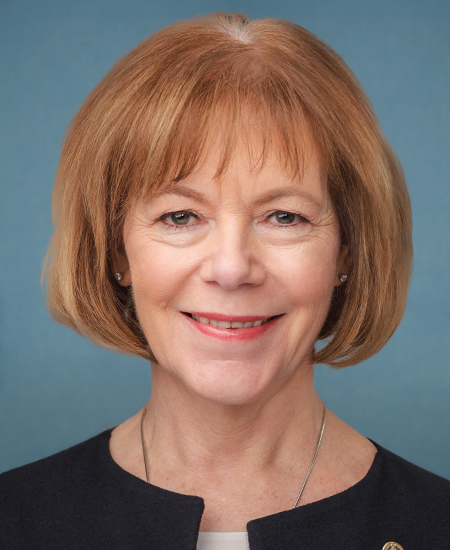
Sponsored bills
Maddy summarySRES 412 is a symbolic Senate resolution supporting approximately 150,000 United Auto Workers (UAW) members negotiating new contracts with General Motors, Ford, and Stellantis (the "Big Three" automakers"). It expresses the Senate's backing for UAW demands for fair wages, benefits, and working conditions, citing corporate profits and stagnant worker pay. The resolution specifically calls on the automakers to negotiate in good faith and offer a fair contract, without creating new legal requirements or funding. As a non-binding resolution, it serves as a statement of support rather than a policy change.
Maddy summaryS. Res. 406 is a Senate resolution honoring the late Richard Clarence Clark, a former U.S. Senator from Iowa (served 1973-1979), who died in 2023. The resolution expresses the Senate’s sorrow at his passing, requests that the House of Representatives and Clark’s family be informed, and directs the Senate to adjourn for the day as a mark of respect. This is a purely commemorative measure with no policy or legal effect, reflecting the Senate’s collective tribute to a former member.
Maddy summaryThe Adult Education WORKS Act creates "college and career navigators" to help adults access workforce development programs, postsecondary education, and career services. It amends definitions to include digital and information literacy skills, and allows public libraries to serve as one-stop centers for workforce development services. The bill increases funding for adult education programs from $810 million to $1.35 billion over five years, and provides $135 million annually specifically for library-based and community-based college and career navigators. It establishes new performance metrics to measure program effectiveness in helping participants obtain credentials, secure employment, and develop foundational skills. The bill directly affects adult education providers, workforce development systems, and individuals seeking to improve their job skills and career opportunities.
Maddy summaryThe Air America Act of 2023 authorizes a one-time $40,000 payment to individuals who served for at least five years with Air America or its affiliated companies (1950-1976) or to their survivors, including widows, widowers, children, or dependents. Additional payments of $8,000 per full year beyond five years of service are provided for longer service periods. The total funding for these awards is capped at $60 million, with claims required to be filed within two years of implementing regulations. The Director of the Central Intelligence Agency administers the program, processing claims and issuing lump-sum payments to eligible individuals or their survivors.
Maddy summaryThe Jobs in the Woods Act (S 3063) creates a federal grant program to fund forestry career training in qualifying rural communities. It provides competitive grants of $500,000-$2 million to eligible entities (like nonprofits, tribes, states, or schools) serving areas with populations under 20,000, low-income status, and adequate broadband access. Grants support sustainable workforce development programs targeting forestry operations, with priority given to projects addressing aging workforces, youth engagement through secondary schools, and job placement. The program is authorized for $10 million annually from 2024-2028, with grants lasting up to 4 years.
Maddy summaryThe Fair Day in Court for Kids Act of 2023 requires the federal government to provide legal counsel at no cost to unaccompanied children (defined as children under 18 not accompanied by a parent or legal guardian) in immigration removal proceedings. It mandates that the Secretary of Health and Human Services appoint or provide counsel as soon as possible after a Notice to Appear is issued or when the child is placed in custody, and ensures children receive their immigration file within 7 days with at least 10 days to review it before court. The bill also requires the development of model guidelines for legal representation and annual reports tracking the number of children represented, including details on the stage of proceedings and demographics. These provisions apply to all unaccompanied children in immigration cases, including those in detention facilities.
Maddy summaryThis is a ceremonial Senate resolution honoring the late Senator Dianne Feinstein of California. It expresses the Senate's respect for her legacy through a formal statement and calls for the chamber to adjourn as a mark of tribute following her passing. The resolution details her historic milestones, including being the first woman to represent California in the Senate, chair multiple key committees, and advocate on issues like gun safety and conservation. It has no policy impact or direct effect on constituents, as it is purely commemorative.
Maddy summarySRES 398 is a Senate resolution designating September 25-29, 2023, as "National Clean Energy Week." It symbolically recognizes the growth of clean energy jobs (citing a 2022 report showing ~8.1 million U.S. energy sector workers) and encourages public and private support for affordable, low-emission energy solutions. The resolution has no legal force and does not create new policies or directly affect specific groups - it serves as a formal acknowledgment of clean energy’s economic and environmental role.
Maddy summarySRES 404 is a ceremonial resolution designating October 4, 2023, as "Energy Efficiency Day" to recognize the economic and environmental benefits of existing energy efficiency policies and private sector innovation. It does not create new laws, funding, or requirements - it simply urges the public to observe the day with activities celebrating achievements like $800 billion in annual energy cost savings and a 50% reduction in energy use in federal facilities since the 1970s. The resolution references bipartisan energy efficiency policies enacted since the 1970s (e.g., the Energy Policy Act of 1992 and the Energy Act of 2020) but does not alter them. As a non-binding observance, it directly affects no individuals or entities and serves only to acknowledge past progress.