

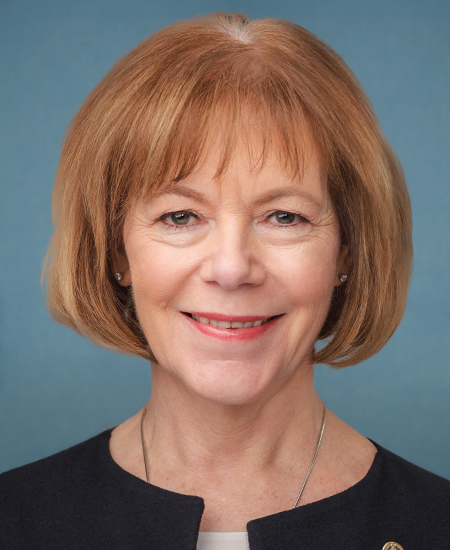
Photo of Tina Smith
D United States Senate · Minnesota

Sen. Tina Smith

Compare
Total votes
1,054
all sessions
Attendance
97%
33 missed
Lower than 92% of chamber peers
With party
97%
of cast votes
Near the chamber average
Bipartisan score
2%
crosses aisle rarely
Near the chamber average
Sponsored
1,913
bills & resolutions
Higher than 75% of chamber peers
Committees
13
assignments
1,913 bills and resolutions

Sponsored bills

Total
1,913
Primary
190
Co-sponsor
1,723
This page
1,913
matching current filters
Co-sponsor S 1071
In committee · United States Senate · Co-sponsor
RISE Act

Maddy summaryThe RISE Act requires colleges and universities to accept multiple forms of documentation, such as past Individualized Education Programs (IEPs) or 504 plans, to determine if a student qualifies for disability accommodations. It mandates that institutions clearly explain their accommodation processes to students and staff and report disability-related data (like enrollment numbers and accommodations provided) to federal databases. The bill also allocates $10 million for a national center to provide information and technical support to postsecondary students with disabilities. These provisions directly affect higher education institutions and students with disabilities seeking accommodations.

In committee Mar 30, 2023 1 co-sponsor
Co-sponsor S 1077
In committee · United States Senate · Co-sponsor
Home-Based Telemental Health Care Act of 2023

Maddy summaryS 1077, the Home-Based Telemental Health Care Act of 2023, authorizes federal grants to expand mental health and substance use services for rural communities and workers in farming, fishing, and forestry (Triple-F) industries. The bill provides up to $10 million annually from 2023-2027 to fund demonstration projects where eligible providers deliver care directly to patients in their homes using telemental health technology. It requires grantees to develop metrics comparing home-based services to in-person care and mandates reports on program impact to Congress. This policy change specifically targets underserved rural populations facing barriers like geographic isolation, workforce shortages, and stigma in accessing mental health care.

In committee Mar 30, 2023 1 co-sponsor
Co-sponsor S 1139
In committee · United States Senate · Co-sponsor
Lower Drug Costs for Families Act

Maddy summaryThis bill amends Medicare's prescription drug rebate calculations for Part B and Part D drugs. It changes the base year for calculating rebates from 2021 to 2016 and adjusts how "commercial market" drug units are counted to exclude units paid for under state Medicaid programs. These changes affect drug manufacturers who pay rebates to Medicare, as they alter the formula used to determine rebate amounts. The bill does not create new cost-saving measures but modifies existing calculation methods for Medicare's drug rebate program.

In committee Mar 30, 2023 1 co-sponsor
Co-sponsor S 1110
In committee · United States Senate · Co-sponsor
Rural Hospital Support Act

Maddy summaryThe Rural Hospital Support Act (S 1110) changes how Medicare calculates payments for two types of rural hospitals: sole community hospitals (the only hospital in their area) and Medicare-dependent hospitals (which rely heavily on Medicare for revenue). It recalculates payments using a 2016 base year instead of previous periods, potentially increasing reimbursements for eligible hospitals if this results in higher payments. The bill also extends the Medicare-dependent hospital program and low-volume hospital payment increases beyond 2024, while prohibiting adjustments to these payments for years before 2015. This directly affects eligible rural hospitals by increasing their Medicare funding and providing long-term program stability.

In committee Mar 30, 2023 1 co-sponsor
Co-sponsor S 1124
In committee · United States Senate · Co-sponsor
Financial Compensation for CFPB Whistleblowers Act

Maddy summaryThis bill establishes a formal reward program for whistleblowers who provide original information leading to successful enforcement actions by the Consumer Financial Protection Bureau (CFPB) against violations of federal consumer financial laws. Whistleblowers who report new, non-public details about violations (e.g., bank fraud or deceptive practices) may receive 10-30% of civil penalties collected in cases exceeding $1 million, with a minimum $50,000 award if penalties are below that threshold. The law includes strong confidentiality protections to prevent disclosure of whistleblower identities and excludes current employees of violators or those convicted of related crimes from receiving awards. It directly affects individuals who report consumer financial law violations, aiming to incentivize insider reporting while ensuring CFPB enforcement actions generate revenue for these rewards.

In committee Mar 30, 2023 1 co-sponsor
Co-sponsor S 1049
In committee · United States Senate · Co-sponsor
REAADI for Disasters Act

Maddy summaryThe REAADI for Disasters Act improves disaster preparedness, response, recovery, and mitigation for individuals with disabilities and older adults (age 50+), who face higher risks during disasters. It requires accessible communications (including American Sign Language, captions, and plain language), inclusive advisory committees in disaster planning, and accessible shelters and facilities. The bill also mandates that crisis standards of care during disasters comply with civil rights laws and funds training centers to support disability-inclusive disaster management practices.

In committee Mar 29, 2023 1 co-sponsor
Co-sponsor S 1026
In committee · United States Senate · Co-sponsor
Gun Violence Prevention Research Act of 2023

Maddy summaryThe Gun Violence Prevention Research Act of 2023 would authorize $50 million annually for the Centers for Disease Control and Prevention (CDC) to conduct or support research on firearms safety and gun violence prevention for fiscal years 2024 through 2029. This funding would allow the CDC to study the causes and prevention of gun violence, including evaluating safety measures and effective interventions. The research would be conducted under the Public Health Service Act, with the funding added to existing appropriations. The bill does not change current laws but provides dedicated resources for evidence-based research on gun violence as a public health issue.

In committee Mar 29, 2023 1 co-sponsor
Primary S 1020
In committee · United States Senate · Lead sponsor
Livestock Consolidation Research Act of 2023

Maddy summaryThe Livestock Consolidation Research Act of 2023 requires the USDA's Economic Research Service to publish a report on consolidation trends in the livestock industry within one year of the latest Census of Agriculture release. The report must analyze changes in farm/facility size and location, and assess impacts on farmers, ranchers, and consumers - including financial effects, market access, resource availability, and dietary impacts - specifically for beef, dairy, pork, and poultry (including broilers, eggs, and turkeys). It mandates using existing USDA data sources like the Census of Agriculture, Food Safety Inspection Service records, and Packers and Stockyards data, while separating beef cattle data by cow-calf and fed operations and excluding confidential business information. This research will inform stakeholders about industry consolidation patterns but does not create new regulations or alter existing policies.

In committee Mar 29, 2023 0 co-sponsors
Co-sponsor S 1031
In committee · United States Senate · Co-sponsor
EACH Act of 2023

Maddy summaryThe EACH Act of 2023 requires federal health programs - including Medicaid, Medicare, the Indian Health Service, and others - to cover abortion services regardless of income or insurance type. It directly affects millions of low-income individuals, women of color (who are disproportionately enrolled in Medicaid), LGBTQ+ people, and people in states that currently restrict abortion coverage. Key provisions mandate that all federally funded health programs provide abortion coverage (Section 4), repeal a prior law restricting abortion coverage in private insurance (Section 5), and prohibit federal interference with private insurance coverage of abortion services. The bill aims to remove financial barriers to abortion care by ensuring coverage through federal programs and private plans.

In committee Mar 29, 2023 1 co-sponsor
Co-sponsor S 1024
In committee · United States Senate · Co-sponsor
Access to AEDs Act

Maddy summaryThe Access to AEDs Act (S 1024) provides $25 million in federal funding over five years (2024-2028) to help public elementary and secondary schools improve access to automated external defibrillators (AEDs) and CPR training. It authorizes grants for schools to purchase AEDs, train students and staff, develop emergency response plans, and partner with health organizations - such as local hospitals or fire departments - to implement these programs. The bill also requires the creation of a national database to track school AED access and share best practices, aiming to support immediate response during cardiac emergencies. This directly affects schools, students, and school staff by enhancing preparedness for sudden cardiac arrest, which the bill cites as a leading cause of death among young athletes and children.

In committee Mar 29, 2023 1 co-sponsor
Showing 1,061 to 1,070 of 1,913 bills