

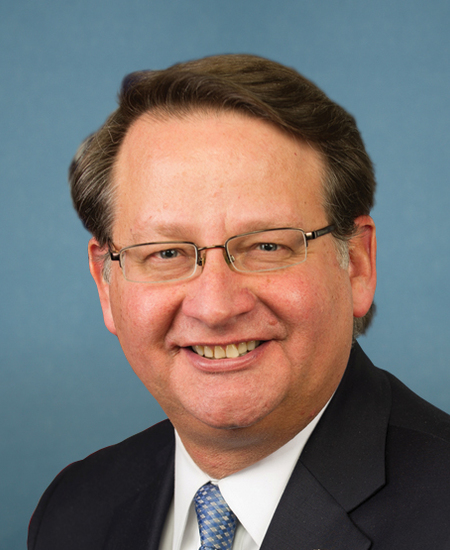
Photo of Gary C. Peters
D United States Senate · Michigan

Sen. Gary C. Peters

Compare
Total votes
1,054
all sessions
Attendance
100%
5 missed
Near the chamber average
With party
97%
of cast votes
Near the chamber average
Bipartisan score
2%
crosses aisle rarely
Near the chamber average
Sponsored
1,483
bills & resolutions
Near the chamber average
Committees
19
assignments
1,483 bills and resolutions

Sponsored bills

Total
1,483
Primary
361
Co-sponsor
1,122
This page
1,483
matching current filters
Primary S 2499
In committee · United States Senate · Lead sponsor
Protecting and Securing Chemical Facilities from Terrorist Attacks Act of 2023

Maddy summaryS 2499 extends the authorization period for the Department of Homeland Security's chemical facility security program from 2023 to 2025. This procedural bill does not change existing security requirements but ensures the current program continues operating under its established framework. The program directly affects chemical facilities handling hazardous materials, which must comply with security standards to prevent terrorist attacks. The bill's sole change is updating the program's expiration date in law, maintaining the same security protocols without new mandates.

In committee Jul 26, 2023 0 co-sponsors
Co-sponsor SRES 309
Passed · United States Senate · Co-sponsor
A resolution recognizing the importance of the blueberry industry to the United States and designating July 2023 as "National Blueberry Month".

This resolution (1) designates July 2023 as National Blueberry Month; and (2) recognizes the contributions of blueberry growers in the United States and their families, and that purchasing blueberries grown in the United States supports farmers, jobs, communities, and the economy of the United States.

Passed Jul 25, 2023 1 co-sponsor
Co-sponsor S 2488
In committee · United States Senate · Co-sponsor
Raise the Wage Act of 2023

Maddy summaryThe Raise the Wage Act of 2023 would gradually increase the federal minimum wage to $17.00 per hour by 2028, with specific annual steps: $9.50 in year one, $11.00 in year two, $12.50 in year three, $14.00 in year four, $15.50 in year five, and $17.00 starting in year six. It also phases out separate minimum wage rates for tipped workers (raising their base wage to match the standard minimum wage by year six) and for workers under 20 (phasing out their lower rate by year five). The bill requires annual minimum wage adjustments after year six based on increases in the median hourly wage of all employees, as tracked by the Bureau of Labor Statistics. Additionally, it eliminates special minimum wage certificates for workers with disabilities by 2028, requiring all such workers to receive the standard minimum wage.

In committee Jul 25, 2023 1 co-sponsor
Co-sponsor S 2496
In committee · United States Senate · Co-sponsor
VALID Act of 2023

Maddy summaryS 2496, the VALID Act of 2023, amends disclosure requirements for FHA-insured loans. It requires lenders to include specific information about VA loans - specifically the loan-to-value ratio and VA loan details assuming prevailing interest rates - when discussing FHA loans. This change directly affects borrowers applying for FHA-insured mortgages by providing clearer comparative information about VA loan options. The bill does not alter VA loan eligibility or require lenders to verify borrower eligibility for VA loans. The key provision is a mandatory update to existing disclosure language under the National Housing Act.

In committee Jul 25, 2023 1 co-sponsor
Co-sponsor S 2473
In committee · United States Senate · Co-sponsor
Strategic Defense Logistics Improvement Act of 2023

Maddy summaryThe Strategic Defense Logistics Improvement Act of 2023 expands the Department of Defense's Contested Logistics Working Group by adding representatives from four specific agencies: the Defense Logistics Agency, the Strategic Capabilities Office, DARPA, and the Office of the Under Secretary of Defense for Research and Engineering. The bill requires these new members to be appointed within 60 days of enactment and mandates the working group meet at least quarterly. It also requires the group to submit an annual report by February 1 to congressional defense committees detailing any shortfalls in personnel, equipment, infrastructure, energy, storage, or capabilities needed for DoD operations. This legislation focuses on improving internal coordination and transparency in defense logistics planning within the Department of Defense.

In committee Jul 25, 2023 1 co-sponsor
Co-sponsor S 1
In committee · United States Senate · Co-sponsor
Freedom to Vote Act

Maddy summary# Summary of Proposed Election Reform Legislation This comprehensive legislative document outlines a wide-ranging election reform bill with multiple titles addressing various aspects of voting rights, election administration, and election integrity. Key provisions include: 1. **Democracy Restoration** (Title I): - Restores voting rights for citizens with criminal convictions (except those serving felony sentences in correctional institutions) - Requires states to notify individuals of restored voting rights upon completion of sentence or release from custody - Includes enforcement mechanisms for states to comply with the restoration provisions 2. **Voter Identification Requirements** (Title II): - Establishes a standardized system for voter identification requirements - Specifies acceptable forms of identification (including many government-issued documents) - Requires states to provide free identification documents to eligible voters - Includes funding ($5 million annually for 5 years) to cover costs 3. **Voter List Maintenance** (Title III): - Prohibits "voter caging" (using undeliverable mail to challenge voter eligibility) - Requires states to verify voter ineligibility using objective and reliable evidence - Limits removal of voters from registration lists to specific circumstances (death, permanent move) - Mandates notice requirements for voters removed from lists 4. **Election Integrity** (Title IV): - Prohibits interference with voter registration (Section 612) - Restricts removal of local election administrators to cases of inefficiency, neglect, or malfeasance - Prohibits harassment and intimidation of election workers - Bans deceptive practices in elections (false information about voting procedures, qualifications, or endorsements) The legislation aims to expand voting access while maintaining election integrity, with specific focus on eliminating barriers for people with criminal convictions, ensuring fair voter list maintenance, and protecting election workers from harassment and intimidation. It also includes provisions for enforcement through civil actions, criminal penalties, and reporting requirements.

In committee Jul 25, 2023 1 co-sponsor
Co-sponsor S 2477
In committee · United States Senate · Co-sponsor
Equitable Community Access to Pharmacist Services Act

Maddy summaryS 2477 (Equitable Community Access to Pharmacist Services Act) expands Medicare Part B coverage to include specific pharmacist services previously only covered when provided by physicians. It directly affects Medicare beneficiaries and pharmacists by allowing coverage for services like evaluating patients for COVID-19, flu, or respiratory illnesses, and addressing public health emergencies - provided pharmacists are licensed or operating under federal emergency authority. The bill establishes payment at 80% of the lesser of actual charge or 85% of physician payment rates (100% during federal emergencies) and prohibits balance billing for these services. It also clarifies that existing Medicare enrollment pathways for pharmacists remain available. This bill modifies Medicare Part B coverage under the Social Security Act without restricting current pharmacy reimbursement options.

In committee Jul 25, 2023 1 co-sponsor
Primary S 931
In committee · United States Senate · Lead sponsor
Strengthening Agency Management and Oversight of Software Assets Act

Maddy summaryS 931 mandates federal agencies to conduct a comprehensive review of their software entitlements and inventories within one year of enactment, requiring detailed accounting of software contracts, costs, usage, and interoperability. Agencies must develop plans to consolidate software licenses, prioritize enterprise agreements for cost savings, and minimize restrictive licensing terms - particularly for cloud services - while ensuring vendor-neutral procurement. The bill also requires a government-wide strategy by the Office of Management Budget within two years, including cost-benefit analyses for enterprise licensing and integration of software spending data into federal budget processes. These provisions directly affect all federal agencies, their CIOs, CFOs, and procurement officers, with reporting to Congress and the Government Accountability Office.

In committee Jul 25, 2023 0 co-sponsors
Co-sponsor S 111
Signed into law · United States Senate · Co-sponsor
Providing Accountability Through Transparency Act of 2023

Maddy summaryThis bill requires federal agencies to include a link to a 100-word plain language summary when publishing notices of proposed regulations. It directly affects all federal agencies that issue rules (such as the EPA or FDA) and makes regulatory information more accessible to the public. The key provision amends federal law to mandate that summaries be posted on regulations.gov, using clear language instead of legal jargon. This change applies to all new rulemaking notices published after the law takes effect. The bill does not alter the content or substance of regulations, only how they are presented to the public.

Signed into law Jul 25, 2023 1 co-sponsor
Co-sponsor S 2454
In committee · United States Senate · Co-sponsor
Pharmaceutical Supply Chain Security Act

Maddy summaryThis bill requires the FDA to report on pharmaceutical products and active ingredients imported from China that make up over 20% of U.S. supply, with the report kept confidential. It directs the President to create a national strategy to reduce reliance on China for drugs and key ingredients, including funding projects that diversify manufacturing through international partnerships. The U.S. Development Finance Corporation must prioritize funding for such projects, but only if recipients certify that no more than 25% of key ingredients come from nonmarket economy countries and the project isn't controlled by entities from those countries. This directly affects drug manufacturers seeking federal support and aims to secure U.S. access to critical medicines.

In committee Jul 20, 2023 1 co-sponsor
Showing 731 to 740 of 1,483 bills
Previous 1 … 73 74 75 … 149 Next