

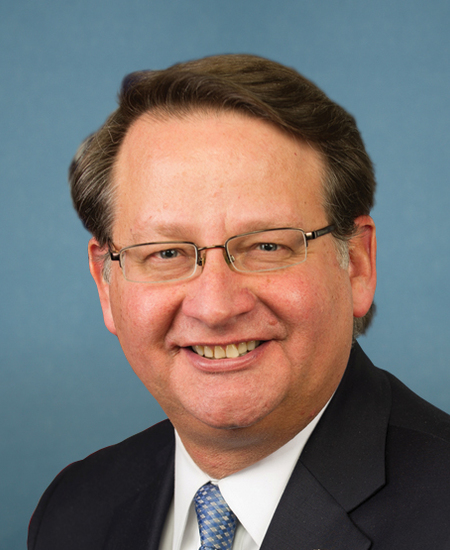
Photo of Gary C. Peters
D United States Senate · Michigan

Sen. Gary C. Peters

Compare
Total votes
1,054
all sessions
Attendance
100%
5 missed
Near the chamber average
With party
97%
of cast votes
Near the chamber average
Bipartisan score
2%
crosses aisle rarely
Near the chamber average
Sponsored
1,483
bills & resolutions
Near the chamber average
Committees
19
assignments
1,483 bills and resolutions

Sponsored bills

Total
1,483
Primary
361
Co-sponsor
1,122
This page
1,483
matching current filters
Co-sponsor S 294
Passed · United States Senate · Co-sponsor
Expanding Access to Capital for Rural Job Creators Act

Maddy summaryS 294, the Expanding Access to Capital for Rural Job Creators Act, amends the Securities Exchange Act of 1934 to include "rural-area small businesses" in two existing exemptions currently available to women-owned small businesses. Specifically, it adds this category to Section 4(j)(4)(C) and Section 4(j)(6)(B)(iii), which govern exemptions for small business capital raising. This change directly affects rural small businesses seeking to access capital markets by making them eligible for the same exemptions previously reserved for women-owned businesses. The bill does not create new funding or programs but adjusts eligibility criteria within existing securities law.

Passed Sep 12, 2023 1 co-sponsor
Co-sponsor S 2757
In committee · United States Senate · Co-sponsor
VA Emergency Transportation Access Act

Maddy summaryThis bill (S 2757) freezes current payment rates for veterans' transportation services provided through "special modes" (like non-emergency medical transport) starting January 1, 2023, preventing the VA from lowering these rates without strict conditions. It directly affects veterans relying on these transportation services and the contractors providing them. The key provision allows rate increases but requires the VA to conduct a detailed economic impact review, consult with veterans' groups and industry experts, and ensure new rates cover actual costs before any decrease can occur. This aims to protect veterans' access to care by preventing rate cuts that could disrupt transportation services.

In committee Sep 11, 2023 1 co-sponsor
Primary S 285
In committee · United States Senate · Lead sponsor
Improving Government Efficiency and Workforce Development through Federal Executive Boards Act of 2023

Maddy summaryThis bill establishes Federal Executive Boards in geographic areas outside Washington, DC, to coordinate federal agencies with significant field operations. It requires each board to include senior representatives from local agencies and focuses on improving workforce development, emergency preparedness, and interagency collaboration. The legislation mandates a minimum $15 million annual fund (adjusted for inflation) to cover staffing and operations, with contributions based on agency employee counts in each region. These boards will directly affect federal agencies with field offices, state/local governments, and educational institutions collaborating on workforce initiatives like apprenticeships and recruitment.

In committee Sep 11, 2023 0 co-sponsors
Primary S 2745
In committee · United States Senate · Lead sponsor
Veterans Affairs Peer Review Neutrality Act of 2023

Maddy summaryS 2745, the Veterans Affairs Peer Review Neutrality Act of 2023, requires the Department of Veterans Affairs (VA) to eliminate conflicts of interest in medical quality reviews and investigations. It mandates that VA staff involved in peer reviews or administrative investigations must recuse themselves if they have direct involvement with the care being reviewed, personal bias, or a supervisory relationship with the subject. The bill also requires the VA Secretary to notify Congress within 90 days when a medical center director is detailed to another position, including details about the new role and expected absence, and to appoint an acting director within 120 days. Additionally, it limits how long a director can be detailed away from their position (180 days, with limited 90-day waivers), requiring them to return or trigger a new hiring process unless an investigation is ongoing.

In committee Sep 7, 2023 0 co-sponsors
Co-sponsor S 2740
In committee · United States Senate · Co-sponsor
Small Business Cyber Resiliency Act

Maddy summaryThe Small Business Cyber Resiliency Act establishes a central resource hub within the Small Business Administration to improve cybersecurity support for small businesses. It requires the SBA to partner with existing small business development centers and other resource providers to deliver free cybersecurity tools, training, and incident response guidance directly to small business owners. The bill also mandates annual reports tracking how many small businesses received assistance and requires a study on cybersecurity risks faced by small businesses that shifted online during the pandemic (2020-2021). These provisions aim to make cybersecurity resources more accessible without creating new government funding.

In committee Sep 7, 2023 1 co-sponsor
Primary S 2734
In committee · United States Senate · Lead sponsor
PAWS Reauthorization Act of 2023

Maddy summaryThe PAWS Reauthorization Act of 2023 extends the Emergency and Transitional Pet Shelter and Housing Assistance Grant Program through 2028, replacing its previous 2019-2023 authorization period. This program provides federal grants to animal shelters and housing providers that assist pet owners in emergency situations, such as domestic violence victims who cannot leave their pets behind. The bill amends Section 12502(b)(8)(A) of the Agriculture Improvement Act of 2018 to update the funding timeframe. This extension directly affects animal welfare organizations and vulnerable pet owners seeking crisis housing support.

In committee Sep 6, 2023 0 co-sponsors
Primary S 1425
In committee · United States Senate · Lead sponsor
Satellite Cybersecurity Act

Maddy summaryThe Satellite Cybersecurity Act (S 1425) requires the Cybersecurity and Infrastructure Security Agency (CISA) to create a public online clearinghouse within 180 days, providing voluntary cybersecurity guidelines for U.S. commercial satellite operators. The clearinghouse will include resources tailored for small businesses, covering risks like hacking, jamming, foreign ownership vulnerabilities, and supply chain threats. It also mandates a two-year study by the Comptroller General examining federal efforts to secure satellite systems, their reliance on critical infrastructure, and coordination with agencies like DHS and the FCC. The bill directly affects commercial satellite companies (including small businesses) and federal agencies that depend on satellite systems for operations.

In committee Sep 5, 2023 0 co-sponsors
Co-sponsor S 359
In committee · United States Senate · Co-sponsor
Supreme Court Ethics, Recusal, and Transparency Act of 2023

Maddy summaryThis bill requires the Supreme Court to establish a code of conduct for justices within 180 days of enactment, with public access to these rules on the Court's website. It sets minimum disclosure standards for gifts, income, and reimbursements received by justices and their law clerks, and strengthens recusal requirements when justices have financial ties to parties in cases. The bill creates procedures for filing complaints about justices' conduct and establishes a judicial investigation panel to review such complaints, while also requiring parties and amicus curiae to disclose gifts to justices and lobbying activities related to the nomination of justices. These provisions aim to increase transparency and accountability in Supreme Court operations.

In committee Sep 5, 2023 1 co-sponsor
Co-sponsor S 1886
In committee · United States Senate · Co-sponsor
Pray Safe Act of 2023

Maddy summaryThe Pray Safe Act of 2023 establishes a federal Clearinghouse within the Department of Homeland Security to provide evidence-based safety and security resources for houses of worship, faith-based organizations, and nonprofit organizations. The Clearinghouse compiles best practices covering threat prevention, emergency response, and recovery, along with a comprehensive index of federal grant programs available to these groups. It requires annual updates based on user feedback and includes contact points for security assistance, such as Protective Security Advisors and fusion centers. The resource aims to improve safety planning without creating new obligations for affected organizations.

In committee Aug 22, 2023 1 co-sponsor
Primary S 1865
In committee · United States Senate · Lead sponsor
TAG Act

Maddy summaryThe TAG Act requires federal agencies to provide clear, plain-language notices and appeal options when using automated systems to make critical decisions affecting individuals' rights, benefits, or well-being - such as access to healthcare, housing, government assistance, or employment. Within 180 days of enactment, the OMB must issue guidance mandating these disclosures, including notices at the point of interaction with automated systems and structured appeal processes for those harmed by such decisions. Agencies must implement this guidance within 270 days and track system performance to ensure accuracy, reliability, and explainability. The Act expires 10 years after enactment.

In committee Aug 22, 2023 0 co-sponsors
Showing 711 to 720 of 1,483 bills
Previous 1 … 71 72 73 … 149 Next