

Maddy summaryThis bill establishes new requirements for the Department of Defense to monitor and address brain injuries from blast overpressure exposure among service members. It mandates baseline and annual neurocognitive assessments for all service members, creates detailed blast exposure logs tracking every instance of exposure, and establishes the Warfighter Brain Health Initiative to coordinate brain health efforts across the military. The legislation requires specific roles for Defense officials to implement these measures within one year, including establishing blast overpressure safety thresholds and reporting requirements. It also mandates annual reports to Congress on brain injury incidents, treatments, and progress toward reducing blast exposure risks. The bill directly affects all members of the Armed Forces and requires significant changes to how the Department of Defense monitors and addresses blast-related brain injuries.
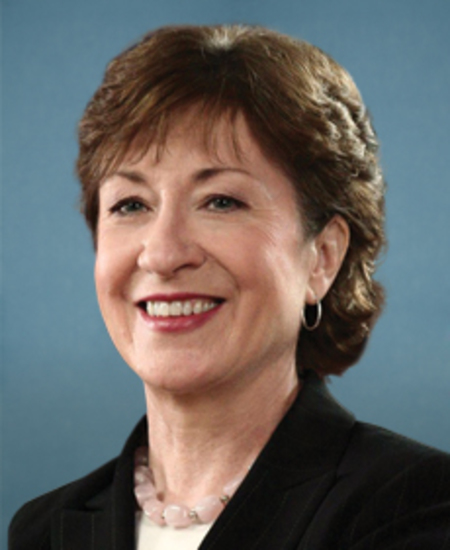
Sen. Susan M. Collins
Sponsored bills
Maddy summaryS 4079, the Rural Obstetrics Readiness Act, creates federal training programs and funding to help rural health facilities without full obstetric units handle emergencies. It requires training non-specialist doctors in rural areas to manage pregnancy-related complications like hemorrhage or high blood pressure, and authorizes $15 million (2025-2028) for equipment, staff support, and telehealth consultations. The bill also funds a $5 million telehealth pilot program to connect rural facilities with maternal health specialists via phone or video, and mandates a federal study on maternity ward closures. This directly affects rural hospitals in areas with shortages of maternity care providers, aiming to improve emergency response without requiring full obstetric units.
Maddy summaryThe Countering Antisemitism Act establishes a National Coordinator within the Executive Office of the President and an Interagency Task Force to coordinate federal efforts against antisemitism across government agencies. The bill requires annual threat assessments of antisemitic violent extremism from the FBI, DHS, and National Counterterrorism Center, and mandates reports from relevant agencies on implementing the U.S. National Strategy to Counter Antisemitism. It also requires the Department of Education to designate a senior officer to address antisemitic discrimination in higher education and to report on complaints, while directing a study on Holocaust education in schools. Additionally, the legislation amends the Nonprofit Security Grant Program to require public reporting on grant applications and awards, and designates May as Jewish American Heritage Month.
Maddy summaryThe Revoke Iranian Funding Act of 2023 revokes existing licenses and exemptions that permitted U.S. funds to be released to Iran for humanitarian purposes, including the $6 billion South Korea transfer in September 2023, and blocks the Treasury from issuing new such licenses for one year. It also rescinds a specific waiver issued by the State Department in September 2023 that allowed humanitarian funding. The bill requires the Treasury to report within 30 days on Iranian assets held in the U.S. and current licenses related to Iran sanctions, directly affecting Iran's government and entities linked to its military, nuclear program, or terrorist groups like Hamas. This targets financial transactions involving Iran's accounts in Qatar and aims to prevent funds from being diverted to support terrorism.
Maddy summaryThe FEND Off Fentanyl Act authorizes sanctions against foreign individuals and entities involved in trafficking fentanyl and its precursors into the United States, with specific focus on transnational criminal organizations like Mexican cartels and the flow of precursor chemicals from China. It requires the President to submit annual reports to Congress on actions taken under the law and designates fentanyl-related transactions as a primary money laundering concern for financial institutions. The bill also repeals a prohibition on imposing sanctions related to importation of goods under previous fentanyl sanctions law. It aims to increase financial costs for traffickers by blocking assets and prohibiting transactions involving sanctioned persons.
Maddy summarySRES 333 is a symbolic Senate resolution designating 2024 as the "Year of Democracy" to highlight the U.S. government system's global contributions to freedom. It does not create new laws or directly affect citizens, but encourages states, local governments, and the public to observe the year through activities that honor democratic principles. The resolution urges reflection on the U.S. system's role in promoting global freedom, appreciation for historical sacrifices, and respectful civic engagement. It has no binding effect and serves solely as a commemorative gesture.
Maddy summaryThis Senate resolution (SRES 620) demands that the international community hold accountable those responsible for sexual violence and sexual torture during and after Hamas' October 7, 2023, attack on Israel. It cites a UN report (released March 4, 2024) that found "reasonable grounds" to believe such violence occurred at multiple locations, including kibbutzim and the Nova music festival site, involving rape, murder, and sexualized torture. The resolution specifically calls on the U.S. to urge the UN Security Council to open an official investigation into these allegations. As a non-binding resolution, it does not create new laws but seeks to mobilize international accountability efforts.
Maddy summaryThis Senate resolution designates March 24, 2024, as "Maine Maple Sunday" to honor Maine's maple syrup industry. It recognizes Maine as the third-largest U.S. producer (17% of national output), generating over $55 million annually and supporting 560 jobs. The resolution is non-binding and symbolic, acknowledging the industry's cultural and economic significance. It follows an annual tradition observed for 41 years, with sugarhouses across Maine hosting events on the fourth Sunday in March.
Maddy summaryS 4040, the RIDE Act, creates a new temporary work visa (P-4) for traveling entertainment workers in the U.S. It directly affects carnival, circus, and festival staff who move across the country seasonally, including those operating rides, games, and food concessions at fairs and community events. The bill requires the Department of Labor to certify that U.S. workers are unavailable for these positions and that hiring foreign workers won’t lower wages or working conditions for American workers. It also allows spouses and children of these visa holders to join them in the U.S. The law mandates federal agencies to issue implementing rules within 180 days and one year of enactment.
Maddy summaryS 4048, the North American Wetlands Conservation Extension Act, increases annual funding for wetlands conservation programs. It amends the existing law to authorize up to $65 million per year (from $60 million) for fiscal years 2024 through 2028, extending the funding period beyond the previous 2021-2025 authorization. This bill directly affects the North American Wetlands Conservation Fund, which provides grants to conservation projects protecting wetlands habitat across North America. The change is purely procedural, adjusting funding levels and timelines without altering program requirements or eligibility.