

Maddy summaryThe Latonya Reeves Freedom Act of 2023 establishes a federally protected right for individuals with disabilities who require long-term services and supports (LTSS) to live in community-based settings rather than institutions. The bill defines specific requirements for "community-based" settings, including housing options that allow individuals to live in their own homes or shared residences with privacy rights, choice, and control over their services. It requires states to develop transition plans with measurable goals to move people from institutional settings to community-based supports within 12 years, along with annual reporting on progress. The Department of Justice and Department of Health and Human Services will enforce the law through investigations, compliance reviews, and the ability to seek injunctive relief for violations.
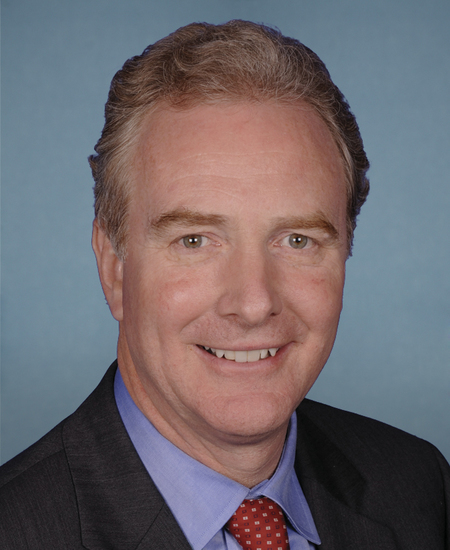
Sponsored bills
Maddy summaryThe Do No Harm Act amends the Religious Freedom Restoration Act (RFRA) to clarify that RFRA does not apply when federal laws protect against discrimination (like the Civil Rights Act of 1964), guarantee workplace protections (such as the Family and Medical Leave Act), prevent child exploitation, or ensure health care access. It specifically prevents religious freedom claims from blocking enforcement of these existing laws. The bill directly affects individuals or entities attempting to use RFRA to challenge such federal protections in court. This amendment ensures that religious freedom arguments cannot override established civil rights, workplace, child safety, or health care regulations.
Maddy summaryThis bill establishes a new Special Envoy to the Pacific Islands Forum (PIF) position at the State Department. The envoy will represent the U.S. as a dialogue partner with PIF and coordinate U.S. policy with like-minded democracies in the region. The bill requires the President to appoint the envoy (with Senate confirmation) and mandates a 180-day report detailing plans to recruit and retain diplomatic staff for Pacific Island posts. It directly affects U.S. diplomatic operations in the Pacific and aims to strengthen engagement with PIF member nations, including the Freely Associated States.
Maddy summaryS.1190, the "End the Threat of Default Act," repeals the statutory debt ceiling (Section 3101 of Title 31, U.S. Code), eliminating the legal limit on federal borrowing. This directly affects how the U.S. Treasury manages debt issuance, as it removes the requirement for Congress to vote on raising the debt limit. The bill replaces all references to "debt subject to limit" with terms like "face value of obligations" to align with the repealed ceiling mechanism, preventing future government shutdowns or default risks tied to debt ceiling negotiations.
Maddy summarySRES 159 is a symbolic Senate resolution designating April 11-17, 2023, as "Black Maternal Health Week" to highlight the maternal health crisis affecting Black women and birthing persons in the U.S. It references data showing Black women are 2.6 times more likely to die from pregnancy-related causes than White women, with higher rates of complications and disparities across income and education levels. The resolution calls for national attention to address systemic racism and inequities in maternal care but does not create new laws, funding, or mandates. It serves solely as a recognition effort to amplify community-led solutions and policy discussions around racial disparities in maternal health.
Maddy summarySRES 161 is a symbolic Senate resolution designating April 22-30, 2023, as "National Park Week." It does not create new laws or affect specific groups, but formally recognizes the National Park System's significance. The resolution highlights the parks' historical value, visitor impact (312 million visits in 2022), and economic contributions ($42.5 billion in 2021). It encourages public engagement with national parks but contains no funding, regulatory changes, or policy mechanisms. As a procedural resolution, it serves purely to honor the parks' legacy.
Maddy summaryThis bill raises the Social Security wage base cap from $160,000 to $400,000 and adds a 1.2% tax on income exceeding $400,000 for individuals or $500,000 for joint filers. It applies to both wage earners and self-employed taxpayers, with new tax revenue allocated to Social Security trust funds (71.3% to Old-Age/Survivors, 10.3% to Disability, and 28.7% to Hospital Insurance). The changes directly affect high-income earners, specifically those with annual earnings above these thresholds. The tax provisions take effect for 2024 and future years.
Maddy summaryThis bill requires employers in healthcare and social service sectors to develop and implement workplace violence prevention plans for their workers. It applies to a wide range of facilities including hospitals, nursing homes, mental health clinics, and community care settings, affecting healthcare and social service workers who provide care in these environments. The plans must include risk assessments, hazard prevention measures, incident reporting procedures, and annual training for employees. Employers must maintain records of violent incidents, conduct annual evaluations of their prevention plans, and submit annual summaries of workplace violence data to the Secretary of Labor. The bill also prohibits retaliation against workers who report violence or safety concerns and ensures compliance with existing safety standards.
Paying a Fair Share Act of 2023 This bill requires an individual taxpayer whose adjusted gross income exceeds $1 million (high-income taxpayer) to pay a minimum tax rate of 30% of the excess of the taxpayer's adjusted gross income over the taxpayer's modified charitable contribution deduction for the taxable year (tentative fair share tax). The amount of the tax is the excess (if any) of the tentative fair share tax over the excess of (1) the sum of the taxpayer's regular tax liability, the alternative minimum tax (AMT) amount, and the payroll tax for the taxable year; over (2) certain tax credits. The bill provides for a phase-in of such tax and requires an inflation adjustment to the $1 million income threshold for taxable years beginning after 2023. The bill also expresses the sense of the Senate that Congress should enact tax reform that repeals unfair and unnecessary tax loopholes and expenditures, simplifies the tax system, and makes sure that the wealthiest taxpayers pay a fair share of taxes.
Maddy summaryThis bill prohibits healthcare providers and transplant centers from denying organ transplants or related services solely because a person has a disability. It requires covered entities (like hospitals and transplant centers) to make reasonable policy changes - such as involving a patient's support network or providing accessible communication - to ensure qualified individuals with disabilities can access transplants. The law clarifies that providers may only consider a disability medically significant if a physician determines it directly affects transplant success, and it establishes enforcement through the Department of Health and Human Services or lawsuits. The bill does not replace existing disability protections like the ADA but specifies how they apply to organ transplant processes.