Big Cat Public Safety Act This bill revises requirements governing the trade of big cats (i.e., species of lion, tiger, leopard, cheetah, jaguar, or cougar or any hybrid of such species). Specifically, it revises restrictions on the possession and exhibition of big cats, including to restrict direct contact between the public and big cats.
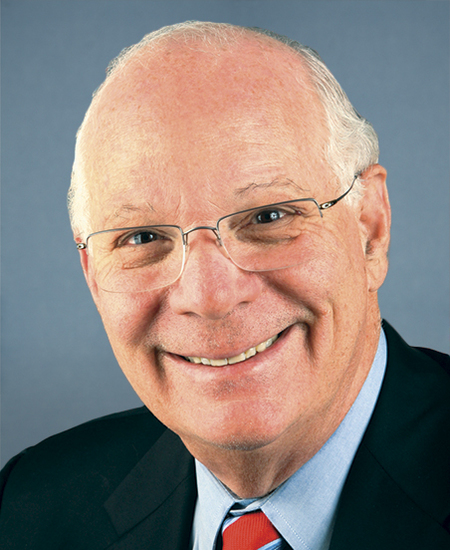
Sen. Benjamin L. Cardin
Sponsored bills
This resolution designates April 17, 2021, through April 25, 2021, as National Park Week. The resolution also encourages the people of the United States and the world to responsibly visit, experience, and support the treasured national parks of the United States while protecting public health during the coronavirus pandemic.
This resolution expresses the Senate's solidarity with the members of the San Isidro Movement, an organization of artists, activists, academics, and journalists protesting increased censorship and persecution in Cuba. Further, it calls on Cuba to release arbitrarily imprisoned artists and journalists, repeal laws that violate freedom of expression, and engage with activists seeking to advance freedom of expression in Cuba.
This resolution recognizes the importance of the relationship between the United States and Mongolia, as well as the continued democratic development of Mongolia. The resolution also encourages expanded U.S. efforts to support Mongolia in certain areas, particularly with respect to economic development.
This resolution reaffirms the Senate's commitment to the historic partnership between the United States and Ecuador, and it supports actions to strengthen this bilateral relationship. Further, it recognizes President Moreno and his administration for committing to democratic values and commends President Moreno for taking steps to protect freedom of expression and freedom of the press in Ecuador.
Rohingya Genocide Determination Act of 2021 This bill requires the Department of State to report to Congress an assessment of the persecution of the Rohingya, a predominantly Muslim group in Burma (Myanmar), by Burma's military and security forces, and whether the situation constitutes genocide under U.S. law. The report shall also contain (1) a description of U.S. government actions to ensure that those responsible are held accountable, and (2) recommendations on further actions to take to ensure accountability and to prevent further mass atrocity crimes in Burma.
Guaranteed Refugee Admission Ceiling Enhancement Act or the GRACE Act This bill establishes that the maximum number of refugees admitted each fiscal year shall be no less than 125,000 and that the maximum number shall be treated as the numerical goal for refugee admissions for the applicable fiscal year. The President may set a higher number if it is justified by humanitarian concerns or is otherwise in the national interest. Currently, the number admitted each fiscal year may not exceed 50,000 unless the President determines that a higher number is justified by humanitarian concerns or is otherwise in the national interest. The bill directs the President to take into consideration information from the United Nations High Commissioner for Refugees when establishing the maximum admission number and making certain other related decisions. The President shall report to Congress quarterly on (1) the number of refugees admitted during the preceding quarter, (2) the number of aliens who were security-cleared during the preceding quarter, (3) a plan to reach the numerical goal for admitted refugees for that fiscal year, and (4) other related information.
Healthy Families Act This bill provides for paid and unpaid sick leave for employees to meet their own medical needs and those of their families. It requires employers with 15 or more employees to provide their employees with at least one hour of earned paid sick leave for every 30 hours worked, up to a maximum of 56 hours of paid sick leave in a year. An employer with fewer than 15 employees may also provide the same amount of paid sick leave, but may opt out of such requirement, in which case such employer must provide its employees at least 56 hours of unpaid leave in a year. An employee may use sick leave for absences (1) resulting from a physical or mental illness, injury or medical condition; (2) resulting from obtaining professional medical diagnosis or care, or preventive medical care; (3) to care for a child, parent, spouse, a domestic partner, or other blood or close relative; and (4) resulting from domestic violence, sexual assault, or stalking. The bill makes it unlawful for any employer to interfere with, restrain, or deny the exercise of an employee's right to accrue sick leave as provided by this bill. An employee may take legal action to enforce the right to sick leave granted by this bill and the Department of Labor must investigate complaints of violations of the requirements of this bill. Labor is authorized to conduct a public awareness campaign to educate and inform the public of the requirements for paid sick leave provided by this bill.

Affordable Housing Credit Improvement Act of 2021 This bill revises provisions of the low-income housing tax credit and renames it as the affordable housing credit . The bill increases the per capita dollar amount of the credit and its minimum ceiling amount beginning in 2021 and extends the inflation adjustment for such amounts. The bill modifies tenant income eligibility requirements and the average income formula for determining such income. It also revises rules for student occupancy of rental units and tenant voucher payments, and prohibits any refusal to rent to victims of domestic abuse. The bill further modifies the credit to increase state allocations of the credit; repeal the qualified census tract population cap; prohibit local approval and contribution requirements; increase the credit for certain projects designated to serve extremely low-income households; increase the credit for certain bond-financed projects designated by state agencies; eliminate the basis reduction for properties that receive certain energy-related tax benefits; and increase the population cap for difficult development areas (i.e., areas with high construction, land, and utility costs relative to area median gross income). The bill also includes Indian and rural areas as difficult development areas and modifies other requirements relating to casualty losses, acquisition credits, and foreclosures.
Tax Fairness for Workers Act This bill allows an above-the-line tax deduction for union dues and expenses. (An above-the-line deduction is subtracted from gross income and is available whether or not a taxpayer itemizes other deductions.) The bill also reinstates the miscellaneous itemized tax deduction for unreimbursed expenses attributable to the performance of services as an employee (Under current law, all miscellaneous itemized deductions are suspended through 2025).