

Puppy Protection Act of 2021 This bill requires the Department of Agriculture to expand standards that govern the humane handling, care, treatment, and transportation of animals to include new requirements for commercial dog dealers. Specifically, the standards must require dog dealers to provide to dogs adequate housing, exercise, and veterinary care; appropriate and nutritious food; continuous access to potable water; and meaningful socialization with humans and compatible dogs for at least 30 minutes each day. The standards must also include requirements for breeders to use safe breeding practices and make all reasonable efforts to find humane placement for retired breeding dogs.
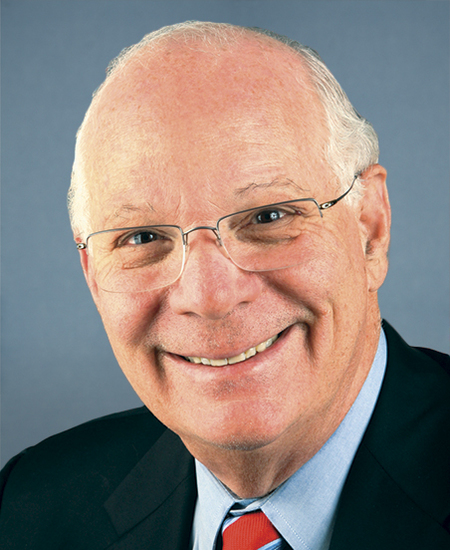
Sen. Benjamin L. Cardin
Sponsored bills
America's College Promise Act of 2021 This bill provides funding and establishes grant programs to expand access to higher education, including by providing free community college to students. Specifically, the bill establishes a program to waive resident tuition and fees for community college students. The Department of Education (ED) must award grants to states and Indian tribes to pay the federal share (75% of the average resident community college tuition and fees per student) of the program. As a condition of receiving such a grant, a state must (1) submit a plan to align the requirements for receiving a regular high school diploma with the requirements for entering credit-bearing coursework at community colleges; and (2) submit a plan to improve transfer pathways between institutions of higher education (IHEs), including by ensuring that associate degrees awarded by community colleges are fully transferable to four-year IHEs. Next, the bill directs ED to award grants to states and Indian tribes for implementing evidence-based institutional reforms and innovative practices to improve student outcomes. In addition, ED must award grants to participating historically Black colleges and universities, tribal colleges and universities, and minority-serving institutions to waive or significantly reduce the first 60 credits of tuition and fees for low-income students.
Families Belong Together Act This bill provides various immigration benefits for eligible alien parents (or legal guardians) and minor children who were separated by the Department of Homeland Security (DHS) between January 20, 2017, and January 20, 2021. Generally, to be an eligible parent or minor child under this bill, the alien must not be inadmissible for certain crime- or security-related grounds, though DHS may waive certain grounds for humanitarian or public interest reasons. Furthermore, an eligible child who was separated as a minor remains eligible for the immigration benefits after reaching majority. DHS must grant humanitarian parole into the United States to an eligible alien who requests such parole, regardless of whether the alien is physically present in the United States. An eligible alien in the United States may apply for lawful permanent resident status. U.S. Citizenship and Immigration Services shall grant a qualifying alien's lawful permanent resident status within 30 days of receiving the alien's application. An alien who receives lawful permanent resident status under this bill shall be eligible for benefits and services that are available to an alien who is admitted as a refugee. Certain annual numerical limitations shall not apply to aliens who receive lawful permanent resident status under this bill. If an alien seeks judicial review of a denial of an application for lawful permanent resident status under this bill, the Department of Justice shall appoint counsel to represent that alien upon request.
This resolution declares racism a public health crisis and supports efforts to address health disparities and inequities across all sectors.
This resolution designates April 2021 as Financial Literacy Month.
Public Buildings Renewal Act of 2021 This bill allows tax-exempt financing of certain government-owned buildings by expanding the definition of exempt facility bond to include bonds used for qualified government buildings. A qualified government building is a government-owned building or facility that consists of one or more of the following an elementary or secondary school; a facility of a state college or university used for educational purposes; a public library; a court; a hospital or health care facility; a laboratory or research facility used by a governmental unit; a public safety facility; or an office for government employees. The bill excludes buildings or facilities that include specified recreational equipment or are used for the primary purpose of providing retail food and beverage services, recreation, or entertainment. The bill establishes (1) a $5 billion limit on the amount of tax-exempt financing which may be provided for government buildings, and (2) procedures for allocating and applying for the financing. The bill exempts the bonds for government buildings from the volume cap on private activity bonds.
Lymphedema Treatment Act This bill provides for Medicare coverage of lymphedema compression treatment items. Specifically, the bill provides for coverage of (1) standard and custom fitted gradient compression garments that are prescribed by a physician or other specified health care professional to treat lymphedema, and (2) other devices determined to be effective in the prevention or treatment of lymphedema.
Promotion and Expansion of Private Employee Ownership Act of 2021 This bill expands tax incentives and federal assistance for employee stock ownership plans (ESOPs) that are sponsored by S corporations. The bill extends to all domestic corporations, including S corporations, provisions allowing deferral of tax on gain from the sale of employer securities to an ESOP. The Department of the Treasury must establish the S Corporation Employee Ownership Assistance Office to foster increased employee ownership of S corporations. The bill defines an ESOP business concern and allows such a concern to continue to qualify as a small business for the purposes of programs under the Small Business Act. An ESOP business concern is a business concern that was a small business concern eligible for a loan, preference, or other program under the Small Business Act before more than 49% of the business concern was acquired by an ESOP.
Water Resources Research Amendments Act This bill reauthorizes through FY2025 the Water Resources Research Act Program and otherwise revises the program, including by increasing the federal share of grant funding under the program for water resources research and technology institutes.
Home Health Emergency Access to Telehealth Act or the HEAT Act This bill provides for Medicare coverage of home health services that are furnished via telehealth during a public health emergency, in accordance with specified requirements. Specifically, the bill allows telehealth services to substitute for in-person home health services and to be considered as home health visits for purposes of payment under Medicare during a public health emergency. Such services (1) may not constitute more than 50% of the number of billable visits in a 30-day period, (2) must be furnished under a plan of care established by a practitioner with whom the beneficiary has an existing care relationship, and (3) must be furnished in accordance with the beneficiary's consent.