This resolution expresses support for the designation of September 2021 as PCOS Awareness Month. Polycystic ovary syndrome (PCOS) is caused by a hormone imbalance, which may result in infertility, weight gain, excess hair growth, and other symptoms.
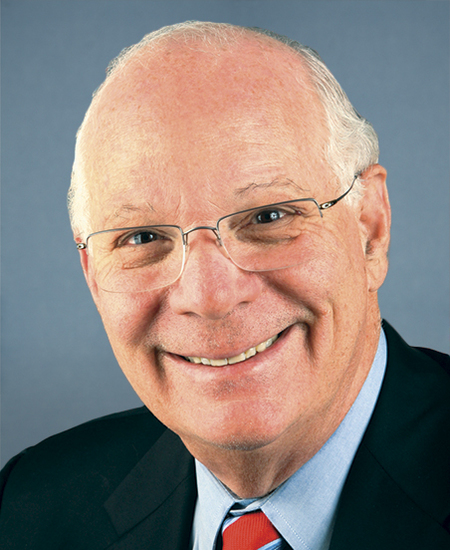
Sen. Benjamin L. Cardin
Sponsored bills
Public Transportation Expansion Act This bill authorizes the Department of Housing and Urban Development and the Department of Transportation to support access to affordable housing and enhanced mobility for residents in certain disadvantaged communities or low-income riders through grants for construction of new fixed guideway capital projects, construction of zero-emission bus rapid transit projects, or other public transportation projects.
Climate Risk Disclosure Act of 2021 This bill directs the Securities and Exchange Commission to require an issuer of securities to annually disclose information regarding climate change-related risks posed to the issuer, including an issuer's strategies and actions to mitigate these risks. Specifically, issuers must report their direct and indirect greenhouse-gas emissions and disclose their fossil fuel-related assets.
Metro Safety, Accountability, and Investment Act of 20 21 This bill reauthorizes funding to the Washington Metropolitan Area Transit Authority (WMATA) contingent on certain changes to its governance and operations. The bill reauthorizes capital and preventive maintenance grants to WMATA for FY2021-2030 as well as additional funding for capital and preventive maintenance projects and the WMATA Inspector General (IG). The Department of Transportation (DOT) may not provide any amounts to WMATA until certain conditions are met, including that DOT (1) certifies that the WMATA Board of Directors has passed a resolution that reaffirms the IG as an independent and objective unit, (2) establishes and maintains the Jeanice McMillan Washington Metropolitan Area Transit Authority Track Safety Task Force, (3) establishes and maintains a Keith Dodson Washington Metropolitan Area Transit Authority Bus Safety Task Force, and (4) certifies that the WMATA General Manager has implemented procedures that establish documented policies and procedures for the capital planning process and require WMATA to improve the transit asset management planning process.
For the People Act of 2021 This bill addresses voter access, election integrity and security, campaign finance, and ethics for the three branches of government. Specifically, the bill expands voter registration (e.g., automatic and same-day registration) and voting access (e.g., vote-by-mail and early voting). It also limits removing voters from voter rolls. The bill requires states to establish independent redistricting commissions to carry out congressional redistricting. Additionally, the bill sets forth provisions related to election security, including sharing intelligence information with state election officials, supporting states in securing their election systems, developing a national strategy to protect U.S. democratic institutions, establishing in the legislative branch the National Commission to Protect United States Democratic Institutions, and other provisions to improve the cybersecurity of election systems. Further, the bill addresses campaign finance, including by expanding the prohibition on campaign spending by foreign nationals, requiring additional disclosure of campaign-related fundraising and spending, requiring additional disclaimers regarding certain political advertising, and establishing an alternative campaign funding system for certain federal offices. The bill addresses ethics in all three branches of government, including by requiring a code of conduct for Supreme Court Justices, prohibiting Members of the House from serving on the board of a for-profit entity, and establishing additional conflict-of-interest and ethics provisions for federal employees and the White House. The bill requires the President, the Vice President, and certain candidates for those offices to disclose 10 years of tax returns.

Continuing Access to 504 Capital Act This bill authorizes the Small Business Administration (SBA) to guarantee an additional $1 billion of loans made under the 504 Program. Such loans, made through SBA community partners and certified by the SBA, provide long-term, fixed rate financing for major fixed assets that promote business growth and job creation.
Frank Harrison, Elizabeth Peratrovich, and Miguel Trujillo Native American Voting Rights Act of 2021 This bill addresses the voting rights of Native American and Alaska Native voters and voting access on tribal lands. The bill includes provisions expanding the types of facilities that can be used as voter registration agencies; increasing polling site accessibility, including by expanding early in-person voting and providing ballot drop boxes; providing enforcement power to citizens and attorneys general; requiring approval for actions like moving a polling place; validating certain tribal identification for voting or registering to vote; permitting voters to designate another individual to return a ballot on their behalf; and expanding requirements for bilingual voting accessibility. In addition, the bill establishes a Native American voting task force grant program for the purpose of increasing voter outreach, education, registration, turnout, and accessibility for Native American communities. The bill also directs the Government Accountability Office to study and report on (1) the prevalence of nontraditional or nonexistent mailing addresses among Indians, members of tribes, and individuals residing on Indian lands; and (2) the alternatives for removing barriers to voter registration, receipt of voter information and materials, and receipt of ballots.
Diversifying Investigations Via Equitable Research Studies for Everyone Trials Act or the DIVERSE Trials Act This bill requires activities to increase diversity in clinical trials. It also expands reporting by laboratories that test for and diagnose COVID-19 and requires a study on data collection and data sharing during public health emergencies. Specifically, the Food and Drug Administration (FDA) must issue guidance on decentralized clinical trials to promote meaningful demographic and geographic diversity in patient engagement, enrollment, and participation. Decentralized clinical trials include those executed through telemedicine or other digital technologies to allow for the remote collection and assessment of clinical trial data. The FDA may also work with foreign regulators to harmonize international regulations governing decentralized clinical trials and the use of digital health technology. In addition, the Department of Health and Human Services (HHS) may support community education, outreach, and recruitment activities for clinical trials of treatments for conditions that disproportionately impact populations underrepresented in clinical trials. The bill also specifies that drug or device manufacturers may provide, subject to some limits, free digital health technologies and other remuneration to patients in approved clinical trials without violating laws that address fraud and abuse in federal programs. Furthermore, laboratories that test for and diagnose COVID-19 must report additional demographic data, including information about social determinants of health. HHS must also contract with the National Academy of Medicine to study and propose a design for an interoperable platform to facilitate data sharing during public health emergencies.
Reinforcing Nicaragua's Adherence to Conditions for Electoral Reform Act of 2021 or the RENACER Act This bill establishes measures to monitor, report on, and address corruption and human rights abuses in Nicaragua. Specifically, the bill directs U.S. leadership at international financial institutions to advocate for oversight with respect to any loan or financial or technical assistance for projects in Nicaragua. The Department of State and the Department of the Treasury must establish a strategy to align diplomatic engagement with implementing sanctions to facilitate free, fair, and transparent elections in Nicaragua. Pursuant to this strategy, the President must prioritize implementing targeted sanctions on persons obstructing such elections. The State Department must also engage in diplomatic efforts with partner countries to impose targeted sanctions on such individuals. The bill adds Nicaragua to a list of countries whose citizens are subject to visa-blocking sanctions for knowingly engaging in (1) actions undermining democratic processes or institutions, or (2) significant corruption or obstruction of investigations into such corruption. Further, the bill requires the State Department to report on the involvement of President Daniel Ortega, members of his family, and senior government officials in significant acts of public corruption; Russian activities in Nicaragua; and gross human rights violations by the Ortega government against campesinos (i.e., natives of Latin American rural areas, especially Latin American Indian farmers or farm laborers) and indigenous communities. In addition, the State Department must report on obstacles to news and information about domestic and international affairs and submit a strategy for strengthening independent broadcasting, information distribution, and media platforms in Nicaragua.
This joint resolution repeals the 2001 Authorization for Use of Military Force, effective one year after the date of enactment of the resolution. The 2001 Authorization for Use of Military Force authorized the President to use all necessary and appropriate force against the nations, organizations, or persons determined to have taken part in carrying out the terrorist attacks of September 11, 2001.