

Department of State Inclusivity Act of 2021 This bill establishes measures at the State Department to promote diversity and to prevent and respond to harassment, discrimination, sexual assault, and retaliation. The bill requires the State Department to develop a comprehensive policy for responding to harassment, discrimination, sexual assault, and retaliation; expand anti-harassment, antidiscrimination, implicit bias, and whistleblower training; establish the Office of Employee Advocacy; survey employees regarding harassment, discrimination, sexual, assault, retaliation, and issues affecting employee retention and diversity; report on the diversity of its workforce; develop a pilot program to use gender-neutral terms in evaluation forms; investigate and report wrongful terminations based on sexual orientation; establish a board to address issues faced by LGBTI+ Foreign Service employees and their families; report on countries that refuse to issue spousal visas for Foreign Service employee spouses due to sexual orientation and recommend how to address this issue; establish a permanent exhibit on the so-called Lavender Scare , which involved the wrongful dismissal of at least 1,000 people from the State Department for alleged homosexuality in the 1950s and 1960s; and make other changes related to anti-harassment, antidiscrimination, diversity, and recruitment. The bill also establishes the Office of the Chief Diversity and Inclusion Officer at the State Department; offers a formal apology from Congress for encouraging the Lavender Scare; and prohibits the use by federal employers of nondisclosure and non-disparagement provisions that cover prohibited discrimination, harassment, or related retaliation.
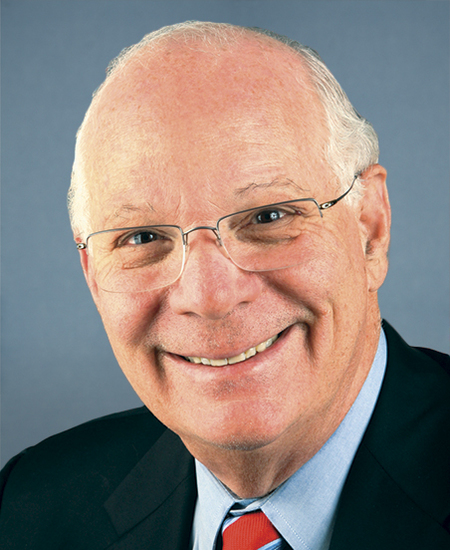
Sen. Benjamin L. Cardin
Sponsored bills
Brian Neuman Department of Veterans Affairs Clothing Allowance Improvement Act of 2021 This bill modifies the Department of Veterans Affairs (VA) clothing allowance policy for veterans who, due to a service-connected disability, wear a prosthetic, use an orthopedic appliance (e.g., a wheelchair), or use a prescription skin medication that the VA determines causes irreparable damage to clothing. The bill requires the VA to continue the clothing allowance for such a veteran on an annual basis until the veteran elects to no longer receive the allowance, or the VA determines the veteran is no longer eligible for the allowance, whichever occurs first. The bill sets forth a procedure by which the VA must conduct reviews of clothing allowance claims to determine the continued eligibility of veterans. Specifically, the VA must conduct a review (1) five years after the date on which a veteran initially receives a clothing allowance and periodically thereafter, and (2) whenever the VA receives notice that the veteran no longer meets eligibility requirements. If a veteran is eligible for a clothing allowance based on a circumstance that is not subject to change, the VA does not need to review whether the veteran has continued eligibility. If the VA determines, as the result of a review of a claim, that a veteran no longer meets the eligibility requirements for a clothing allowance, the VA must provide notice of the determination and discontinue the clothing allowance. The notice must include a description of applicable actions that may be taken following the determination (e.g., filing a notice of disagreement).
Reconnecting Communities Act This bill establishes a grant program to remove, retrofit, or otherwise address infrastructural barriers (e.g., highways, railways, or viaducts) that impede mobility and connectivity, with a particular focus on communities of color and low-income communities. Under this program, the Department of Transportation (DOT) must award three types of grants: community engagement, education, and capacity-building grants to educate and involve community members in transportation and economic development planning; planning and feasibility study grants to develop designs, conduct environmental reviews, and carry out other preliminary activities required to remove, retrofit, or mitigate an infrastructural barrier; and capital construction grants to remove, retrofit, or mitigate an infrastructure barrier. DOT must award the community engagement, education, and capacity-building grants and the planning and feasibility study grants to state, tribal, and local governments; metropolitan planning organizations; and nonprofits. An eligible entity may apply for and receive funding from more than one type of grant. DOT must award the capital construction grants to the owner of an infrastructure barrier. The owner may, if applicable, partner with other eligible entities.
United States Climate Leadership in International Mitigation, Adaptation, and Technology Enhancement Act of 2021 This bill sets out priorities for climate action, clean energy, energy diplomacy, reduced deforestation, and related U.S. foreign policy. The Department of State must incorporate climate action and climate diplomacy across all bureaus and U.S. missions abroad. In addition, the bill directs increased U.S. involvement in international climate change agreements and activities, including the Paris Agreement (a climate treaty adopted in 2015), the Kigali Amendment to the Montreal Protocol (amends a treaty on reducing ozone-depleting compounds to include hydrofluorocarbons) and efforts to reduce short-lived climate pollutants, the Carbon Offset and Reduction Scheme for International Aviation, and Mission Innovation and the Clean Energy Ministerial (global initiatives to advance clean energy technologies and policies). In addition, the bill directs (1) increased U.S. engagement in international economic forums (e.g., G-7 and the World Economic Forum) related to climate action, including with a specific focus on China; and (2) efforts by the U.S. International Finance Development Corporation and U.S. representatives at international financial institutions to prioritize renewable energy projects and advance other climate-related policy objectives. The bill also establishes foreign assistance, financing mechanisms, and other programs to support developing countries transition to renewable energy and reduce carbon emissions. Furthermore, the bill outlines climate-related foreign policy and programs for particular regions (the Arctic, sub-Saharan Africa, the Caribbean, Europe, and North America) and countries (China, India, Brazil, and Indonesia). The bill also addresses climate change and its effects on women and girls.
Combating International Islamophobia Act This bill establishes within the Department of State the Office to Monitor and Combat Islamophobia and addresses related issues. The office shall monitor and combat acts of Islamophobia and Islamophobic incitement in foreign countries. The bill establishes the position of Special Envoy for Monitoring and Combating Islamophobia, who shall head the office. The bill also requires certain existing annual reports to Congress about human rights and religious freedom in foreign countries to include information about Islamophobia, such as information about (1) acts of physical violence or harassment of Muslim people, (2) instances of propaganda in government and nongovernment media that attempt to justify or promote hatred or incite violence against Muslim people, and (3) actions taken by a country's government to respond to such acts. The office shall coordinate and assist in preparing these portions of the reports.
Correctly Recognizing Educational Achievements To Empower Graduates Act or the CREATE Graduates Act This bill directs the Department of Education (ED) to take specified actions to increase postsecondary degree attainment. Specifically, the bill requires ED to provide grants to states to support institutions of higher education in awarding associate degrees to students who have accumulated enough credits. Additionally, the bill allows the release of a transfer student's educational records from an institution of postsecondary education where a student earned credit for coursework to an institution of postsecondary education where the student was previously enrolled in order to apply the student's coursework and credits toward completion of a recognized postsecondary credential, such as an associate's degree. In particular, the bill allows ED to provide funding to an institution of postsecondary education that releases a student's records of postsecondary coursework and credits without the consent of the student or the student's parents if the student provides written consent prior to receiving the credential.
Protecting Community Television Act This bill revises the definition of a franchise fee that is paid by a cable operator or cable subscriber to encompass only a tax, fee, or other monetary assessment that is imposed by a franchising authority or other governmental entity.
Maddy summaryThis is a ceremonial Senate resolution (SRES 470) commemorating the death of former U.S. Senator Bob Dole of Kansas. It formally expresses the Senate's sorrow, requests the Secretary of the Senate transmit a copy to Dole's family, and directs the Senate to adjourn as a mark of respect. The resolution has no policy or legal effect - it solely serves as a symbolic tribute to Dole's public service career. It does not affect any individuals or enact new laws.
Masih Alinejad Harassment and Unlawful Targeting Act of 2021 or the Masih Alinejad HUNT Act of 2021 This bill imposes sanctions on foreign persons (i.e., individuals or entities) that are acting on behalf of Iran's government and involved in the harassment of certain individuals, such as human rights activists. The Department of State must periodically report to Congress the identities of foreign persons acting on behalf of Iran's government that are knowingly responsible for or complicit in the surveillance, harassment, imprisonment, or killing of citizens of Iran or the United States who seek to (1) expose corruption or illegal activity by Iranian government officials; (2) obtain, defend, or promote internationally recognized human rights; or (3) obtain, defend, or promote the rights and well-being of women, religious and ethnic minorities, and the LGBTQ community in Iran. The report must include foreign persons involved in such actions that occur inside or outside Iran. The President must impose property-blocking sanctions on persons identified in the report, as well as visa-blocking sanctions on the identified individuals. The Department of the Treasury must submit to Congress a report identifying any foreign financial institution that knowingly conducts a significant transaction with a person sanctioned under this bill. Treasury may prohibit the opening, or prohibit or impose strict conditions on the maintaining of a U.S. correspondent account or a payable-through account by such a financial institution.
PrEP Access and Coverage Act This bill requires private health insurance plans to cover prescription drugs that prevent HIV, including related screenings, diagnostic procedures, administrative fees, and clinical follow-ups, without any cost-sharing obligation for the plan holder. Further, insurance plans must not impose any preauthorization requirement for this coverage. These coverage requirements also apply to public health insurance programs, including Medicare, Medicaid, and the Children's Health Insurance Program. Additionally, the bill prohibits denying, limiting, or qualifying coverage or increasing premiums for disability insurance, long-term care insurance, or life insurance policies based on an individual taking medication for HIV prevention. The bill further requires the Department of Health and Human Services to award grants to states, or directly to eligible local organizations, to provide uninsured individuals and underinsured individuals access to prescription drugs and related services that prevent HIV. The Centers for Disease Control and Prevention also must develop a public awareness campaign that focuses efforts in communities with a high need for HIV prevention treatment.