

National Biodefense Analysis and Countermeasures Center Authorization Act of 2022 or the NBACC Authorization Act of 2022 This bill directs the Department of Homeland Security to designate a specified laboratory as the National Biodefense Analysis and Countermeasures Center (NBACC). It shall be the lead federal facility dedicated to defending the United States against biological threats. The NBACC may include the National Bioforensic Analysis Center and the National Biological Threat Characterization Center. The NBACC shall engage in specified activities, including conducting studies and experiments to better understand current and future biological threats and hazards and pandemics; providing the scientific data required to assess vulnerabilities, conduct risk assessments, and determine potential impacts to guide the development of countermeasures; conducting and facilitating the technical forensic analysis and interpretation of materials recovered following a biological attack, or in other law enforcement investigations requiring evaluation of biological materials, in support of the appropriate lead federal agency; and coordinating with other national laboratories to enhance research capabilities, share lessons learned, and provide training more efficiently. The NBACC must engage in a continuously operating Work for Others program to make the unique biocontainment and bioforensic capabilities of the NBACC available to other federal agencies; and perform regularly scheduled and required maintenance of laboratory infrastructure, and procure mission-critical equipment and capability upgrades. The Office of the Under Secretary for Science and Technology shall conduct a mission needs assessment of the NBACC.
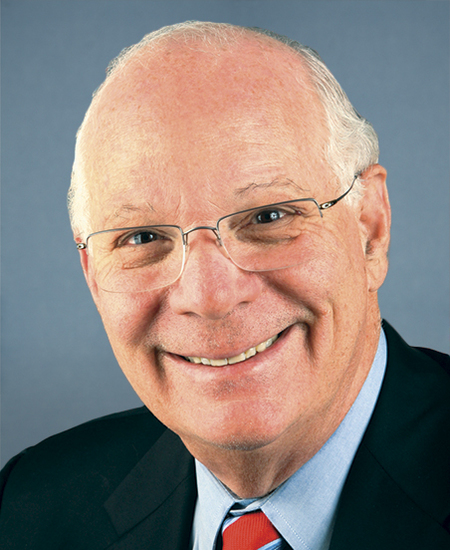
Sen. Benjamin L. Cardin
Sponsored bills
Small Business Development Centers Improvement Act of 2022 This bill reauthorizes the Small Business Development Center Program through FY2026 and otherwise revises the program. Specifically, the bill (1) generally prohibits entities other than institutions of higher education from receiving new grants under the program; (2) allows centers to collect fees related to private partnerships or cosponsorships; (3) authorizes centers to market their services directly to small businesses; and (4) modifies or establishes provisions related to program funding, operations, data collection, and reporting.
Holding Accountable Russian Mercenaries Act or the HARM Act This bill requires the Department of State to designate the PMC Wagner Group as a foreign terrorist organization. Such designation also applies to any affiliated and successor entities undertaking malign activities against the United States and its allies or partners. (Among other things, such a designation allows the Department of the Treasury to require financial institutions to block transactions involving the organization.) The President may waive the application of sanctions against these entities if the President determines it to be in the national interest.
Assessing Health Evaluations to Advance Decision-making Act of 2022 or the AHEAD Act of 2022 This bill requires the Department of Health and Human Services to enter into an agreement with the National Academies of Sciences, Engineering, and Medicine (National Academies) to study, and make certain recommendations concerning, the use of health impact assessments or other tools to evaluate the effect of proposed federal legislation on health and health disparities. When developing recommendations to incorporate these tools into the federal legislative process, the National Academies must consult with the Government Accountability Office, the Congressional Budget Office, and the Congressional Research Service.
International Trafficking Victims Protection Reauthorization Act of 2022 This bill reauthorizes certain initiatives to combat human trafficking (e.g., the Trafficking Victims Protection Act of 2000) and specifically incorporates anti-human trafficking initiatives into other federal programs and activities (e.g., the U.S. Agency for International Development).
This concurrent resolution commemorates the 50th anniversary of the enactment of the Federal Water Pollution Control Act Amendments of 1972, commonly known as the Clean Water Act.
Maddy summarySRES 839 is a symbolic Senate resolution expressing support for Stomach Cancer Awareness Month in November 2022. It highlights key facts about stomach cancer, including its high mortality rate (11,090 U.S. deaths estimated in 2022), low early-stage survival rates (6% when diagnosed late), and disparities affecting racial and ethnic minorities. The resolution encourages public awareness efforts, better education for patients and healthcare providers, and additional research into early detection and treatment. It does not create new laws or allocate funding but urges states, territories, and local communities to support the awareness month's goals.
Reinvesting In Shoreline Economies and Ecosystems Act of 2022 or the RISEE Act of 2022 This bill expands the amount of revenue generated from leases for energy development on federal land or submerged lands in the Outer Continental Shelf that is shared with certain states and coastal communities. For example, the bill dedicates a percentage of the revenue generated from offshore wind leases for coastal states. Currently, this revenue is deposited in the U.S. Treasury. In addition, the bill increases the amount of revenue generated from offshore oil and gas leases that is shared with states under the Gulf of Mexico Energy Security Act. States must use the funding from the revenue for specified purposes, such as coastal restoration, conservation, or infrastructure.
This resolution designates the week beginning on October 9, 2022, as National Wildlife Refuge Week. The resolution acknowledges the importance of national wildlife refuges for their recreational opportunities and contribution to local economies. Finally, the resolution reaffirms the support of the Senate for wildlife conservation and the National Wildlife Refuge System.
Senator Paul Simon Study Abroad Program Act of 2022 This bill expands access to study abroad for U.S. undergraduate students. It revises the Increase and Diversify Education Abroad for U.S. Students program (commonly known as the IDEAS program) and formally renames the program as the Senator Paul Simon Study Abroad Program.