

Transformational Reforms and Updates to Ensure Educational Quality and Urgent Investments in Today's Youth Act of 2021 or the TRUE EQUITY Act This bill establishes various grant programs to address educational inequities in elementary and secondary schools. Specifically, the bill creates grant programs related to (1) early childhood education, (2) high-quality and diverse teachers and leaders, (3) college and career readiness pathways, and (4) additional resources for at-risk students. For each grant program, the Department of Education (ED) must award a single grant to an eligible state. To be eligible for a grant, a state must establish an independent state oversight board. The oversight board must, among other duties (1) determine whether the state and its local educational agencies (LEAs) have met state educational equity goals, and (2) hold them accountable for failing to meet those goals. ED may renew a grant if the oversight board determines the state has met its goals. In addition, for each grant program, the bill outlines the activities authorized under the program, maintenance-of-effort requirements, and matching fund requirements. Finally, the bill permits ED to enter into a local flexibility demonstration agreement, through which a state educational agency may use funds to develop and implement a school funding system based on weighted per-pupil allocations for low-income and disadvantaged students. (Currently, ED may enter into these agreements with LEAs.)
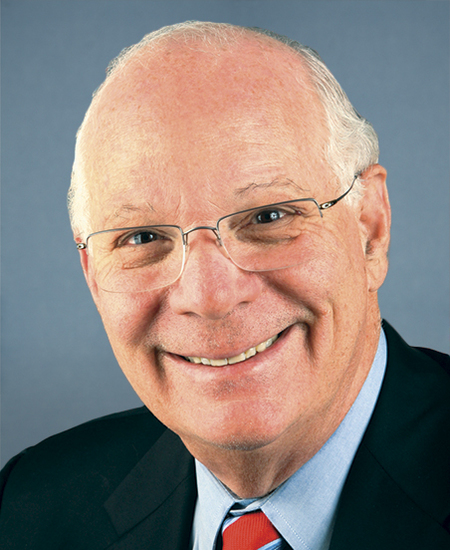
Sen. Benjamin L. Cardin
Sponsored bills
Access Technology Affordability Act of 2021 This bill allows a refundable tax credit equal to the amounts paid for qualified access technology for use by a blind individual who is the taxpayer, the taxpayer's spouse, or a dependent of the taxpayer. Qualified access technology is hardware, software, or other information technology with the primary function of converting or adapting information that is visually represented into forms or formats useable by blind individuals. The credit is limited to (1) costs that are not compensated by insurance or otherwise, and (2) an aggregate amount of $2,000 per blind individual in any period of three consecutive taxable years. The credit must be adjusted for inflation after 2022 and terminates after 2026.
Global Press Freedom Act This bill establishes the Office of Press Freedom to advance the protection and well-being of members of the press abroad and to engage with foreign governments and global press freedom organizations concerning freedom of the press and of expression. Led by the Ambassador-at-Large for Press Freedom, who shall be appointed by the President, the office must (1) coordinate efforts between relevant U.S. embassy personnel and press organizations or threatened individuals in situations in which press freedom is threatened abroad, (2) publicly and privately denounce oppression of the press abroad, and (3) recommend appropriate responses by the U.S. government when press freedoms are infringed upon. The office must also develop a press freedom curriculum for the National Foreign Affairs Training Center to help Foreign Service officers better understand issues of press freedom and tools that are available to help protect journalists and promote freedom of the press norms. The Government Accountability Office must assess and report on effects and changes resulting from certain requirements related to press freedom.
Holding Russia Accountable for Malign Activities Act of 2021 This bill directs the President to impose visa- and asset-blocking sanctions on any current or former official of Russia's government involved in the August 20, 2020, poisoning of Russian opposition leader Alexei Navalny or the subsequent cover-up of the poisoning. An individual or entity that violates, attempts to violate, conspires to violate, or causes a violation of such sanctions shall be subject to civil and criminal penalties. In addition, the President shall report to Congress on the personal wealth of Russian President Vladimir Putin and his family members. The Department of State shall report to Congress on the circumstances of the February 27, 2015, assassination of Russian opposition leader Boris Nemtsov.
This resolution reaffirms support for the people of Colombia in their pursuit of peace, lauds efforts to bring an end to Colombia's internal armed conflict, and reaffirms the partnership between the governments of the United States and Colombia on issues of mutual interest.
This resolution honors the life and legacy of Henry Louis Aaron for his accomplishments on and off the baseball field and for defying racism and breaking down racial barriers in the fight for equality.
Countering Russian and Other Overseas Kleptocracy Act or the CROOK Act This bill requires various actions designed to combat public corruption in foreign countries. The bill establishes within the Department of the Treasury the Anti-Corruption Action Fund to help foreign states fight public corruption and develop rule-of-law-based governance structures. For certain fines and penalties imposed under the Foreign Corrupt Practices Act, an additional fine shall be imposed and deposited into the fund. The Department of State must (1) manage U.S. government efforts to fight foreign public corruption, and (2) establish an interagency task force to assist in coordinating such efforts. Each U.S. embassy must have a point of contact responsible for coordinating the embassy's anti-corruption efforts. The State Department must report to Congress on its anti-corruption activities and make various reports publicly available online.
Temporary Reciprocity to Ensure Access to Treatment Act or the TREAT Act This bill temporarily authorizes the interstate provision of in-person and telehealth services. This authorization applies during, and for at least 180 days after, the COVID-19 (i.e., coronavirus disease 2019) emergency. Specifically, subject to scope of practice and other requirements, a health care professional may provide health services in any U.S. jurisdiction based on that individual's authorization to practice in any one state or territory. The bill also provides certain related powers to health care professional regulatory bodies, such as medical boards. Specifically, a regulatory body may investigate and take disciplinary actions against a professional who provides services pursuant to this bill to a patient in that body's jurisdiction.
USPS Fairness Act This bill repeals the requirement that the U.S. Postal Service annually prepay future retirement health benefits.
Securing Access to Lower Taxes by ensuring Deductibility Act or the SALT Deductibility Act This bill repeals the temporary restrictions in taxable years 2018 through 2025 on the deductibility of state and local taxes.