

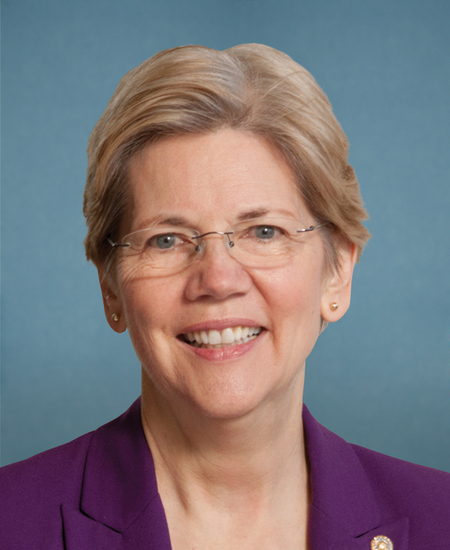
Maddy summaryThis proposed constitutional amendment would give Congress and states the authority to regulate campaign contributions and spending, including setting limits and prohibiting corporations from spending money to influence elections. It explicitly protects freedom of the press by stating the amendment cannot be used to abridge it. If ratified by three-fourths of state legislatures, it would establish a new constitutional standard for campaign finance regulation.
Sponsored bills
Maddy summaryThis bill amends the Packers and Stockyards Act to strengthen antitrust enforcement in the meatpacking industry. It adds specific criteria to define when an acquisition creates a monopoly: if it results in a Herfindahl-Hirschman Index (HHI) over 1,800 or increases the HHI by more than 100 in a relevant market. Meatpacking companies making such acquisitions would automatically violate the Clayton Act, triggering federal antitrust enforcement. The changes clarify and tighten existing rules for reviewing industry consolidation.
Maddy summaryS 2804, the Protection of Social Security Benefits Restoration Act, prohibits the government from withholding Social Security, Railroad Retirement, and Black Lung benefits to pay off unrelated debts like federal student loans or tax obligations. It amends the Social Security Act and related laws to nullify provisions allowing such administrative offsets, restoring protections that previously existed before a 2020 change. The bill ensures Railroad Retirement and Railroad Unemployment Insurance benefits receive identical protections to Social Security benefits. These changes apply to all offset collections occurring after the bill's enactment date.
Maddy summaryThe Veteran Families Health Services Act of 2023 provides fertility treatment and counseling services to active duty military members and veterans with infertility conditions, along with adoption assistance for veterans. It requires the Department of Defense to establish fertility preservation procedures before deployment or hazardous assignments, including cryopreservation and storage of reproductive genetic material at no cost to service members. The bill ensures these services are provided without regard to sex, gender identity, sexual orientation, or marital status, with specific limits on in vitro fertilization (three completed oocyte retrievals, unlimited embryo transfers per medical guidelines). It creates coordination between the Department of Defense and Department of Veterans Affairs to ensure seamless transitions of care and adds adoption assistance with a limit of three covered adoptions. The legislation specifically covers veterans with service-connected disabilities affecting reproductive health, such as spinal cord injuries, military sexual trauma, or certain mental health conditions.
Maddy summaryThis bill creates grants to fund partnerships between Hispanic-serving institutions (HSIs) and local schools with high Hispanic/Latino student enrollment. It directly affects Hispanic and Latino students in K-12 schools where 25%+ of students are Hispanic/Latino and 50%+ meet poverty measures, aiming to improve their college readiness and success. Key mechanisms include funding for activities like aligning high school courses with college requirements, providing college application support, addressing non-academic barriers (childcare, housing), and developing teacher pipeline programs. The bill authorizes $150 million for fiscal year 2024 and subsequent years to support these collaborations and track outcomes by student demographics.
Maddy summaryThe FABRIC Act (S 2817) would prohibit piece-rate pay in the garment industry, requiring employers to pay workers hourly wages at or above minimum wage. It would hold brand guarantors (companies contracting for garment manufacturing) jointly liable for wage violations with their contractors. The bill would require garment manufacturers and contractors to register with the Department of Labor, providing detailed information about ownership, employees, and compliance history. It would establish a new Office of the Garment Industry and create a grant program to support domestic garment manufacturing through workforce development and equipment investments.
Maddy summaryS 2776, the Disarm Hate Act, prohibits firearm sales, possession, shipment, or transport for individuals convicted of a misdemeanor hate crime or receiving an enhanced sentence for such a crime. It directly affects people convicted under state, federal, or tribal law of a misdemeanor involving bias motivation (based on race, religion, gender, sexual orientation, gender identity, or disability) and physical threat or force. The bill amends federal gun laws (18 U.S.C. §§922(d) and 922(g)) to add this restriction, while excluding cases where convictions were expunged, pardoned, or where legal rights were waived improperly. This is a concrete policy change affecting firearm access for a specific category of offenders, not a broader hate crime prevention measure.
Maddy summaryThis bill provides $16 billion in federal funding over five years (2024-2028) to stabilize the child care sector. It directly affects child care providers by offering grants to offset operating costs, support higher wages for early childhood educators without increasing fees for families, and expand access to high-quality care. Key provisions include funding for providers in underserved areas (like rural communities, infant/toddler care, and inclusive services for children with disabilities) and a requirement that 99% of funds go directly to providers. The funds are administered through the existing framework of the American Rescue Plan Act's child care program.
Maddy summarySRES 337 designates the week beginning September 10, 2023, as "National Direct Support Professionals Recognition Week" to honor workers who provide essential in-home and community-based support to people with disabilities. The resolution recognizes these professionals - including personal assistants and in-home support workers - who help individuals live independently, avoid institutional care, and access community activities, while also urging the Bureau of Labor Statistics to collect specific data about this workforce.
Maddy summaryThe Wage Theft Prevention and Wage Recovery Act requires employers to provide detailed paystubs showing wage calculations, timely final payments within 14 days of termination, and strengthens workers' ability to recover stolen wages. It increases civil penalties for wage theft violations from $10,000 to $22,030 per employee affected for initial violations, and extends the statute of limitations for wage theft claims from 2-3 years to 4-5 years. The bill creates a $50 million grant program to fund community partnerships that prevent wage theft and assist workers in recovering unpaid wages. These provisions target widespread wage theft that disproportionately affects low-wage workers, women, immigrants, and racial and ethnic minorities.