

Maddy summaryS 1915, the "Remove the Stain Act," rescinds 20 Medals of Honor awarded to U.S. Army soldiers for their role in the 1890 Wounded Knee Massacre, where unarmed Lakota men, women, and children were killed. The bill requires removing these soldiers' names from official military Medal of Honor rolls but does not require them to return their medals or deny them federal benefits. This action follows historical findings that the massacre involved the killing of hundreds of unarmed Native Americans, including women and children, and was described by military leaders as "brutal" and "cold-blooded." The bill directly affects the historical record of the Medal of Honor, aligning with requests from the Cheyenne River Sioux Tribe and the National Congress of American Indians.
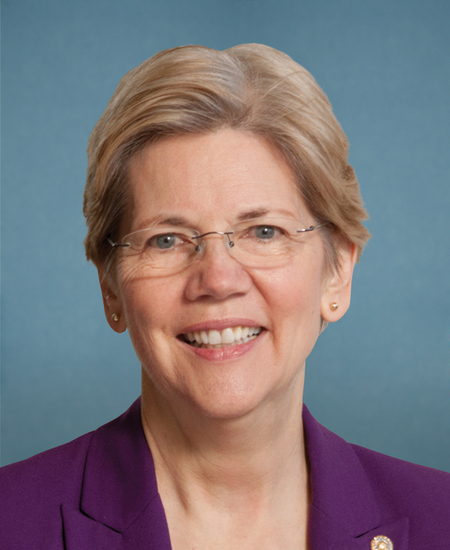
Sen. Elizabeth Warren
Sponsored bills
Maddy summaryThis bill requires federal law enforcement officers, Bureau of Prisons staff, and U.S. Marshals to immediately obtain or provide medical care when someone in federal custody shows medical distress (like breathing difficulties). It makes it a federal offense for covered officials to negligently fail to act, punishable by fines, up to one year in prison, or both. The bill mandates Inspector General investigations into such failures that cause harm and establishes confidential complaint processes. It also requires agencies to train covered officials on responding to medical distress in custody. The law directly affects individuals in federal custody and the specific federal officials responsible for their care.
Maddy summaryThe Vote at Home Act of 2025 would require all states to mail ballots to registered voters at least two weeks before federal elections, making voting by mail the default option for all eligible voters. It eliminates unnecessary barriers like notary requirements and excuse documentation for mail-in voting while ensuring ballots are accessible for people with disabilities. The bill also mandates free postage for election mail and expands automatic voter registration through motor vehicle departments. These changes would directly affect all voters participating in federal elections across the United States, aiming to increase accessibility and participation.
Maddy summaryThis resolution (SRES 240) affirms that diversity, equity, inclusion, and accessibility are core U.S. values and emphasizes the need to address ongoing discrimination across multiple sectors. It directly affects workplaces, K-12 and higher education systems, healthcare, housing, government programs, and the military by citing data on persistent inequities - such as racial disparities in housing discrimination, wage gaps, and underrepresentation in leadership. The resolution does not create new laws but encourages federal, state, and local entities to adopt inclusive policies and remove barriers to opportunity. It references evidence from agencies like the Department of Housing and Urban Development and the Equal Employment Opportunity Commission to support its focus on systemic discrimination. The Senate calls for promoting environments where all individuals can achieve their full potential.
Maddy summaryS 1848, the Opportunities for Fairness in Farming Act of 2025, regulates agricultural checkoff programs - mandatory fee systems funded by producers (like cotton, dairy, or beef farmers) to promote their commodities. It prohibits checkoff boards from using funds for lobbying or anticompetitive activities, bans conflicts of interest, and requires full public disclosure of all spending, including recipient names and purposes. Boards must publish quarterly spending records and submit to regular audits by the USDA Inspector General and the Comptroller General. These changes aim to prevent misuse of funds that could unfairly benefit certain producers or harm competition among agricultural commodities.
College for All Act of 2025 This bill establishes measures to expand access to higher education, including by eliminating tuition and required fees for eligible students, revising the Federal Pell Grant program, and reauthorizing certain programs to assist students from disadvantaged backgrounds. Specifically, the bill provides funding to enable states and tribal colleges and universities, through a federal-state partnership, to eliminate tuition and required fees for (1) all students at community colleges and two-year tribal colleges and universities, and (2) working- and middle-class students at four-year public institutions of higher education and tribal colleges and universities. The bill provides funding to enable private, nonprofit historically Black colleges and universities and minority-serving institutions to eliminate tuition and required fees for eligible students. The bill permanently reauthorizes and otherwise revises the Federal Pell Grant program by providing funding to increase the maximum award for each eligible student, increasing the duration limit for the use of Pell Grants, allowing students to use their awards to cover living and nontuition expenses, and expanding eligibility to Dreamer students (i.e., students who have been granted Deferred Action for Childhood Arrivals status and who entered the United States before the age of 16) and students with other immigration statuses. Further, the bill requires the Department of Education to award grants to eligible states and tribal colleges and universities for improving student outcomes. The bill reauthorizes through FY2035 the Federal TRIO Programs and reauthorizes through FY2029 the Gaining Early Awareness and Readiness for Undergraduate Programs.
Maddy summaryThe SMART Prices Act (S 1836) changes how Medicare negotiates drug prices. It increases the number of drugs eligible for negotiation from 15 to 50 per year starting in 2028, shortens the time drugs must be the sole source for eligibility from 7 to 3 years, and adjusts price ceiling percentages for negotiated drugs (e.g., raising the maximum fair price from 75% to 76% for some drugs). These changes directly affect Medicare Part D beneficiaries and pharmaceutical companies by altering the negotiation process and pricing caps. The bill modifies existing Medicare drug pricing rules without creating new programs, applying to initial price negotiations beginning in 2028.
Maddy summaryThis bill creates a process for the Secretary of Health and Human Services to determine if brand name drug prices exceed those in five reference countries (Canada, UK, Germany, France, and Japan). If a drug is deemed excessively priced, the government will terminate the manufacturer's exclusivity rights and allow any company to produce a generic version under an open, non-exclusive license with a reasonable royalty. Drug manufacturers must submit detailed annual reports on pricing, costs, and revenues, with penalties for noncompliance. The Secretary will maintain a public database of excessive price determinations and report annually to Congress. This directly impacts brand name drug manufacturers, generic producers, and patients who purchase prescription drugs.
Maddy summaryThis bill requires Medicare Advantage plans to implement electronic prior authorization systems by 2028 and report detailed transparency data starting in 2027. Plans must publicly disclose approval/denial rates, average processing times (including for appeals), technology use, and other metrics for covered medical services. It mandates 24-hour response standards for expedited requests and routinely approved services, with data collection to analyze access patterns and potential disparities in rural/low-income communities. These changes directly affect Medicare Advantage plans, providers, and seniors enrolled in these plans by standardizing and increasing visibility into prior authorization processes.
Maddy summaryThis bill expands benefits for public safety officers (like police and firefighters) who develop certain cancers linked to their work. It creates a presumption that specific cancers - such as lung, bladder, or mesothelioma - were caused by job-related exposure to carcinogens, if the officer served at least 5 years, was diagnosed within 15 years of leaving active duty, and the cancer caused death or permanent disability. The list of covered cancers will be updated every 3 years based on medical evidence from agencies like the National Institute for Occupational Safety and Health. Claims must be filed within 3 years of the bill’s enactment, applying to cases involving deaths or disabilities occurring after January 1, 2020.