

Humane Cosmetics Act of 2021 This bill generally prohibits animal testing in the evaluation of cosmetic products, and it prohibits the sale or transport of cosmetics developed using animal testing, subject to civil penalties. These prohibitions begin one year after enactment. The bill specifies exceptions to these prohibitions, including if such animal testing (1) is conducted outside the United States to comply with a foreign regulatory authority; (2) is pursuant to a specified finding that there are no nonanimal alternatives to test the safety of a potentially dangerous cosmetic product or ingredient; (3) is of a product or ingredient for a drug or device subject to regulation by the Food and Drug Administration (FDA); or (4) is required for a noncosmetic purpose pursuant to a state, federal, or foreign regulatory authority. Further, no animal-testing evidence may be used to establish the safety of a cosmetic product or ingredient that is regulated by the FDA after the effective date of this bill, subject to limited exceptions.
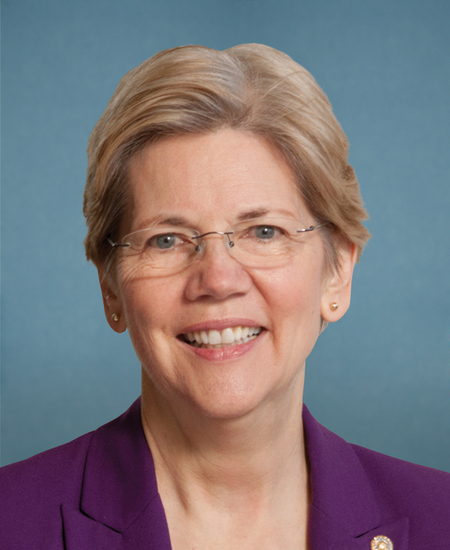
Sen. Elizabeth Warren
Sponsored bills
Protecting Community Television Act This bill revises the definition of a franchise fee that is paid by a cable operator or cable subscriber to encompass only a tax, fee, or other monetary assessment that is imposed by a franchising authority or other governmental entity.
Maddy summaryThis is a ceremonial Senate resolution (SRES 470) commemorating the death of former U.S. Senator Bob Dole of Kansas. It formally expresses the Senate's sorrow, requests the Secretary of the Senate transmit a copy to Dole's family, and directs the Senate to adjourn as a mark of respect. The resolution has no policy or legal effect - it solely serves as a symbolic tribute to Dole's public service career. It does not affect any individuals or enact new laws.
Freedom's Way National Heritage Area Act of 2021 This bill extends through FY2036 the authority of the Department of the Interior to provide financial assistance for the Freedom's Way National Heritage Area in Massachusetts and New Hampshire. The bill removes the limit on the total amount that may be appropriated for the heritage area.
Maddy summarySJRES 31 is a joint resolution that would block a specific foreign military sale to Saudi Arabia. The sale, submitted to Congress under the Arms Export Control Act, includes 280 advanced air-to-air missiles, 596 missile launchers, and related support equipment. If enacted, the resolution would prohibit the U.S. government from proceeding with this transaction. This directly affects the U.S. government's ability to transfer these defense articles to Saudi Arabia.
This resolution designates December 3, 2021, as National Phenylketonuria Awareness Day. (Phenylketonuria or PKU is a rare, inherited metabolic disorder that can cause intellectual disability and other neurological problems.)
Outdoors for All Act This bill directs the Department of the Interior to establish an outdoor recreation legacy partnership grant program under which Interior may award grants to states, certain political subdivisions of a state, special purpose districts, Indian tribes, or Alaska Native or Native Hawaiian communities or organizations. Funds must be used for projects to (1) acquire land and water for parks and other outdoor recreation purposes in qualifying areas, and (2) develop new or renovate existing outdoor recreation facilities that provide outdoor recreation opportunities to the public in qualifying areas. A qualifying area is an area that has a population of 30,000 or more in the most recent census, or that is administered by an Indian tribe or an Alaska Native or Native Hawaiian community organization. Interior shall give priority to projects that create or significantly enhance access to park and recreational opportunities in an urban neighborhood or community, engage and empower underserved communities and youth, provide opportunities for employment or job training for youth or underserved communities, establish or expand public-private partnerships, and take advantage of coordination among various levels of government.
PrEP Access and Coverage Act This bill requires private health insurance plans to cover prescription drugs that prevent HIV, including related screenings, diagnostic procedures, administrative fees, and clinical follow-ups, without any cost-sharing obligation for the plan holder. Further, insurance plans must not impose any preauthorization requirement for this coverage. These coverage requirements also apply to public health insurance programs, including Medicare, Medicaid, and the Children's Health Insurance Program. Additionally, the bill prohibits denying, limiting, or qualifying coverage or increasing premiums for disability insurance, long-term care insurance, or life insurance policies based on an individual taking medication for HIV prevention. The bill further requires the Department of Health and Human Services to award grants to states, or directly to eligible local organizations, to provide uninsured individuals and underinsured individuals access to prescription drugs and related services that prevent HIV. The Centers for Disease Control and Prevention also must develop a public awareness campaign that focuses efforts in communities with a high need for HIV prevention treatment.
Maddy summaryThis Senate resolution (SRES 464) expresses symbolic support for National Adoption Month (November) and National Adoption Day (November 20), encouraging public awareness of children awaiting adoption. It does not create new laws or allocate funding but urges U.S. citizens to consider adoption and support efforts to provide safety and permanency for children in foster care. The resolution highlights challenges like the pandemic's impact on foster care systems while affirming that every child deserves a permanent family. It directly affects no specific group through policy changes - it is a non-binding statement of support endorsed by 30+ senators.
Protecting America's Meatpacking Workers Act of 2021 This bill addresses workplace conditions and safety with a particular focus on meat and poultry processing establishments and makes other changes to agricultural programs and activities. Generally, the bill provides funding through FY2027 for hiring additional Occupational Safety and Health Administration (OSHA) inspectors and related activities. It also restricts an employer's use of certain attendance policies under which a worker is assessed points for absences with progressive discipline imposed as points accumulate. Additionally, the bill expands protections for workers who exercise their rights under occupational safety and health laws and regulations. This includes specific protections and procedures for workers of meat and poultry processing establishments. The bill expands workplace safety and health requirements that apply to meat and poultry processing establishments, including by prohibiting waivers (subject to limited exceptions) related to line speeds and inspections. Additionally, OSHA must issue standards for these establishments that address, for example, ergonomic program management and preventing occupational exposure to COVID-19. OSHA must also (1) establish, within seven days, a process for establishments to report COVID-19 information; and (2) publish certain regulations regarding a workers' representative accompanying an OSHA inspector during inspections of an establishment. The bill provides funding through FY2031 for, and imposes additional conditions on recipients of, grants to improve meat and poultry processing facilities. Further, the bill increases funding for a program that supports regional and local food systems. It also requires country-of-origin labeling of beef, pork, and dairy products.