

Maddy summarySRES 509 is a non-binding Senate resolution honoring NFL quarterback Tom Brady for his 22-season professional career, primarily with the New England Patriots (20 seasons) and briefly with the Tampa Bay Buccaneers (2 seasons). The resolution recognizes his seven Super Bowl championships, NFL records (including most career passing yards and touchdowns), and iconic moments like the 2007 perfect regular season and Super Bowl LI comeback. It does not create new laws or affect any policies - it is a ceremonial tribute to Brady’s athletic achievements and legacy. The resolution was introduced by Senators Hassan, Collins, Whitehouse, and others in February 2022.
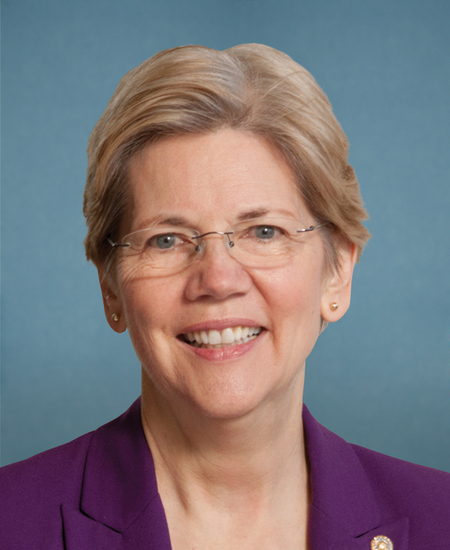
Sen. Elizabeth Warren
Sponsored bills
First Rhode Island Regiment Congressional Gold Medal Act This bill provides for the award of a single Congressional Gold Medal to the First Rhode Island Regiment, collectively, in recognition of their dedicated service during the Revolutionary War.
Climate Adaptation Science Centers Act or the CASC Act This bill provides statutory authority for the National and Regional Climate Adaptation Science Centers of the U.S. Geological Survey (USGS). The centers must provide scientific expertise to managers of natural resources, cultural resources, and ecosystem services to inform decisions that aid adaptation to a changing climate and extreme weather events. The program shall include a National Climate Adaptation Science Center and Regional Climate Adaptation Science Centers. Among its activities, the National Center shall serve as the national office for the regional centers, develop and facilitate coordination among the regional centers, and conduct research on cross-regional and national science priorities. Regional centers shall develop research, education, training, and advisory service priorities regarding the impacts of climate trends and variability on natural and cultural resource management. The USGS shall establish an Advisory Committee on Climate and Natural Resource Sciences to identify and recommend priorities for ongoing research needs on such impacts in informing the research priorities of the National Center.
American Housing and Economic Mobility Act of 2021 This bill addresses housing affordability and availability, makes certain changes to the estate and gift taxes, and contains other related provisions. The Department of Housing and Urban Development shall provide grants to (1) state and local governments that remove unnecessary barriers to building affordable units, (2) states to assist borrowers who have negative equity in their homes, (3) state housing finance agencies to construct or acquire affordable rental housing and prevent tenant displacement and harassment, and (4) eligible individuals (generally, lower income individuals who resided in low-income or historically racially segregated areas) to help them purchase their first homes. The bill provides funding through FY2031 for the first-time homeowner grant program established by the bill, through FY2022 for the affordable rental housing construction program established by the bill, and through FY2022 for specified existing rural housing programs. The bill also expands fair housing protections to prohibit discrimination based on sexual orientation, gender identity, marital status, source of income, veteran status, or an individual's perceived membership in a protected class (e.g., an individual's perceived race or sex). Additionally, the bill modifies the estate tax in various ways, including by reducing the number of brackets to three, increasing the tax rates, and reducing the basic exemption amount. The bill also modifies provisions related to gift taxes and transfer taxes.
Algorithmic Accountability Act of 2022 This bill requires certain businesses that use automated decision systems to make critical decisions to study and report about the impact of those systems on consumers. Critical decisions include those that have a significant effect on a consumer's life such as the cost or availability of health care, housing, educational opportunities, or financial services. The Federal Trade Commission (FTC), in consultation with relevant stakeholders, must issue regulations to implement the bill. The bill provides for enforcement by the FTC and specified state officials. Further, the bill establishes a Bureau of Technology to advise the FTC about the technological aspects of its functions.
Stop the Wait Act of 2022 This bill allows individuals with disabilities to begin receiving Social Security Disability Insurance (SSDI) benefits in the month they become eligible for the benefits. It also allows these individuals to immediately enroll in Medicare if they cannot afford minimum essential coverage. (Under current law, an individual must generally wait 5 months after the onset of disability to begin receiving SSDI benefits and an additional 24 months to become eligible for Medicare.)
Political Corruption Review of Infractions for Misconduct by Executive Servants Act or the Political CRIMES Act This bill addresses unlawful political activity by specified federal officials and revises the penalties for unlawful political activity by executive branch employees. Specifically, the bill directs the Department of Justice (DOJ) to conduct a preliminary investigation when it receives information sufficient to constitute grounds to investigate whether the President, Vice President, or other senior officials violated laws regarding political activities between January 20, 2009, and January 21, 2021. If further investigation is warranted, DOJ must apply for the appointment of an independent counsel. The bill limits the political activity of the President and Vice President while on federal property. Additionally, the bill increases criminal penalties for Hatch Act violations. The Hatch Act prohibits civil service employees in the executive branch of the federal government from engaging in some forms of political activity (e.g., advocating for or against a partisan political party while on duty). The purpose of the act is to maintain a federal workforce free from partisan political influence or coercion. The bill establishes an Inspector General for the Office of Special Counsel. The Government Accountability Office must report to Congress on certain reimbursable political events held at the White House or on the White House grounds.
This resolution honors and commends the women who served in the Navy Women Accepted for Voluntary Emergency Service (WAVES) during World War II. Additionally, the resolution recognizes that the WAVES opened opportunities for women and contributed vitally to the victory of the United States and Allies in World War II.
Ghost Army Congressional Gold Medal Act This bill provides for the award of a Congressional Gold Medal to the 23rd Headquarters Special Troops and the 3133rd Signal Services Company, known collectively as the Ghost Army , in recognition of unique and highly distinguished service during World War II.
Heating and Cooling Relief Act This bill provides additional energy assistance to households, including heating and cooling assistance. Specifically, the bill reauthorizes through FY2031 and revises the Low Income Home Energy Assistance Program. Under the existing program, the Department of Health and Human Services (HHS) may award grants to states for assisting low-income households that pay a high proportion of their income for home energy. To be eligible under the existing program, households must have incomes which do not exceed the greater of an amount equal to 150% of the poverty level for their state or an amount equal to 60% of the state median income. The bill expands eligibility to households with incomes which do not exceed the greater of an amount equal to 250% of the poverty line as defined in the Community Services Block Grant Act or an amount equal to 80% of the state median income. In addition, the bill expands eligibility to households with a monthly energy burden of 3% or more per year. It also requires states to establish procedures to protect households receiving assistance under the program from energy shutoffs and certain late fees. In addition, the bill requires HHS and the Department of Energy to jointly carry out a program that awards grants to states and local governments for developing and implementing interagency plans to reduce energy burdens for eligible households with high home energy use. The plans must promote the reduction of energy from fossil fuels.