

CDC Tribal Public Health Security and Preparedness Act This bill allows tribes and tribal organizations to apply directly to the Centers for Disease Control and Prevention (CDC) for Public Health Emergency Preparedness (PHEP) program funds. Currently, only states and certain local entities may apply for PHEP funds to respond to public health emergencies, such as COVID-19. The CDC must award at least 10 cooperative agreements to tribal applicants. Additionally, the CDC must consult with tribes and tribal organizations to ensure the PHEP program enables these entities to respond to public health emergencies. The CDC may make certain modifications to the program after the consultation.
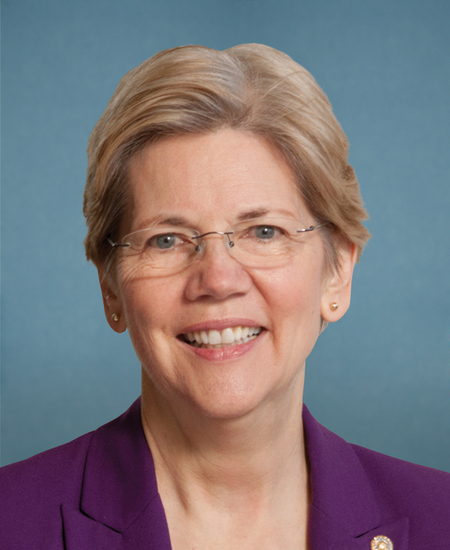
Sen. Elizabeth Warren
Sponsored bills
This resolution designates March 24, 2022, as National Women in Agriculture Day. It also recognizes the important role of women in agriculture as producers, educators, leaders, mentors, and more
Disabled Jurors Nondiscrimination Act This bill prohibits the exclusion of individuals from jury service on the basis of their disability. Further, the bill prohibits the disqualification of individuals from jury service who fail to meet certain qualifications (e.g., adequate proficiency in English) on the basis of their disability.
Military Spouse Hiring Act This bill expands the Work Opportunity Tax Credit (WOTC) to include the hiring of a qualified military spouse. (The WOTC permits employers who hire individuals who are members of a targeted group such as qualified veterans, ex-felons, or long-term unemployment recipients to claim a tax credit equal to a portion of the wages paid to those individuals.) A qualified military spouse is any individual who is certified by the designated local agency as being (as of the hiring date) a spouse of a member of the Armed Forces.
Tribal Health Data Improvement Act of 2021 This bill expands tribal access to public health care data and public health surveillance programs. It also reauthorizes through FY2025 the National Center for Health Statistics, which is part of the Centers for Disease Control and Prevention (CDC), and requires the CDC to take certain actions to address the collection and availability of health data for American Indians and Alaska Natives. Specifically, the Department of Health and Human Services must (1) establish a strategy for providing data access to Indian tribes and tribal epidemiology centers; and (2) make available all requested data related to health care and public health surveillance programs and activities to the Indian Health Service, tribes, tribal organizations, and tribal epidemiology centers. Next, the CDC must make grants to and enter into contracts with tribes, tribal organizations, and tribal epidemiology centers for data collection and related activities. Among other activities, the CDC must (1) develop guidance for state and local health agencies to improve birth and death record data for American Indians and Alaska Natives; (2) enter into cooperative agreements with tribes, tribal organizations, urban Indian organizations, and tribal epidemiology centers to analyze and address certain inaccuracies related to records for American Indians and Alaska Natives; (3) adopt uniform standards for the collection of health data on race and ethnicity; and (4) encourage states to enter into data sharing agreements with tribes and tribal epidemiology centers to improve the quality and accuracy of health data.
This resolution celebrates the successes of American Indian, Alaska Native, and Native Hawaiian women and the contributions they have made in the United States. The resolution also recognizes the importance of supporting equity, providing safety, and upholding the interests of these women.
Future of Water Act of 2022 This bill prohibits the trading of futures contracts in water or water rights. A futures contract is an agreement to buy or sell a commodity or financial instrument at a set price at a specific time.
Connecting Hard-to-reach Areas with Renewably Generated Energy Act of 2022 or the CHARGE Act of 2022 This bill modifies planning, transparency, cost allocation and pricing, interconnections, and other aspects of the regulation and operation of transmission networks with a particular focus on improving the resiliency of the electric grid and integrating renewable energy sources into the grid. It also provides funding for the Federal Energy Regulatory Commission to implement specified provisions of the bill.
Prohibiting Anticompetitive Mergers Act of 2022 This bill prohibits certain business mergers, modifies the procedures for reviewing mergers, and establishes procedures for reversing certain mergers. Specifically, the bill prohibits mergers that (1) are valued at more than $5 billion in total assets, (2) result in the acquiring entity having a market share of greater than 33% (or a share of a labor market as an employer of greater than 25%), or (3) result in market concentration levels that exceed specified thresholds. The bill also expands the authority of the Federal Trade Commission (FTC) and the Antitrust Division of the Department of Justice (DOJ) to review pending mergers, including whether a merger is likely to harm the competitive process and the effect of a merger on relevant labor markets. Finally, the bill authorizes the FTC and the Antitrust Division of the DOJ to retroactively unwind mergers that are prohibited under the bill or that meet certain other anticompetitive criteria such as a merger that results in a greater than 50% share of a relevant market.
SBA Franchise Loan Default Disclosure Act This bill requires the Small Business Administration to publish on its website and to regularly update the loan default rates by franchise brands during the preceding 10-year period.