

Workplace Violence Prevention for Health Care and Social Service Workers Act This bill requires the Department of Labor to address workplace violence in health care, social service, and other sectors. Specifically, Labor must issue an interim occupational safety and health standard that requires certain employers to take actions to protect workers and other personnel from workplace violence. The standard applies to employers in the health care sector, in the social service sector, and in sectors that conduct activities similar to those in the health care and social service sectors. In addition, Labor must promulgate a final standard within a specified time line.
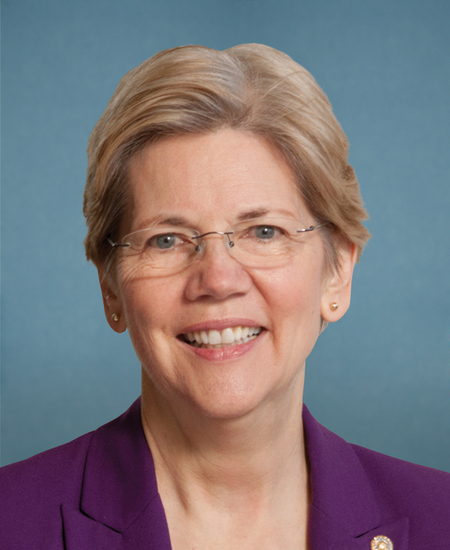
Sen. Elizabeth Warren
Sponsored bills
National Scenic Trails Parity Act This bill requires the North Country, Ice Age, and New England national scenic trails to be administered as units of the National Park System.
Maddy summaryThis is a symbolic Senate resolution (SRES 626), not a policy bill. It supports observing National Nurses Week from May 6-12, 2022, to honor nurses' contributions to healthcare. The resolution recognizes nurses as the largest healthcare profession (over 4 million registered nurses), highlights their roles during crises like the COVID-19 pandemic, and encourages public recognition of their work in patient care, research, and health equity. It does not create new laws, allocate funds, or directly affect policies or individuals.
Wage Theft Prevention and Wage Recovery Act This bill requires employers to make initial and modified disclosures to employees of the terms of their employment, provide such employees with regular paystubs, and make a final payment to an employee for uncompensated work hours within 14 days of the employee's termination. Employers must also allow employees access to wage records. An employer must compensate an employee at the rate specified in an employment contract, including a collective bargaining agreement, that specifies a rate of pay higher than the minimum wage rate. The bill makes all of such unpaid wages recoverable through civil enforcement. The bill establishes new and increased civil and criminal penalties for violations of overtime or minimum wage requirements, including referral to the Department of Justice for criminal prosecution of employers who engage in wage theft, falsification of wage records, or retaliation against employees. The Wage and Hour Division of the Department of Labor must provide grants to specified organizations, including nonprofits and educational institutions, to enhance the enforcement of wage and hour laws. The Government Accountability Office must study and report on successful grant programs.
Judicial Ethics and Anti-Corruption Act of 2022 This bill makes various changes to the federal framework governing judicial ethics. Among the changes, the bill prohibits federal judges and Supreme Court Justices from owning individual stocks and securities; requires the Judicial Conference of the United States to issue regulations restricting the solicitation or acceptance of gifts in connection with a private judicial seminar; expresses the sense of Congress that the Code of Conduct for U.S. Judges shall apply to Supreme Court Justices; requires federal judges and Supreme Court Justices to report on each association or interest that would require recusal, including any financial interest of a spouse or minor child who resides in the household; and establishes a committee to review complaints against the Supreme Court.
This resolution expresses that the Senate has heard of the death of the Honorable Orrin G. Hatch, former U.S. Senator for the state of Utah. The resolution also expresses that the Senate honors the life and legacy of the late Senator Hatch for his unwavering dedication to Utah as a Senator and a public servant and accomplishments in legislating with principle and dedication for the good of the people of the United States. The resolution states when the Senate adjourns today, it stands adjourned as a further mark of respect to the memory of Senator Hatch.
CDFI Crisis Fund Act This bill establishes the CDFI National Crisis Fund. The fund is authorized to make grants to community development financial institutions (CDFIs) providing financial products as emergency assistance to small businesses and low-income populations in certain circumstances. Furthermore, the fund is triggered by certain emergency declarations, including the COVID-19 emergency period; certain disaster declarations; a specified increase in a statewide unemployment rate; or a specified increase in the nationwide unemployment rate. Specified amounts in the fund are set aside for grants to Native and minority CDFIs. The Government Accountability Office must report on the impact of the fund and provide recommendations.
Federal Emergency Management Advancement of Equity Act or the FEMA Equity Act This bill addresses equity in federal disaster assistance policies and programs. It allows, in some instances, counties to request disaster declarations. The Federal Emergency Management Agency (FEMA) must develop and implement a process to ensure equity in the provision of federal assistance and throughout all FEMA programs and policies. Additionally, FEMA must establish metrics to measure the efficacy of the process and seek input from relevant representatives of state, regional, local, and tribal governments; community-based organizations; subject matter experts; and individuals from underserved communities impacted by disasters. FEMA must designate a senior official as an equity advisor. The bill establishes in FEMA an Equity Enterprise Steering Group. The chief executive officer of an affected county may submit a request for a presidential declaration that a major disaster exists if (1) the governor of the state or territory in which the county is located does not request such a declaration, (2) the affected county is not included in a request for assistance made by such governor, or (3) the affected county communicates with that governor about the disaster or potential request for a major disaster declaration before the relevant period has lapsed. The Government Accountability Office shall issue a report describing the factors that FEMA considers when evaluating a request from a governor to declare that a major disaster or emergency exists and to authorize specified assistance.
Installing Clean Efficient Energy Hastens Our Transition Act of 2022 or the ICEE HOT Act of 2022 This bill revises the State Energy Efficient Appliance Rebate Program by allowing states to provide rebates to distributors and original equipment manufacturers of certain electrical heating appliances (e.g., heat pumps, heat pump water heaters, and heat pump clothes dryers) that are made in the United States.
Stop Overdraft Profiteering Act of 2021 This bill prohibits a depository institution from engaging in certain acts in connection with overdraft coverage. Each depository institution that offers overdraft coverage for accounts must disclose overdraft coverage fees and certain related information. A depository institution must provide certain other disclosures regarding its overdraft protection program, including prompt notification of the account's overdraft status. Regarding overdraft fees, the bill limits the number of overdraft fees a consumer may be charged each month and year, provides that such fees must be reasonable, and prohibits an overdraft coverage fee if the overdraft results solely from a debit hold amount that exceeds the actual dollar amount of the transaction. The bill also prohibits a depository institution from charging a non-sufficient fund fee for any debit card transaction, or reporting negative information regarding consumer use of overdraft coverage to any consumer reporting agency when the overdraft amounts and coverage fees are paid under the terms of an overdraft coverage program.