

Maddy summarySenate Bill 1466, the Resources for Victims of Gun Violence Act of 2025, establishes an Advisory Council to help victims of gun violence access available resources. The Council, composed of federal agency heads and appointed victims/victim professionals, will identify best practices and create a public resource guide covering medical, financial, mental health, legal, and housing needs. It must produce an initial report within 180 days of enactment (and a follow-up report after two years), sharing this information with Congress, state agencies, and the public through online and print materials. The bill does not authorize new funding and expires after five years.
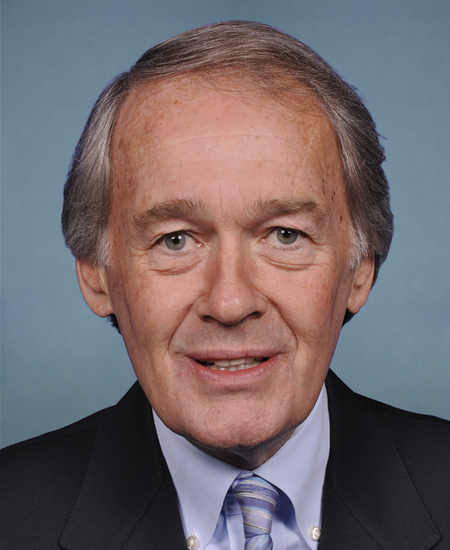
Sen. Edward J. Markey
Sponsored bills
Maddy summaryThe New England Coastal Protection Act prohibits the federal government from issuing new leases for oil and gas exploration, development, or production in the Outer Continental Shelf off the coasts of Maine, New Hampshire, Massachusetts, Rhode Island, and Connecticut. This bill directly affects energy companies seeking offshore drilling permits and the federal government, which would no longer be allowed to grant such leases. The key mechanism amends the Outer Continental Shelf Lands Act to add a specific prohibition banning all new oil and gas leasing in the designated coastal states. The bill would prevent future oil and gas development in these waters but does not impact existing leases or operations.
Maddy summaryThe Housing for All Act of 2025 is a comprehensive federal housing bill that allocates significant funding to address housing shortages and homelessness. It provides $45 billion for the Housing Trust Fund, $40 billion for the HOME Investment Partnerships Program, and expands housing choice vouchers by 500,000 in 2025 with annual increases to 1 million by 2028, prioritizing individuals at risk of homelessness. The bill establishes a Racial Equity Commission to examine structural racism in housing and creates new programs including safe parking initiatives, eviction protection grants, and mobile crisis intervention teams. It directly affects vulnerable populations including people with disabilities, racial minorities, elderly individuals, veterans, and those experiencing homelessness or housing instability. The legislation also requires a GAO report on eviction data and promotes inclusive transit-oriented development to enhance climate resilience.
Maddy summaryThe FORECAST Act of 2025 requires the National Oceanic and Atmospheric Administration (NOAA) to improve subseasonal-to-seasonal weather and climate forecasting by developing new multi-model forecast systems, enhancing data collection across Earth systems (atmosphere, ocean, land, ice), and creating an online clearinghouse for forecast data. It establishes a workforce program to train and recruit professionals in weather modeling, data assimilation, and emerging technologies like AI, including scholarships and annual workforce planning. The bill authorizes $28.5 million annually for NOAA to implement these changes and fund partnerships with universities and research institutions. These provisions directly affect NOAA, climate researchers, and the broader weather forecasting community, aiming to strengthen forecast accuracy for extreme weather events and climate impacts.
Maddy summaryThe COAST Anti-Drilling Act of 2025 prohibits new oil and gas leasing in four specific coastal planning areas of the outer Continental Shelf: the North Atlantic, Mid-Atlantic, South Atlantic, and Straits of Florida. It amends the Outer Continental Shelf Lands Act to require the Secretary not to issue any leases or authorizations for exploration or production in these areas. The bill directly affects oil and gas companies seeking to develop resources in these coastal regions by blocking new federal leasing activities. This policy change prevents future drilling permits in these designated zones, as defined in the 2023 Bureau of Ocean Energy Management leasing program.
Maddy summaryThis resolution (SRES 168) expresses the U.S. Senate's support for the "Rise Up for LGBTQI+ Youth in Schools Initiative," which calls on communities to demand equal educational opportunities, civil rights protections, and inclusion for LGBTQI+ students in K-12 schools. It specifically highlights the need to address anti-LGBTQI+ policies in states - including restrictions on sports participation, bathroom access, and classroom curricula - and cites research showing these policies harm students' mental health, academic performance, and sense of safety. The resolution urges states and localities to adopt inclusive policies like anti-bullying protections and gender-neutral dress codes to create affirming school environments. It does not create new laws but serves as a symbolic endorsement of efforts to combat discrimination against LGBTQI+ youth, particularly transgender, nonbinary, and students of color.
Maddy summaryThe GOSAFE Act prohibits the import, sale, manufacture, transfer, or possession of gas-operated semi-automatic firearms and large capacity ammunition feeding devices (those holding more than 10 rounds). It defines gas-operated firearms as those using gas pressure to cycle the action and requires the Attorney General to publish a list of prohibited firearms within 180 days. The bill includes exemptions for single-shot weapons, muzzle-loaders, firearms with permanently fixed magazines under 10 rounds, and certain other specific types. Manufacturers must now seek approval for new semi-automatic firearms through a process requiring detailed documentation, and the bill establishes a Firearm Safety Trust Fund to cover administrative costs. Violations of these provisions can result in fines up to $5,000 or up to 12 months in prison.
Maddy summaryThe BUMP Act (S 1374) bans devices that increase the firing rate of semiautomatic firearms to mimic machineguns, directly affecting owners of modified firearms. It prohibits importing, selling, or possessing devices (like "bump stocks") that speed up firing or eliminate the need for separate trigger pulls, and requires registration of existing modified semiautomatics within 120 days. The law exempts government agencies and pre-enactment modifications that are registered. This targets specific firearm modifications, not all semiautomatic weapons.
Maddy summaryThis bill, the Tax Cut for Workers Act of 2025, expands the Earned Income Credit (EIC) to make it more accessible and generous for low-income workers without children. It lowers the minimum age for the credit from 25 to 19 (with exceptions for students, former foster youth, and homeless youth), removes the maximum age limit, and increases the credit amount and income thresholds. The bill also adjusts these amounts for inflation and allows taxpayers to use their prior year’s earned income if it was higher, applying to taxable years starting after 2025. These changes extend the credit to U.S. territories like Puerto Rico and American Samoa without prior time limits.
Maddy summaryThe American Family Act creates a new monthly child tax credit that would provide $300 per month for each child under age 6 and $300 per month for each child age 6 and older, with income-based eligibility limits. The credit would be refundable, meaning it could be paid even if a family owes no income tax, and would replace the current annual child tax credit. The bill establishes income thresholds ($150,000 for joint filers) above which the credit begins to phase out, with full phase-out at $400,000 for joint filers. It also includes provisions for "presumptive eligibility" to allow for advance payments based on previous tax returns or government program data. The bill would terminate the existing annual child tax credit after 2024, replacing it with this monthly payment system.