

Maddy summaryThe Family Vaccine Protection Act establishes formal procedures for the Advisory Committee on Immunization Practices (ACIP) within the Public Health Service Act. It requires the CDC Director to adopt ACIP vaccine recommendations unless they lack scientific support, in which case the Director must publish the rationale and notify Congress within 48 hours. The bill specifies the committee's composition, including required expertise for members and ex-officio members from key health agencies like the FDA and CMS. These provisions affect vaccine recommendations that determine coverage for health insurance plans and the Vaccines for Children Program, ensuring all recommendations are based on peer-reviewed scientific evidence.
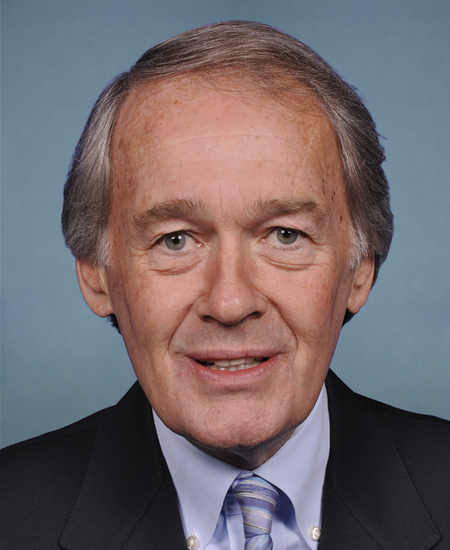
Sen. Edward J. Markey
Sponsored bills
Maddy summaryThis bill allocates $30 million annually (2026-2030) for research on family caregivers under the Older Americans Act. It defines "family caregiver" to include adults providing in-home care to older adults or those with Alzheimer's, and specifically creates a new "older relative caregiver" category for adults 55+ caring for children or disabled relatives. The bill updates the National Family Caregiver Support Program to focus exclusively on family caregivers (removing prior references to "older relative caregivers" in program descriptions) and requires new definitions to align with the updated terminology. These changes directly affect millions of unpaid caregivers by expanding research funding and clarifying eligibility for support services.
Maddy summaryThis bill (S 1677, Ensuring Lasting Smiles Act) requires health insurance plans to cover medically necessary treatments for congenital anomalies or birth defects affecting the eyes, ears, teeth, mouth, or jaw. It mandates coverage for reconstructive services, dental/orthodontic care, and related treatments during the course of medical treatment, while excluding purely cosmetic procedures not medically necessary. Plans may apply cost-sharing requirements similar to those for other medical services but must provide notice about these coverage requirements to participants by January 1, 2026. The bill also directs a study on provider network adequacy and cost impacts related to these coverage requirements, to be completed by December 2027.
Maddy summaryThe HELP Copays Act requires that financial assistance from non-profit organizations or prescription drug manufacturers counts toward patients' annual out-of-pocket cost-sharing limits (like deductibles and copays) for certain prescription drugs. It directly affects individuals enrolled in group health plans or individual insurance who receive such assistance, ensuring payments from these sources reduce their total out-of-pocket spending. The bill amends key healthcare laws to include these payments in calculating cost-sharing thresholds, specifically for specialty drugs and drugs subject to utilization management (like prior authorization). It takes effect for plan years beginning in 2026 and does not change how utilization management tools are applied.
Maddy summaryS. Res. 650 is a Senate resolution that formally recognizes the heritage, culture, and contributions of American Indian, Alaska Native, and Native Hawaiian women in the United States. The resolution highlights their achievements in military service, business ownership, healthcare, science, arts, and civil rights advocacy through specific examples of individual women. It does not create new laws or funding but serves as a symbolic acknowledgment of their historical and ongoing contributions to American society.
Maddy summaryThe Love Lives On Act of 2025 modifies veterans' and military survivors' benefit rules to prevent remarriage from automatically ending eligibility. It directly affects surviving spouses of veterans or military members who remarried, ensuring they retain access to key benefits. Key provisions include: (1) preventing termination of veterans' dependency compensation (under 38 U.S.C. §1311/1562) due to remarriage; (2) stopping termination of military Survivor Benefit Plan annuities solely for remarriage, with specific rules for those who remarried before age 55; and (3) expanding TRICARE coverage to include remarried widows/widowers whose subsequent marriage ended (via death, divorce, or annulment). These changes restore or maintain benefits that were previously lost upon remarriage.
Maddy summaryThis bill, titled the Equal Tax Act, proposes changes to how the U.S. tax system treats capital gains and earned income. It would limit preferential tax rates for capital gains to individuals with taxable incomes of $1,000,000 or less, while maintaining lower rates for qualifying family farms and businesses. Additionally, the bill would require taxpayers to recognize capital gains when property is transferred through gifts or inheritance, except for transfers between spouses and certain charitable contributions. The legislation also includes provisions for reporting certain gifts and bequests, allows for extended payment terms for taxes owed on gains realized due to death, and places limits on using like-kind exchanges to defer taxes on real estate gains.
Maddy summaryThis bill proposes a new windfall profits tax on crude oil producers and importers, targeting companies that extract or import more than 300,000 barrels of oil per day. The tax rate would be 50% of the amount by which current crude oil prices exceed a baseline set at the 2025 average, with adjustments for inflation in subsequent years. Revenue collected from this tax would be placed in a dedicated fund and then rebated directly to individual taxpayers as a credit against their income taxes. The rebate amount would be calculated quarterly based on the total tax revenue collected and distributed to eligible individuals, with higher amounts for joint filers and income-based phase-outs. The bill applies to oil extracted or imported after December 31, 2025, and includes provisions for territories with mirror tax systems to receive equivalent benefits.
Maddy summaryThe Children and Teens' Online Privacy Protection Act (S 836) extends COPPA protections to teens aged 13-17 by requiring websites, apps, and online services to obtain verifiable consent from parents for children or from teens themselves before collecting or using their personal information for purposes beyond the service. It defines "personal information" broadly to include biometric data, voice recordings, persistent identifiers, and geolocation information, and prohibits using such information for individual-specific advertising without consent. The bill mandates clear notice about data practices and gives children and teens rights to access, correct, and delete their personal information. Additionally, it requires the FTC to conduct studies on mobile app oversight and the GAO to study teen privacy in financial technology products.
Maddy summaryThis bill, known as the Fair Wages for Home Care Workers Act, would change federal labor rules to require overtime pay and minimum wage protections for certain babysitters who currently do not receive these benefits. It specifically targets casual babysitting jobs that are irregular or intermittent and not performed by individuals whose primary occupation is babysitting. The law would also clarify that trained medical professionals like nurses and home health aides remain exempt from these new requirements, ensuring the changes apply only to casual domestic caregivers. By amending the Fair Labor Standards Act of 1938, the bill aims to extend wage protections to a specific group of home care workers while maintaining existing exemptions for professional medical staff.