

Maddy summarySJRES 4 is a joint resolution that removes the 1972 deadline for states to ratify the Equal Rights Amendment (ERA), which was originally proposed in House Joint Resolution 208. It declares that the ERA is valid as part of the U.S. Constitution if ratified by three-fourths of states (38), regardless of the expired deadline. The resolution directly affects the ERA ratification process, making it possible for states to complete ratification without time constraints. As of 2023, 38 states had already ratified the ERA, and this resolution would finalize its inclusion in the Constitution if enacted.
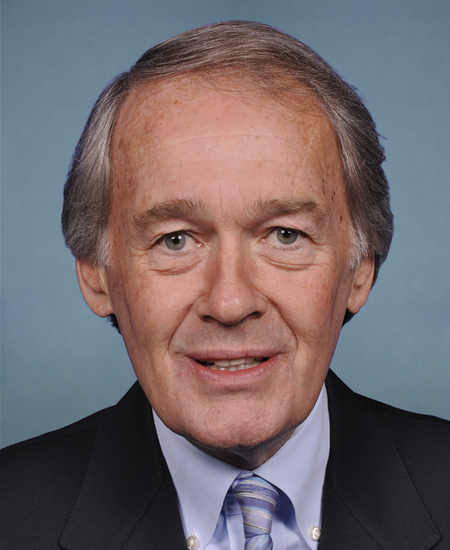
Sen. Edward J. Markey
Sponsored bills
Maddy summaryThe Naloxone Affordability Act of 2023 requires the Government Accountability Office (GAO) to study how naloxone - a medication that reverses opioid overdoses - is covered by health insurance and the costs patients face when purchasing it. The study will specifically examine whether naloxone should be covered as an over-the-counter product under group health plans, Medicare, and Medicaid, and analyze out-of-pocket expenses for consumers. The GAO must complete this study and submit a report to Congress within one year of the bill’s enactment. This bill does not change current coverage or costs but aims to provide Congress with data to inform future policy decisions about naloxone access.
Maddy summaryThe Patient Right to Shop Act (S 1374) prohibits health plans and insurers from entering contracts with pharmacy benefit managers (PBMs) that block third-party tools helping consumers compare prescription drug costs, including out-of-pocket expenses, copays, coinsurance, and savings options like manufacturer assistance. It requires PBMs to provide necessary cost data in machine-readable format at no cost to health plans, insurers, or the tools themselves. The law applies to group health plans and individual health insurance coverage, effective for plan years starting two years after enactment. This policy change ensures consumers can access transparent, comprehensive cost information when choosing medications.
Maddy summaryThe Child Care for Working Families Act establishes a new federal program to provide affordable, high-quality child care for working families with children under age 6. It requires states to implement a sliding fee scale (with no copayment for families earning up to 85% of state median income) and develop a tiered quality system for child care providers, with payment rates that support staff wages comparable to elementary educators. The bill prioritizes access for underserved populations including children with disabilities, children experiencing homelessness, children in foster care, and children from low-income families, while requiring states to improve child care quality and supply through dedicated funding streams. States must submit detailed plans demonstrating how they will meet these requirements to receive federal funding, which will be provided through a combination of direct child care assistance and quality improvement activities.
Maddy summaryThis bill clarifies what counts as a "conviction" for immigration purposes under U.S. law. It excludes dismissed, expunged, or deferred cases, probation without judgment, and appeals from being treated as convictions that could lead to deportation. It also allows sentencing courts to recommend against deportation for certain immigrants with past convictions, after notifying immigration authorities. The law would directly affect immigrants facing removal based on older or resolved legal cases that no longer qualify as "convictions" under this definition.
Maddy summaryThis bill prohibits insurers from denying coverage, canceling policies, or increasing premiums for life, disability, or long-term care insurance solely because someone is a living organ donor, without considering actual health risks. It also updates the Family and Medical Leave Act to include recovery from organ donation surgery as a qualifying condition for leave for private-sector employees and federal workers. Additionally, the bill requires the Health and Human Services Secretary to update public educational materials about living organ donation within six months, covering benefits, risks, and the new insurance protections. These changes directly affect living organ donors, insurers, and employers who must comply with the updated leave and insurance rules.
Maddy summaryThe HELP Copays Act (S 1375) changes how health insurance plans calculate patient cost-sharing. It requires that discounts, financial assistance, or third-party payments (like drug manufacturer coupons) count toward a patient’s deductible, copayment, or out-of-pocket limit. This directly affects individuals enrolled in group or individual health insurance plans who receive such assistance. The bill amends the Public Health Service Act and Affordable Care Act to ensure these payments reduce the actual out-of-pocket costs patients face, rather than being treated as separate expenses.
Maddy summaryThe Forced Arbitration Injustice Repeal Act (S 1376) would prohibit businesses from requiring customers, employees, or small businesses to agree to private arbitration for future employment, consumer, antitrust, or civil rights disputes. It also bans agreements that prevent people from joining class or collective lawsuits in these areas. The bill makes such forced arbitration clauses unenforceable and ensures courts - not arbitrators - decide if the law applies. This directly affects individuals and small businesses in disputes involving workplace discrimination, product issues, unfair competition, or civil rights violations, allowing them to seek justice collectively in court.
Maddy summaryThe Closing the Meal Gap Act of 2023 would change how food assistance benefits are calculated by replacing the "thrifty food plan" with a "low-cost food plan" that better reflects actual food costs for families. The bill establishes a specific family diet for calculating benefits (a 4-person household with defined age groups), requires reevaluation of the food cost calculations by 2029 and every 5 years thereafter, and adjusts benefits for Hawaii and Alaska to reflect regional food costs. It also eliminates a cap on shelter expenses and includes Puerto Rico in the Supplemental Nutrition Assistance Program (SNAP), with specific transition provisions for Puerto Rico to join the program.
Maddy summaryS 1383 restricts the possession of firearm silencers and mufflers for most individuals, making it unlawful to import, sell, manufacture, transfer, or possess them except for specific exemptions. These exemptions include use by federal, state, or campus law enforcement officers (defined as officers employed by eligible private colleges with arrest powers), nuclear facility security personnel, and licensed manufacturers testing under Attorney General authorization. The bill also establishes a federal buy-back program using Byrne grant funds, allowing individuals to voluntarily surrender silencers/mufflers for compensation, with the Attorney General required to implement this program within 90 days of enactment. The law takes effect 90 days after enactment.