

Maddy summaryThe Working Families Tax Relief Act of 2023 expands tax benefits for low-to-moderate income workers and families with children. It lowers the minimum age for the Earned Income Credit from 25 to 19 (with exceptions for students, former foster youth, and homeless youth), removes the age 65 maximum, and increases credit amounts and income thresholds. The bill also establishes a permanent system for monthly advance payments of the Child Tax Credit, with higher payments ($300 monthly) for children under age 6 compared to $250 for older children. It includes inflation adjustments to maintain the value of these credits over time and creates mechanisms for determining eligibility and recapturing payments in certain circumstances. The provisions apply to all states and U.S. territories, including Puerto Rico and American Samoa.
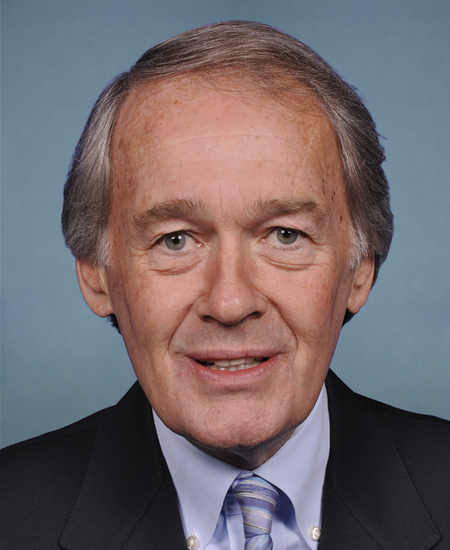
Sen. Edward J. Markey
Sponsored bills
Maddy summaryThis bill requires federal agencies that use private or state/local facilities to house federal prisoners to treat records about those facilities as government records under the Freedom of Information Act (FOIA). It directly affects federal agencies (like the Department of Justice), private prison operators, and state/local facilities under contract with the federal government. Key provisions mandate that these entities maintain records in searchable formats, allow public access to information (unless specific legal exemptions apply), and include disclosure requirements in all relevant contracts. The law aims to increase transparency around conditions and operations in non-federal correctional facilities used by the federal government.
Maddy summaryThe Right to Contraception Act (S 1999) establishes a federal statutory right for individuals to access contraceptives and related information without government interference, directly affecting all people seeking reproductive care and health care providers who offer these services. Key provisions prohibit state or federal laws that restrict contraceptive access, single out contraceptive services, or allow provider refusals based on personal beliefs, while requiring any restrictions to be narrowly tailored to advance access. The bill preempts conflicting state laws, allows enforcement through lawsuits by affected individuals or the Attorney General, and explicitly protects access for historically marginalized groups facing barriers. It does not alter existing insurance coverage requirements under the Affordable Care Act but ensures contraceptive access remains protected from restrictive state policies.
Maddy summaryThe College for All Act of 2023 would establish a federal-state partnership to eliminate tuition and required fees for eligible students at public community colleges and 4-year institutions. It would cover students from families earning under $125,000 (single) or $250,000 (married) annually, with the federal share of costs decreasing from 100% to 80% over five years. The bill also includes separate provisions to eliminate tuition at historically Black colleges and minority-serving institutions through dedicated grant programs, while requiring states to maintain higher education funding levels and improve student support services.
Maddy summaryThis Senate resolution designates June 6, 2023, as National Naloxone Awareness Day to highlight naloxone's role in reversing opioid overdoses. It recognizes that opioid overdoses caused over 79,770 U.S. deaths in 2022 and emphasizes naloxone as a life-saving medication that can prevent fatalities when administered promptly. The resolution encourages public education about naloxone use and urges federal, state, and local entities to expand access and distribution efforts. As a symbolic resolution, it does not create new laws or funding but aims to raise awareness about overdose prevention.
Maddy summaryThe TEST Act addresses the backlog in evaluating fentanyl-related substances under the Controlled Substances Act. It requires the Attorney General to complete scheduling evaluations for identified fentanyl substances within 1 year for those identified before enactment and 3 years for newly identified substances. The bill creates a temporary 3-year scheduling mechanism for new fentanyl substances while establishing procedures to potentially remove substances from Schedule I if they're determined to have less abuse potential. It also streamlines research registration processes for scientists studying fentanyl-related substances to accelerate development of life-saving treatments. The legislation authorizes $50 million for these evaluations in fiscal years 2023-2024 and mandates public posting of evaluation results.
Maddy summaryThis bill amends federal jury selection law (28 U.S.C. § 1862) to explicitly prohibit excluding potential jurors based on sexual orientation or gender identity. It directly affects individuals selected for federal jury service by ensuring these characteristics cannot be used as grounds for exclusion. The key mechanism adds "sexual orientation, gender identity" after "sex" in the existing exclusion criteria, making federal jury selection more inclusive. This change updates the law to align with broader protections against discrimination in civic participation.
Maddy summaryThe Global Respect Act of 2023 requires the U.S. President to publicly list foreign officials or entities responsible for severe human rights violations against LGBTI individuals, including torture, arbitrary detention, or inciting violence based on sexual orientation or gender identity (Section 4). This list must be updated every 180 days and published in the Federal Register, with individuals added facing U.S. visa ineligibility and potential removal from the country (Section 5). The bill also mandates annual reports tracking additions/removals from the list and directs the State Department to monitor global violence against LGBTI people in country reports (Section 7). It directly affects foreign government actors accused of targeting LGBTI communities, using visa restrictions as a tool to increase accountability for human rights abuses.
Maddy summaryThe SECURE Act would allow certain foreign nationals to adjust their immigration status to lawful permanent residence. It specifically targets individuals who are nationals of countries designated under Temporary Protected Status (TPS), or who were in TPS, and who have been continuously present in the U.S. for at least three years. The bill includes provisions for work authorization while applications are pending, fee exemptions for vulnerable applicants (such as minors, low-income individuals, and those in foster care), and a "stay of removal" for those with pending applications. It also contains confidentiality protections for application information and requires detailed reporting when countries lose TPS status. The bill aims to streamline the process for eligible TPS holders to obtain permanent residency without having to file motions to reopen prior removal orders.
Maddy summaryThe GLOBE Act of 2023 is a comprehensive legislative proposal focused on advancing the human rights of LGBTQI people worldwide. It requires the Department of State to document and respond to bias-motivated violence against LGBTQI individuals in country reports, establishes a Special Envoy for LGBTQI rights, and creates targeted sanctions for individuals responsible for human rights violations against LGBTQI people. The bill also includes provisions for immigration reform to better protect LGBTQI asylum seekers, mandates training for U.S. diplomatic personnel on LGBTQI rights, and establishes a Global Equality Fund to support civil society organizations working to protect LGBTQI rights internationally.