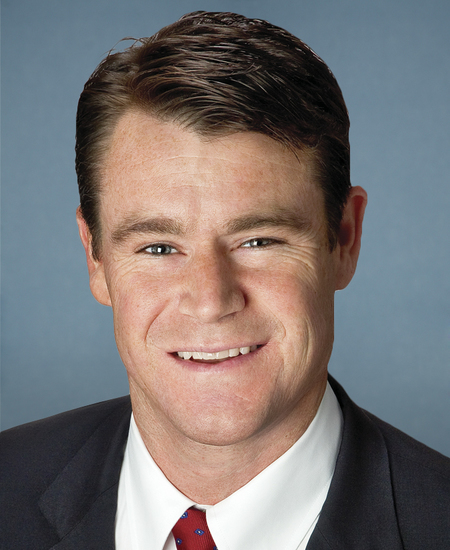
This resolution remembers former Prime Minister of Japan Shinzo Abe and his work to strengthen the alliance between the United States and Japan. It also extends condolences to his family and the people of Japan.
Sponsored bills
This resolution condemns the use of hunger, including the starvation of civilians, as a weapon of warfare. It also calls on the U.S. government to prioritize diplomatic efforts to call out and address instances where hunger and intentional deprivation of food is being utilized as a weapon of war, including through efforts to ensure that security operations minimize civilian harm and do not undermine livelihoods of civilian populations.
ISA Student Protection Act of 2022 This bill sets forth consumer protections and other requirements for educational income share agreements (ISAs). In an educational ISA, a provider credits or advances funding for a recipient's postsecondary education or other training; in turn, the recipient agrees to pay the provider a percentage of the recipient's future earnings over a set period of time. (The Department of Education currently considers educational ISAs as private education loans for the purposes of preferred lender arrangement disclosures.) Under the bill, the recipient is only obligated to pay back the provider if the recipient earns over a certain amount. The recipient's obligation to pay ends at the specified time even if the recipient does not pay back the full amount of the funding. Further, payments are limited to 20% of the recipient's income. Recipients earning under a certain threshold are exempt from payments. If a recipient files for bankruptcy, ISAs are not subject to the same undue hardship standard typical of student loan discharges, therefore making these agreements easier to discharge. The bill also applies current consumer loan protections to these agreements. A provider must make certain disclosures to the recipient before entering into an ISA, including how payments are calculated, the length of the agreement, and how these agreements compare to student loan options. The bill establishes the tax treatment of ISAs, including by exempting from taxable income the amounts received under an ISA.
Democracy Technology Partnership Act This bill establishes the International Technology Partnership Office, led by the Special Ambassador for Technology, in the Department of State. The office shall advance U.S. technology policy through the creation of an International Technology Partnership with specified foreign countries. Specifically, the office must create a partnership of democratic countries to develop technology governance regimes, with a focus on key technologies such as artificial intelligence and machine learning, 5G telecommunications, semiconductor chip manufacturing, biotechnology, and quantum computing. Partner countries must be democratic countries with advanced technology sectors that have a demonstrated record of trust or an expressed interest in international cooperation and coordination with the United States on defense and intelligence matters. The bill also establishes the International Technology Partnership Fund in the Department of the Treasury. The State Department may use amounts from this fund to support joint research projects from International Technology Partnership member countries and technology investments in third-country markets. The State Department must also submit reports (1) outlining a national strategy for technology and national security; and (2) assessing other countries' standards and governance regimes for privacy, human rights, consumer protection, and free expression.
This resolution congratulates the pro-life movement on the Supreme Court's ruling in Dobbs v. Jackson Women's Health Organization (that there is no constitutional right to abortion), recognizes the role of states as laboratories of democracy, and expresses a commitment to ensuring the safety of pro-life supporters, government officials, and court personnel in the wake of the Court's ruling.
Countering Economic Coercion Act of 2022 This bill authorizes the President to take certain actions to assist foreign trading partners affected by economic coercion. Economic coercion refers to actions or threats undertaken by a foreign adversary to restrain, obstruct, or manipulate trade, foreign aid, investment, or commerce with the intent to cause economic harm or influence sovereign political actions. Specifically, the bill authorizes the President (upon a determination that a foreign trading partner is subject to economic coercion) to exercise specified authorities to support or assist the foreign trading partner. These authorities include, among others, decreasing duties or modifying tariff-rate quotas on imports from the foreign trading partner, requesting appropriations for foreign aid, and expediting export licensing decisions and regulatory processes. The President must consult with Congress prior to exercising any authority. Additionally, the President must publish notice in the Federal Register related to the exercise of such authority. Any determination of economic coercion must be revoked at the earliest of (1) two years from the date of determination, (2) upon a joint resolution of Congress, or (3) when the President revokes the determination. The bill also directs the President to endeavor to coordinate with other foreign trading partners to broaden economic support for the foreign trading partner.

Informing Grandfamilies Act This bill requires states to notify kinship caregivers (e.g., grandparents or other relatives caring for a minor child) about (1) the care and placement options under federal, state, and local laws; (2) the requirements to become a foster family home; (3) whether the state has elected to make guardianship assistance payments; and (4) other policies under the state program that may assist such caregivers.
Veterans Expedited TSA Screening Safe Travel Act or the VETS Safe Travel Act This bill makes certain veterans eligible for the Transportation Security Administration (TSA) PreCheck Program at no cost if they meet the program's background check and security requirements. Veterans who are eligible for this fee waiver are those who are in the annual patient enrollment system of the Department of Veterans Affairs (VA) and require the use of a wheelchair, prosthetic limb, or other assistive device to aid with mobility due to (1) loss, or loss of use, of a limb; (2) full or partial paralyzation; or (3) permanent blindness. The VA and the TSA must develop and implement a process to provide disabled veterans effective outreach about TSA programs that are designed to improve the screening process for passengers with disabilities.
Educational Choice for Children Act This bill allows individuals and corporations a new tax credit after 2022 for charitable contributions to tax-exempt organizations that provide scholarships to elementary and secondary school students. Such students must be members of a household with incomes not greater 300% of the area median gross income and be eligible to enroll in a public elementary or secondary school. The bill excludes from the gross income of taxpayer dependents any scholarship amount for the elementary or secondary education expenses of eligible students. It also prohibits governmental control over scholarship granting organizations.
Special Needs Trust Improvement Act of 2022 This bill allows a nonprofit charitable organization to be named as the remainder beneficiary of a Special Needs Trust (i.e., a trust that preserves a beneficiary's eligibility for needs-based government benefits).