

Cattle Price Discovery and Transparency Act of 2022 This bill requires the Department of Agriculture (USDA) to take various actions to address transparency in contract terms and pricing in the cattle industry. Among these requirements, USDA must maintain a publicly available library or catalog of contracts entered into between meat packers and livestock producers for the purchase of cattle, including any schedules of premiums or discounts associated with the contracts and other specific details. USDA must make this information available to producers and other interested parties in a monthly report. The bill further requires USDA to establish five to seven regions encompassing the entire continental United States that reasonably reflect similar fed cattle purchase practices for processing plants and establish mandatory minimums for each region (i.e., the minimum percentage of cattle purchases that are required to be made through approved pricing mechanisms from producers that are not packers). Under the bill, approved pricing mechanisms are generally purchases of fed cattle made through a negotiated purchase, through a negotiated grid purchase, at a stockyard, or through trading systems or platforms where multiple buyers and sellers can regularly make and accept bids and offers. The bill also establishes a maximum penalty for mandatory minimum violations by covered packers. Under the bill, a covered packer is a packer that has slaughtered an average of 5% or more of the number of fed cattle slaughtered nationally during the immediately preceding five calendar years.
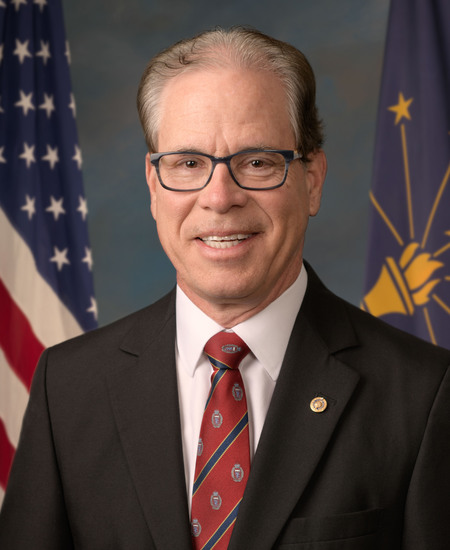
Sen. Mike Braun
Sponsored bills
This joint resolution nullifies a Bureau of Alcohol, Tobacco, Firearms and Explosives rule published on April 26, 2022, concerning regulatory definitions and identification of firearms.
Maddy summaryThis resolution designates June 12, 2022, as "Women Veterans Appreciation Day" to recognize the service of women veterans. It does not create new policies or affect any individuals or programs; it is a symbolic gesture by the Senate. The resolution highlights women's historical and ongoing contributions to the U.S. military, including their current representation across branches (e.g., 17% of active-duty personnel). The key mechanism is the Senate's formal designation of this specific date for commemoration. It aims to honor women veterans' sacrifices without implementing any concrete legislative changes.
Securing Employee Retirement Returns Act This bill revises the fiduciary duties for a retirement or employee benefit plan that is regulated under the Employee Retirement Income Security Act of 1974. The bill generally requires a fiduciary to select and maintain investments for a plan based solely on pecuniary factors. Under the bill, a pecuniary factor is a factor that is expected to have a material effect on the risk or return of an investment based on appropriate investment horizons that are consistent with the plan's investment objectives and funding policy. The bill allows a fiduciary to use nonpecuniary factors in certain circumstances, such as when a fiduciary (1) is unable to distinguish between investment alternatives on the basis of pecuniary factors alone, or (2) is selecting or maintaining investment alternatives for a defined contribution plan that permits a participant or beneficiary to choose from a broad range of investment alternatives.
Debt Cancellation Accountability Act of 2022 This bill prohibits the Department of Education from providing class-based loan forgiveness unless funds have been specifically requested and appropriated for this purpose. Class-based loan forgiveness refers to the cancellation, waiver, assumption, discharge, reduction, or other forgiveness of any obligation due on Federal Family Education Loans, Federal Direct Loans, or Federal Perkins Loans (1) on a class-wide basis and for a class of two or more loan borrowers, and (2) that totals more than $1 million. The prohibition does not apply to targeted loan forgiveness programs established under the Higher Education Act of 1965 and in effect before the enactment of this bill if the loan forgiveness is granted for a single borrower on a case-by-case basis.
This bill terminates General License No. 8C, which was issued by the Department of the Treasury's Office of Foreign Assets Control to authorize energy-related transactions involving specified Russian financial institutions. Further, the bill applies property-blocking sanctions to those Russian financial institutions listed in the license.
Prohibiting Federal Emergencies for Abortion Act This bill prohibits the President and the Department of Health and Human Services (HHS) from declaring a federal emergency relating to abortion. Specifically, neither the President nor HHS may declare a national emergency for purposes of (1) promoting, supporting, or expanding access to abortion; or (2) taking adverse action against or litigating against states that prohibit or otherwise restrict abortion.
This resolution condemns the use of congressionally directed spending, community project funding, and other earmarks to direct federal funding. It also affirms the need to address inflation by curbing federal spending.
This resolution includes bills, joint resolutions, and messages from the House of Representatives within the scope of a point of order that prohibits the Senate from considering legislation unless each congressionally directed spending item (i.e., earmark), limited tax benefit, or limited tariff benefit in the legislation has been publicly identified. Currently, the point of order only applies to Senate bills or joint resolutions that are not reported by committee.
Educational Choice for Children Act This bill allows individuals and corporations a new tax credit after 2022 for charitable contributions to tax-exempt organizations that provide scholarships to elementary and secondary school students. Such students must be members of a household with incomes not greater 300% of the area median gross income and be eligible to enroll in a public elementary or secondary school. The bill excludes from the gross income of taxpayer dependents any scholarship amount for the elementary or secondary education expenses of eligible students. It also prohibits governmental control over scholarship granting organizations.