

Lifting Local Communities Act This bill specifies that government entities may not discriminate against religious organizations when awarding federal funds for social services programs (i.e., government programs that provide services for low-income individuals and communities, such as child care, transportation, employment, housing, and meal services). Specifically, religious organizations are eligible to apply for and receive federal funds to provide services for social services programs on the same basis as private, nonreligious organizations. Additionally, government entities may not discriminate against private organizations on the basis of religion when selecting funding recipients. Organizations that receive federal funds for social services programs may not discriminate against individuals on the basis of religion when providing services. If an individual objects to the character or affiliation of a private organization that is providing a service as part of a social services program, government entities must provide the individual with reasonable alternatives. Religious organizations may bring civil actions against entities for violations.
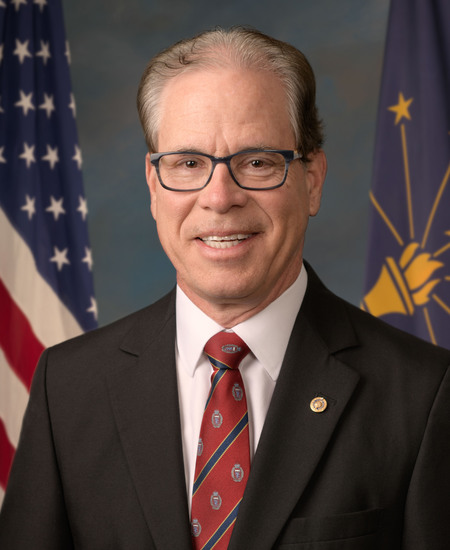
Sen. Mike Braun
Sponsored bills
Maddy summaryThis bill clarifies that new members of the House of Representatives (including Delegates and Resident Commissioners) can choose not to participate in the Federal Employees' Retirement System (FERS) pension plan. However, it requires all such members to continue participating in the Thrift Savings Plan (TSP), the retirement savings program. The law amends existing code to explicitly state that opting out of FERS does not affect mandatory TSP participation. This applies only to members first serving after the bill's enactment date, not current members.
Maddy summaryS 88, the BLAST Act, bans former U.S. Senators, Representatives, and elected congressional officers from lobbying Congress after leaving office. It prohibits them from making communications or appearing before current members or staff to influence legislation on behalf of others (excluding the U.S. government), with violations punishable under federal law. The bill directly affects former lawmakers who might seek to lobby while using their prior congressional connections. This amendment to Title 18, U.S. Code, applies to those leaving office after the bill’s enactment date.
Maddy summaryThis bill requires Congress to approve a budget resolution and pass all regular appropriations bills by October 1 each fiscal year. If Congress fails to meet this deadline, members of Congress (excluding the Vice President) would not receive pay for the period of non-compliance, with no retroactive payment allowed. The Budget and Appropriations Chairs in each chamber would determine compliance on October 1 and certify pay status. The law would take effect on September 30, 2025.
Maddy summaryS 68, the FARM Act, requires the Committee on Foreign Investment (CFIUS) to review foreign investments in U.S. agriculture businesses and supply chains. It adds the Secretary of Agriculture to CFIUS and designates agricultural supply chains as critical infrastructure and critical technologies. The bill mandates a report within one year detailing foreign investments in U.S. agriculture, potential threats to supply chains, and espionage risks targeting agricultural data. This directly affects foreign entities seeking to acquire or invest in U.S. agricultural operations and supply chain systems.
American Vehicle Security Act of 2023 T his bill requires the immediate implementation of amendments to the tax credit for new clean vehicles enacted by the Inflation Reduction Act of 2022. The amendments include requirements for vehicle assembly and critical mineral and battery sourcing for manufacturers.
Maddy summaryThe Standing with Moms Act of 2023 requires the U.S. Department of Health and Human Services to create a public website (life.gov) and an interactive portal within one year of enactment. The portal uses a question-based system to connect pregnant individuals with location-specific resources, including mental health support, medical services, financial assistance, childcare, and alternatives to abortion. It prohibits listing resources from organizations that provide or promote abortions and mandates multilingual access. The bill also requires annual reporting on website usage and resource gaps to Congress, focusing on improving support for pregnant and postpartum women.
Maddy summaryS 78 requires physicians performing abortions on minors from out-of-state to provide at least 24 hours' written notice to the minor's parent before the procedure, unless specific exceptions apply. It prohibits transporting minors across state lines to bypass parental involvement laws in their home state, with penalties for violations. Exceptions include life-threatening medical conditions, compliance with the minor's home state's abortion laws, or documented court authorization. The bill directly affects minors seeking out-of-state abortions, their parents, and medical providers who perform such procedures.
Maddy summaryS 72, the Debt Cancellation Accountability Act of 2023, requires congressional approval before the federal government can cancel student loans for groups of borrowers (defined as "class-based" forgiveness totaling over $1 million for two or more borrowers). It prohibits the Education Secretary from authorizing such group cancellations without a specific budget appropriation, mandating that the Secretary submit detailed requests to Congress explaining the need, legal basis, and justification for collective cancellation versus individual reviews. The bill specifically excludes existing targeted loan forgiveness programs in place before January 1, 2022, which continue to operate under individual case reviews. This law changes the process for large-scale student loan forgiveness by making it contingent on explicit congressional funding and approval.
Maddy summaryThe SOAR Permanent Authorization Act permanently authorizes annual funding of $75 million for the District of Columbia's Opportunity Scholarship Program, replacing previous funding levels. It requires participating schools to be fully accredited by a DC-recognized body or meet specific U.S. immigration program standards. The bill updates evaluation requirements to focus on student academic progress (not just achievement), compares scholarship program outcomes to public school peers, and prioritizes tutoring for students from lowest-performing schools when funds are limited. This directly affects D.C. students eligible for opportunity scholarships and the organizations administering the program.