

Maddy summaryS 160, titled "Sarah's Law," amends immigration law to require mandatory detention for non-citizens charged with crimes causing death or serious bodily injury. It specifically applies to individuals who entered without inspection, held revoked visas, or fall under certain immigration categories. The bill also mandates that Immigration and Customs Enforcement (ICE) notify crime victims or their families about the alien's identity, immigration status, custody details, and removal efforts. This policy change directly affects non-citizens facing such charges and ensures victims receive ongoing case information.
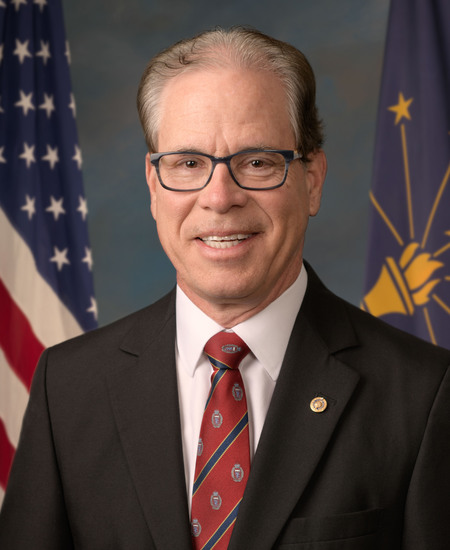
Sen. Mike Braun
Sponsored bills
Maddy summaryS 170 establishes a 12-member congressional Joint Select Committee on Afghanistan to investigate the 2021 U.S. withdrawal from Afghanistan. The committee, composed of equal Senate and House members appointed by party leaders, must produce a report within 90 days detailing specific aspects of the withdrawal - including intelligence assessments, evacuation planning, timeline decisions, and communications with allies. The report must cover 23 defined elements, such as warnings about Taliban advances, National Security Council planning, and the status of assets left behind. The committee will operate for one year, with unclassified findings and a possible classified annex. This procedural bill creates a formal investigation mechanism without proposing new policy changes.
Maddy summaryThe JOBS Act of 2023 expands Federal Pell Grant eligibility to short-term job training programs that provide 150-600 clock hours (8-15 weeks) of instruction aligned with in-demand local industries. It directly affects students enrolled in eligible career-focused programs at institutions of higher education, requiring programs to offer industry-recognized credentials and meet validation standards from employers or sector partnerships. Key provisions include mandatory industry validation of program quality, institutional credit articulation for noncredit programs, and lowering the minimum Pell Grant percentage from 10% to 5% for qualifying students. The bill ensures these programs count toward students’ total Pell Grant eligibility period while maintaining standard Pell Grant terms and conditions.
Maddy summaryThis bill amends the Civil Rights Act of 1964 to define specific educational practices as discrimination. It prohibits curricula or teaching that promotes "divisive concepts" (like claiming one race is inherently superior or that the U.S. is fundamentally racist) and results in a "racially hostile environment" in schools. The bill requires schools to report such complaints to state attorneys general and mandates annual reports to Congress on these complaints. It directly affects elementary, secondary, and postsecondary education programs receiving federal funding.
Maddy summaryThis bill prohibits the federal government from promoting, supporting, or contracting with organizations that provide abortions on federal lands or in federal facilities, including national parks, military bases, and courthouses. It directly affects federal agencies and contractors operating on public lands or in government buildings by banning any federal funding, promotion, or contractual relationships with abortion providers. Key provisions define "abortion entity" as any organization performing, referring for, or financially supporting abortions, and prohibit federal actions that expand access to abortion in these settings. The law creates a clear policy restriction on federal involvement in abortion services within government-controlled spaces.
Helping with Equal Access to Leave and Investing in Needs for Grieving Mothers and Fathers Act or the HEALING Mothers and Fathers Act This bill revises the family and medical leave entitlement and limits funding to certain family planning programs. Specifically, the bill provides family and medical leave due to the spontaneous loss of an unborn child of an employee or spouse of the employee. It also establishes a tax credit for an individual who experiences, during the taxable year, the stillbirth of a child who would have been a qualifying child of the individual for the taxable year if the child had been born live. The bill further prohibits the Office of Population Affairs within the Department of Health and Human Services from providing federal assistance to voluntary family planning programs that (1) perform abortions, (2) provide funding to another entity that performs abortions, or (3) refer patients to abortion providers.
Maddy summaryS 165, the "Let Them Learn Act," prohibits the use of federal or local funds in Washington, D.C., to require students to receive a COVID-19 vaccine for school enrollment or participation in school activities. It directly affects D.C. public elementary and secondary schools (covered schools) and their students by blocking vaccine mandate enforcement through public funding. The bill also repeals a prior D.C. law that had established such vaccine requirements for school students and early childhood workers.
Maddy summaryThis bill prohibits the President from declaring federal emergencies under three key laws (the National Emergencies Act, Public Health Service Act, and Stafford Act) for purposes related to abortion. Specifically, it blocks emergency declarations meant to promote, support, or expand abortion access, or to take legal action against states that restrict abortion. The bill defines "abortion" as intentionally terminating a pregnancy (with limited exceptions for live birth or health) using instruments, medicine, or devices. It directly affects federal emergency powers, preventing their use to advance abortion policy or challenge state abortion laws. The law does not change existing abortion regulations but restricts how emergency declarations can be utilized.
Maddy summaryThe PART Act (S 154) requires all new vehicles to have catalytic converters marked with unique VINs using durable, high-visibility stamping (via die/pin stamping and theft-deterrent paint) within 180 days of enactment. It creates a $7 million federal grant program to help dealers, repair shops, law enforcement, and nonprofits mark converters at no cost to vehicle owners, prioritizing high-theft areas. The bill also mandates sellers of catalytic converters to retain buyer identification and vehicle details for two years and adds criminal penalties (up to 5 years in prison) for stealing or trafficking in converters. Directly affecting manufacturers, dealers, repair shops, and sellers, the law targets converter theft through standardized marking, record-keeping, and new criminal offenses.
Maddy summaryThis bill would prevent government shutdowns by automatically continuing funding for most federal programs at the previous fiscal year's level if Congress fails to pass a full budget by the start of the new fiscal year. The automatic funding would continue in 14-day increments until a budget is enacted, with the government returning to normal funding levels once a budget is passed. During these automatic funding periods, government employees (including congressional staff) would face restrictions on travel, with limited exceptions for returning to Washington, D.C. or responding to national security events. The bill also establishes specific procedures for Congress to prioritize budget negotiations during these periods. This would affect the entire federal government and its operations during budget stalemates.