

Maddy summaryThis bill prohibits healthcare providers and transplant centers from denying organ transplants or related services solely because a person has a disability. It requires covered entities (like hospitals and transplant centers) to make reasonable policy changes - such as involving a patient's support network or providing accessible communication - to ensure qualified individuals with disabilities can access transplants. The law clarifies that providers may only consider a disability medically significant if a physician determines it directly affects transplant success, and it establishes enforcement through the Department of Health and Human Services or lawsuits. The bill does not replace existing disability protections like the ADA but specifies how they apply to organ transplant processes.
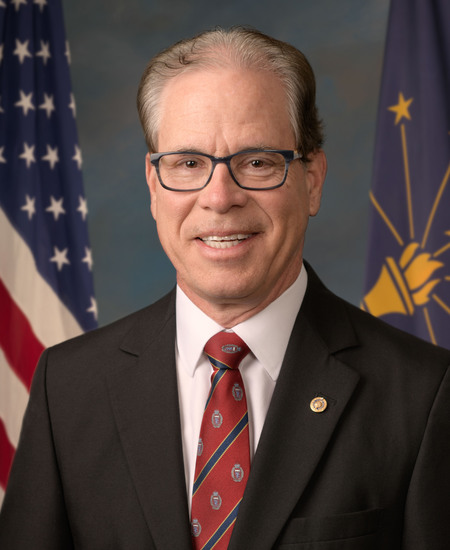
Sen. Mike Braun
Sponsored bills
Maddy summaryThis bill prohibits federal agencies from banning lead ammunition or tackle for hunting and fishing on federal lands and waters managed by the Interior Department or Agriculture Department. It directly affects hunters and anglers using these public areas by preventing federal restrictions on lead products, except in limited cases. The exception allows restrictions only on specific federal sites where state wildlife data shows lead use is harming wildlife, and only if approved by the state's fish and wildlife agency. The bill requires federal agencies to explain in public notices how any exception meets these state approval and wildlife harm criteria.
Maddy summaryThis bill amends the Higher Education Act to allow foreign institutions of higher education to offer distance education programs that qualify for federal student aid. It sets three key requirements: distance education must not exceed 12.5% of a program, the institution must be evaluated by an independent body (like an accreditor) for distance education capability, and students must physically attend instruction in the country where the institution is located. The bill also clarifies that courses requiring over 50% in-person attendance - even with some distance components - do not count toward the 12.5% limit. This directly affects foreign universities seeking to provide federally funded distance education to students abroad.
Maddy summaryS 1165, the Reentry Act of 2023, allows Medicaid coverage for incarcerated individuals during the 30 days preceding their release from prison or jail. This directly affects people transitioning from correctional facilities back into communities by connecting them to healthcare immediately after release. The bill amends Medicaid law to remove a barrier preventing coverage during this critical period. It also requires a report within 18 months analyzing correctional healthcare standards, the number of eligible individuals, and discharge processes to support better health transitions.
Maddy summaryS 1166, the Restore Public Health Institution Trust Act of 2023, requires the Comptroller General to produce a report assessing the CDC's public health messaging and guidance. The report must examine the data used by the CDC, the impact of inconsistent messaging on public trust and vaccine uptake (including for school-age children), and whether outside groups influenced recommendations. It also asks for specific recommendations to improve the CDC's future communication and decision-making processes. This procedural bill directly affects the CDC and Congress, as it mandates a review of past CDC actions without altering current policies.
Maddy summarySRES 120 is a ceremonial Senate resolution designating March 23, 2023, as "National Women in Agriculture Day." It recognizes the significant contributions of women in U.S. agriculture, citing that they represent over one-third of agricultural producers and generated $148 billion in sales in 2017. The resolution encourages citizens to acknowledge women in the field and supports their roles as producers, educators, mentors, and leaders. As a symbolic gesture, it does not create new laws or funding but aims to highlight their impact on the agricultural workforce and food systems.
Maddy summaryThis bill allows veterans' families to include specific military emblems on headstones and markers provided by the U.S. Department of Veterans Affairs. It requires the VA and Defense Department to create a list of approved emblems, including unit insignia (like division-level badges) and combat or skill badges earned by the veteran. The VA must establish this list within 180 days of the bill's enactment and make the emblems available for use on headstones within 360 days. The change applies only to headstones and markers furnished after the bill becomes law.
Maddy summaryThis bill requires covered entities participating in the federal 340B drug discount program to allow the Health and Human Services Secretary to audit their records at no cost to the entity. It mandates that these entities retain and provide records showing how they use the savings from discounted drugs. The law directly affects safety-net hospitals, clinics, and other providers enrolled in the 340B program, which serves low-income patients. The key provision adds audit authority and record-keeping requirements to verify how program savings are utilized. This focuses on transparency in how covered entities manage the financial benefits of the 340B program.
Maddy summaryThis bill provides legal protection for franchisors by clarifying that certain supportive actions they take with franchisees cannot be used to establish an employment relationship under federal labor laws. It specifically shields franchisors from being deemed employers if they provide training handbooks (on topics like harassment or workplace safety), require franchisees to adopt policies (covering issues such as discrimination, childcare, or pandemic safety measures like PPE), or offer pandemic-related support. The law directly affects franchisors and franchisees in their business relationship, preventing actions like sharing safety guidelines or requiring policy adoption from triggering labor law obligations. This applies to key federal laws including the National Labor Relations Act, Fair Labor Standards Act, and Occupational Safety and Health Act.
Maddy summaryThis bill restricts federal funding for state and local governments that qualify as "sanctuary jurisdictions" under its definition. A sanctuary jurisdiction is defined as any state or local area that prohibits sharing immigration status information or refusing to comply with federal immigration detainers (with an exception for crime victims/witnesses). The bill blocks funding for Economic Development Administration grants and Community Development Block Grants if projects are located in such jurisdictions or if recipients become sanctuary jurisdictions during the grant period. Recipients must return funds if they become sanctuary jurisdictions, and the U.S. government will reallocate those funds to non-sanctuary areas.