This resolution supports the designation of May 7, 2023 through May 13, 2023, as Public Service Recognition Week and commends public servants for their contributions.
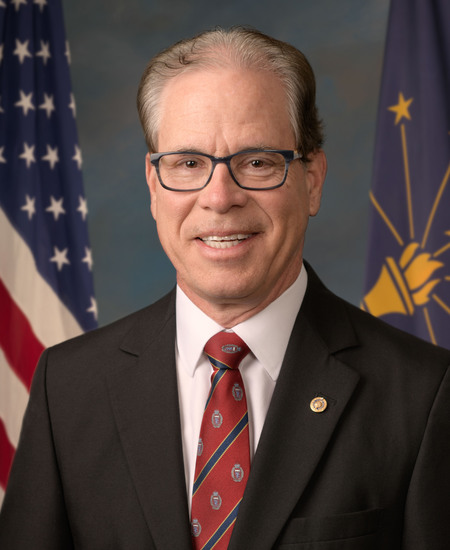
Sen. Mike Braun
Sponsored bills
Maddy summarySRES 195 is a ceremonial Senate resolution congratulating students, parents, teachers, and leaders of charter schools nationwide for their contributions to education. It formally supports the 24th annual National Charter Schools Week (May 7-13, 2023), encouraging public recognition of charter schools' role in providing diverse educational options. The resolution does not create new policies, funding, or obligations - it solely expresses legislative support for charter schools as part of a symbolic observance. It directly affects the charter school community by acknowledging their work during a designated national week.
Maddy summaryThis bill allows states to retain 25% of funds recovered from fraudulent unemployment claims (particularly pandemic-era claims) to strengthen fraud prevention systems. States can use these funds for modernizing unemployment systems, hiring fraud investigators, covering administrative costs for fraud detection, and other program integrity activities. The bill requires states to implement specific data-matching systems to prevent fraud, including cross-checking claims against employment records, databases of incarcerated individuals, and deceased individuals. It also extends emergency staffing flexibility for fraud detection through 2030 and establishes a 10-year window for prosecuting unemployment fraud.
Maddy summaryThis bill requires federal executive agencies to return to their pre-pandemic telework policies by December 31, 2019, effectively ending widespread remote work arrangements established during the COVID-19 emergency. It directly affects all federal employees in executive agencies by limiting remote work options until agencies submit a detailed study to Congress analyzing telework impacts on mission performance, costs (like underused office space and incorrect pay classifications), and employee productivity tools. Agencies must then submit a plan to expand telework, which the Office of Personnel Management must certify will improve mission performance, reduce costs, and ensure secure remote work capabilities before any changes can take effect. The law prohibits agencies from expanding telework until this study, plan, and certification process is completed.
Maddy summaryS 1585, the Federal Law Enforcement Service Weapon Purchase Act, allows current or former federal law enforcement officers to purchase handguns retired from agency service. The bill authorizes officers to buy these retired handguns during a 6-month window after retirement, at fair market value based on the weapon's age and condition, provided they are legally permitted to own firearms under federal or state law. It directly affects federal law enforcement officers who served with agency-issued handguns and now wish to retain one. Key provisions include defined terms (like "retired handgun" meaning agency-surplus weapons), purchase limitations, and requirements for the General Services Administration to establish sale policies. This bill creates a formal process for officers to legally acquire service-issued handguns no longer needed by their agency.

Maddy summaryS 1583 requires the Secretary of State to submit to Congress any classified State Department cables expressing dissent about the U.S. military withdrawal from Afghanistan within 30 days of the bill's enactment. It also mandates that the Secretary publicly release unclassified versions of these cables within 60 days, while redacting all personally identifiable information about the cable authors. This bill directly affects the Secretary of State, Congress, and the public by establishing a timeline for transparency regarding internal government disagreements on the Afghanistan withdrawal. The key mechanism is the mandatory submission and public release of dissenting cables, with protections for author privacy.
Maddy summaryThis bill requires retirement plan managers (fiduciaries) to primarily consider financial factors like risk and return when selecting investments for employee benefit plans, such as 401(k)s. It allows using non-financial factors (like environmental or social concerns) only if financial factors are insufficient to choose between options, and then mandates detailed documentation explaining why financial factors weren't decisive and how the non-financial choice still serves participants' retirement interests. The rule applies to investments made 60 days after the bill becomes law. It directly affects plan managers overseeing retirement savings, not individual investors.
Maddy summaryThis bill repeals a corporate minimum tax provision in the Internal Revenue Code. It directly affects corporations by eliminating their requirement to pay a separate minimum tax (known as the corporate alternative minimum tax) that applied alongside regular corporate income tax. Key provisions amend tax code sections to set the corporate minimum tax amount to zero and remove related adjustments and calculations. The change takes effect for taxable years beginning after December 31, 2022.
Maddy summaryThis bill authorizes a Congressional Gold Medal to honor the service of Army and Navy nurses who served during World War II. It directly recognizes approximately 73,000 nurses (including those who died in action or captivity) who provided critical medical care under combat conditions across 6 continents. The medal, designed by the Treasury Secretary, will be displayed at institutions like the Smithsonian, the Women in Military Service Memorial, and military museums. The bill is purely commemorative, with no new benefits or policy changes, focusing solely on formal recognition of their wartime contributions.
Maddy summaryS 1554, the National American Indian Veterans Charter Act, grants a federal charter to the existing nonprofit organization National American Indian Veterans, Incorporated. This charter formally recognizes the group as a federally chartered entity under Title 36 of the U.S. Code, authorizing it to operate as a nonprofit dedicated to serving American Indian veterans. Key provisions include granting the organization exclusive rights to its name and insignia, requiring it to maintain tax-exempt status, and mandating annual reports to Congress on its activities (though these reports are not public documents). The bill directly affects American Indian veterans by legally solidifying the organization’s role as their representative body for advocacy, outreach, and support services.