

Maddy summaryThe Agrivoltaics Research and Demonstration Act of 2023 directs the U.S. Department of Agriculture to study how solar energy systems can be integrated with farming on the same land without displacing agricultural production. The study will examine regional factors like panel height for crops and livestock, economic viability, and how to incorporate such systems into federal programs like crop insurance. It requires the creation of a national network of research sites across diverse U.S. climates, with $15 million annually allocated for 2024-2028 to fund this work. This research aims to provide farmers with evidence-based guidance for adopting integrated solar-farming systems that maintain agricultural output while supporting clean energy and rural economic opportunities.
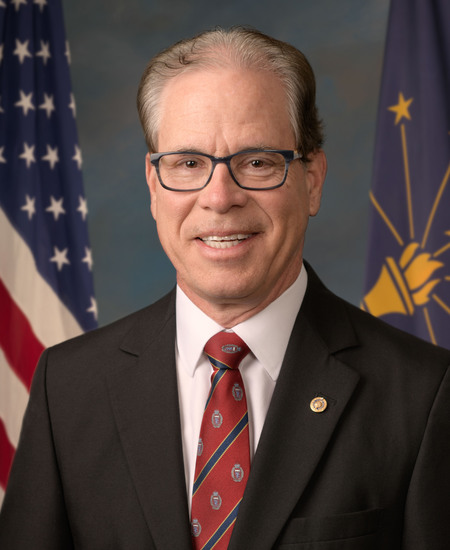
Sen. Mike Braun
Sponsored bills
Maddy summaryThis bill requires federal agencies to annually identify and eliminate unnecessary programs or activities. Specifically, agency Chief Operating Officers must compile lists within 20 days of the presidential budget submission, flagging programs that are duplicative, defunct, or could be consolidated or administered more effectively by another agency. Agencies must publish these lists in designated program inventories and submit them to relevant congressional committees. The law aims to increase transparency and streamline federal operations through mandatory annual reviews, with OMB providing implementation guidance. It directly affects all federal agencies and their budget processes, without altering funding levels.
Maddy summaryThis joint resolution (SJRES 18) disapproves a Department of Homeland Security rule that would have expanded the "public charge" standard for immigration. The rule, published in the Federal Register on September 9, 2022, aimed to deny visas or green cards to immigrants who might rely on public benefits like housing or food assistance. By passing this resolution, Congress blocks the rule from taking effect, meaning immigrants applying for visas or permanent residency would not face this specific eligibility barrier. The resolution directly affects non-citizens seeking to enter or remain in the U.S. under immigration processes.
Maddy summaryThis resolution requires the Senate and House Budget Committees to hold an annual joint hearing within 45 days of the Treasury submitting the federal government's audited financial statement. The Comptroller General will present findings from the audit and analyze the government's financial position, including deficits, surpluses, and long-term fiscal projections. The hearing must follow nonpartisan GAO standards to provide objective, fact-based information to Congress. This procedural measure affects only the Budget Committees and the Comptroller General, creating a regular process for reviewing federal finances.
Maddy summarySRES 224 is a non-binding Senate resolution designating May 2023 as "ALS Awareness Month." It recognizes the challenges of amyotrophic lateral sclerosis (ALS), a progressive neurodegenerative disease affecting nerve cells, noting that about 5,000 Americans are diagnosed annually and there is no cure. The resolution affirms the Senate's commitment to supporting ALS patients and caregivers, including access to treatments, research into causes, and reducing the disease's physical, emotional, and financial burdens. It does not create new laws or policies but serves to raise public awareness and honor efforts by families, researchers, and caregivers.
Maddy summarySRES 221 is a Senate resolution supporting National Minority Health Month in April 2023 by raising awareness of health disparities affecting specific minority populations. It highlights documented inequities, such as higher rates of diabetes, cancer, and mortality among American Indians, Alaska Natives, Asian Americans, African Americans, Hispanics, and Native Hawaiians or Pacific Islanders compared to non-Hispanic White populations. The resolution does not create new laws or allocate funding but serves as a symbolic acknowledgment of these disparities through a series of cited statistics from health data. It aims to promote public understanding of these issues during the designated awareness month.
Maddy summarySRES 225 is a Senate resolution commemorating the 107th running of the Indianapolis 500 Mile Race on May 28, 2023, and formally recognizing it as "the greatest spectacle in racing" - a phrase coined in 1954. The resolution highlights the race's history since 1911 (excluding wartime years), its status as the world's largest single-day sporting event, and its cultural significance to Indianapolis, motorsports, and the automotive industry. It does not create new laws or affect any individuals or policies. The resolution was introduced by Senators Young and Braun on May 18, 2023, and serves only as a symbolic tribute.
Maddy summaryThe Main Street Tax Certainty Act permanently extends the 20% tax deduction for qualified business income (QBI), which currently applies to owners of pass-through businesses like sole proprietorships, partnerships, and S corporations. The bill achieves this by amending the tax code to remove an expiration date (via striking subsection (i) of Section 199A of the Internal Revenue Code). This change directly affects small business owners who rely on the QBI deduction to reduce their taxable income. The key provision eliminates uncertainty about the deduction’s future, ensuring continued eligibility without requiring future legislative action.
Maddy summaryThis bill amends the Elementary and Secondary Education Act to integrate accounting education into K-12 curricula as part of a "well-rounded" education. It specifically adds accounting career awareness and programs to eligible funding streams, targeting students in grades K-12 - particularly those from groups historically underrepresented in accounting careers. Key provisions require schools to develop and strengthen accounting courses, including early exposure to inspire career interest. The bill aims to expand the accounting talent pipeline by linking accounting to STEM-focused skills like data analysis and cybersecurity.
Maddy summaryThis bill requires rural public housing agencies (PHAs) that use less than 95% of their annual budget to accept housing vouchers for families moving from another area. It mandates that these agencies either cover the voucher costs directly or bill the original PHA for no more than 12 months. The law aims to improve housing access for low-income rural families by streamlining voucher portability between jurisdictions. It does not create new funding but changes existing rules to reduce barriers for families seeking housing outside their original PHA’s area.