Maximizing America's Prosperity Act of 2021 This bill establishes annual spending limits that are equal to specified percentages of potential gross domestic product (GDP). Potential GDP generally refers to the GDP that would occur if the economy were at full employment without inflation. The spending limits apply to all budget authority and outlays of the federal government excluding net interest. The bill establishes procedures for enforcing the spending limits, including requirements for sequestration (i.e., automatic spending cuts) and for the President's budget and congressional budget resolutions to comply with the limits. The bill also requires at least 1% of total discretionary spending for each year to be reserved for emergencies.
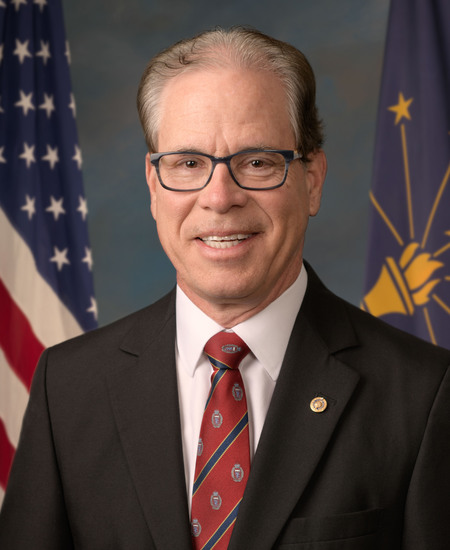
Sen. Mike Braun
Sponsored bills
This bill establishes annual discretionary spending limits for FY2022-FY2031. (Discretionary spending is spending that is controlled through the appropriations process.) For each year, the bill specifies limits for both defense and nondefense discretionary spending.
This bill establishes annual discretionary spending limits for FY2022-FY2024. (Discretionary spending is spending that is controlled through the appropriations process.)
This bill establishes a Federal Rainy Day Fund to fund emergency spending. Under the bill, an emergency is any occasion or instance for which federal assistance is needed to supplement state and local efforts and capabilities to save lives and to protect property, public health, and safety; or to lessen or avert the threat of a catastrophe in any part of the United States. The bill authorizes annual appropriations to the fund that are equal to 2% of the amount of the previous year's nonemergency discretionary spending. In addition, the bill modifies or establishes various budget enforcement procedures to address spending from the fund. For example, the bill establishes a point of order to prohibit the fund from being used for nonemergency spending, establishes a point of order against provisions that provide emergency spending from the general fund of the Treasury when unobligated funds are available in the rainy day fund, and repeals a provision that currently requires adjustments to discretionary spending limits to accommodate emergency spending. Finally, the bill requires the Government Accountability Office to report on the relationship between emergency, disaster, and wildfire spending, including any recommendations to modify the spending that qualifies as emergency spending.
Expanding Access to Low-Cost Generics Act of 2021 This bill modifies provisions related to market exclusivity for a generic drug. Currently, the Food and Drug Administration (FDA) awards 180 days of exclusivity on the market to a first applicant to file a qualifying application for market approval of a generic drug. Generally, this exclusivity period begins upon a first applicant's commercial marketing of the drug. The bill authorizes the FDA to approve a subsequent generic drug application prior to a first applicant's first date of commercial marketing if (1) the subsequent application is ready for full approval, (2) a first applicant's application has been pending for at least 30 months, (3) the approval of a first applicant's application is not precluded by patent infringement claims asserted against that first applicant, and (4) no first applicant's application has been effectively approved on the date that all such conditions are met.
This resolution supports the designation of October 3-October 9, 2021, as National 4-H Week. It also (1) recognizes the important role of 4-H in youth development and education, and (2) encourages all citizens to recognize 4-H for the significant impact the organization and members have made and continue to make by empowering young people with the skills needed to lead for a lifetime.
Maddy summaryThis Senate resolution (SRES 267) designates June 12, 2021, as "Women Veterans Appreciation Day" to formally recognize the service of women veterans. It highlights their historical contributions to U.S. military service and their current representation, noting women comprised 17% of active duty personnel in 2020. The resolution does not create new policies or obligations but serves as a commemorative gesture acknowledging their sacrifices. It references statistics on women's military participation and their growing role in the Armed Forces and National Guard.
Viral Gain of Function Research Moratorium Act This bill prohibits the award of federal research grants to institutions of higher education or research institutes that conduct gain-of-function research. Gain-of-function research refers to any research that (1) may be reasonably anticipated to confer attributes to influenza, MERS, or SARS viruses such that the virus would have enhanced pathogenicity or transmissibility in an organism; or (2) involves the enhancement of potential pandemic pathogens or related risky research with potentially dangerous pathogens.
This resolution recognizes (1) the celebration of Hispanic Heritage Month from September 15 - October 15, 2021; and (2) the integral role of Latinos and their manifold heritage in the economy, culture, and identity of the United States.
Denying Earnings to the Military Oligarchy in Cuba and Restricting Activities of the Cuban Intelligence Apparatus Act or the DEMOCRACIA Act This bill provides for asset- and visa-blocking sanctions for conduct relating to Cuba. It also establishes an interagency task force to facilitate access to uncensored internet in Cuba. The President must sanction foreign persons that provide financial support to Cuban government sectors involved in human rights abuses or terrorism (e.g., the defense sector). This includes foreign persons that (1) are military contractors or mercenaries operating on behalf of the Cuban government, or (2) violate laws restricting trade with Cuba. Specified transactions, including remittances to immediate family members (subject to some limitations) and payments related to U.S. military and diplomatic sites, are not subject to these sanctions. The President must also sanction (1) foreign persons complicit or engaged in human rights abuses or corruption, (2) foreign persons supporting such conduct, and (3) specified Cuban government officials and their affiliates. The bill provides humanitarian exceptions to these sanctions, for example, donating food or agricultural commodities to organizations or individuals unaffiliated with the Cuban government. The President may not license sanctionable conduct, and U.S. persons seeking to engage in a permitted transaction must submit a written request to the Office of Foreign Asset Control of the Department of the Treasury. The President may waive the sanctions in the interest of U.S. national security. To terminate the sanctions, the President must certify that the Cuban government has legalized all political activities and taken other steps to promote political rights and freedoms. Congress must then enact a joint resolution approving the termination.