

Maddy summaryThe Public Health Air Quality Act of 2025 requires the Environmental Protection Agency to implement comprehensive monitoring of hazardous air pollutants at specific facilities posing the greatest health risks. It mandates fenceline monitoring for pollutants like benzene, formaldehyde, and ethylene oxide at facilities in census tracts with elevated cancer risks or other health impacts, and requires deployment of 80 additional air quality monitoring stations in communities disproportionately affected by pollution. The EPA must publish all monitoring data publicly within 7 days of collection in accessible formats and multiple languages, with data maintained for at least 10 years. The bill allocates $146 million for implementation in fiscal years 2026-2027 to support this monitoring network.
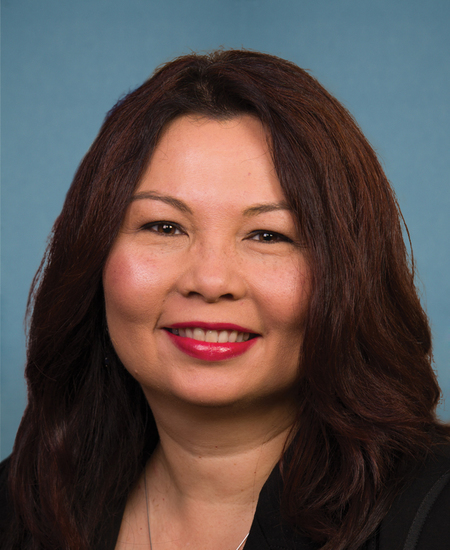
Sponsored bills
Maddy summaryThe GRACE Act (S 3535) sets a minimum annual refugee admission target of 125,000 for the U.S., requiring the President to determine this number based on humanitarian needs and national interest. It introduces community/private sponsorship for refugees, allowing groups to provide initial resettlement services instead of traditional agency support. The bill mandates quarterly public reports to Congress on admissions numbers, regional allocations aligned with UN resettlement needs, processing times, security checks, and any shortfall in meeting targets. This directly affects refugees seeking admission, the Department of Homeland Security (which administers processing), and Congress (through transparency requirements).
Maddy summaryThe Schedules That Work Act would require employers in retail, food service, cleaning, hospitality, and warehouse sectors to provide workers with at least 14 days' advance notice of their schedules and pay predictability pay for last-minute changes. It gives employees the right to request schedule changes for reasons including health conditions, caregiving responsibilities, or enrollment in career training programs. Employers must engage in a good-faith process to address these requests unless they have a legitimate business reason to deny them. The bill aims to address widespread problems with unpredictable schedules that make it difficult for low-wage workers to manage family responsibilities, access healthcare, and secure stable housing and child care.
Maddy summaryThis bill amends Section 1983 of federal law to make federal law enforcement agencies financially liable when officers violate constitutional rights during searches, seizures, or arrests. It directly affects federal agencies (like the FBI or DHS) and citizens who experience such rights violations. Key provisions remove the requirement that a violation must stem from an agency's policy or custom, and waive the U.S. government's sovereign immunity - meaning agencies can be sued directly in court regardless of officer defenses or immunities. The law expands legal recourse for victims by enabling lawsuits against the agency itself, not just individual officers.
Maddy summaryThis bill prohibits the implementation of the WISeR model under Medicare, specifically blocking the Secretary of Health and Human Services from adopting the "Medicare Program; Implementation of Prior Authorization for Select Services for the Wasteful and Inappropriate Services Reduction (WISeR) Model" or any similar model. It directly affects Medicare beneficiaries and providers by preventing a new payment and service delivery approach that would require prior authorization for certain services. The key provision is a direct ban on the WISeR model's rollout, as outlined in the July 1, 2025, federal notice. This change would maintain current Medicare approval processes for affected services without creating new requirements. The bill does not establish new benefits or alter existing Medicare coverage rules.
Maddy summarySRES 542 is a symbolic Senate resolution commemorating the 50th anniversary of large-scale Southeast Asian refugee resettlement in the U.S. (1975-2025), honoring the contributions and sacrifices of over 3 million Southeast Asian Americans who arrived after conflicts in Cambodia, Laos, and Vietnam. It recognizes their historical roles in U.S. military efforts, their ongoing challenges (including language barriers and health disparities), and their cultural and economic contributions to American society. The resolution does not create new policies or funding but formally acknowledges these communities’ resilience and affirms the U.S. commitment to supporting refugees and immigrants.
Maddy summaryThe RISE from Trauma Act establishes grants for community coordinating bodies to address trauma and build resilience, particularly for children and youth affected by violence, substance use, or other traumatic experiences. These grants (up to $6 million each for 4 years) require diverse community stakeholders - including healthcare providers, schools, law enforcement, and community organizations - to collaborate on identifying local needs and developing trauma-informed strategies. The legislation prioritizes communities with high rates of overdose deaths, violence-related deaths, or involvement in child welfare and juvenile justice systems. It also expands existing programs like the National Child Traumatic Stress Network, creates hospital-based interventions to prevent readmissions after trauma events, and establishes training for schools, law enforcement, and healthcare providers in trauma-informed care. Funding is authorized at $600 million annually from 2026-2033 for these initiatives.
Maddy summaryThe FAAN Act (S 3435) provides $1 billion in federal grants to nursing schools in underserved areas to address nursing workforce shortages. It directly affects nursing schools located in medically underserved regions, rural communities, or areas with health professional shortages, prioritizing institutions serving underrepresented racial/ethnic groups, low-income students, and rural populations. Key provisions require grantees to expand enrollment (especially for underrepresented students), modernize facilities with technology like simulation labs, strengthen clinical partnerships, and hire diverse faculty. Schools must report annually on outcomes, including student demographics and program impacts, with a comprehensive report to Congress after five years. The bill aims to strengthen nursing education capacity and emergency response readiness through these targeted funding mechanisms.
Maddy summaryThis bill amends federal law to remove a specific deadline for completing background checks on firearm purchases. It deletes the requirement that background checks must be completed within 10 business days, as previously established under the Brady Handgun Violence Prevention Act. The change directly affects firearm sellers (such as licensed dealers) who conduct these checks, removing a strict timeline for completing the process. The bill focuses on technical adjustments to existing background check procedures without altering the underlying requirements for the checks themselves.
Maddy summaryThe Keeping All Students Safe Act prohibits inappropriate seclusion and restraint in schools, including mechanical, chemical, and certain physical restraints that pose safety risks. It requires schools to use less restrictive interventions first, train staff in crisis intervention, and notify parents within 24 hours of any restraint incident. The law mandates meetings between schools and parents after incidents to discuss prevention strategies and provides documentation requirements. It applies to all public schools receiving federal funding, with specific protections for students with disabilities. States must submit compliance plans and report on restraint use, including demographic data on affected students.