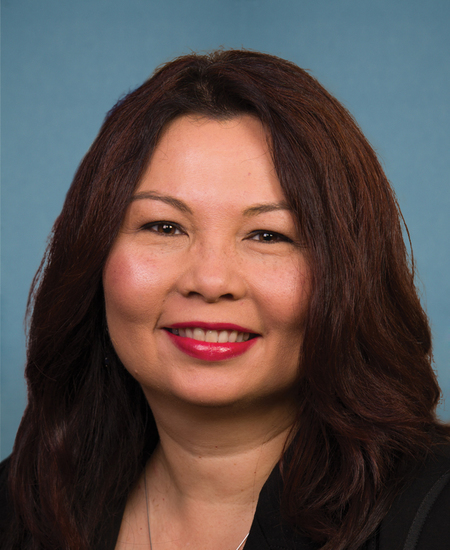
This resolution celebrates the successes of American Indian, Alaska Native, and Native Hawaiian women and the contributions they have made in the United States. The resolution also recognizes the importance of supporting equity, providing safety, and upholding the interests of these women.
Sponsored bills
This resolution designates March 2021 as National Women's History Month. The resolution also recognizes the celebration of such month as a time to reflect on the contributions that women have made to the United States.
Data Care Act of 20 21 This bill imposes various duties on online service providers with respect to their handling of individual-identifying data that can be reasonably linked to a specific user. Specifically, online service providers have a duty to (1) reasonably secure such data from unauthorized access, (2) refrain from using such data in a way that will result in reasonably foreseeable harm to the end user, and (3) not disclose such data to another party unless that party is also bound by the duties established in this bill. The bill authorizes the Federal Trade Commission and specified state officials to take enforcement actions with respect to breaches of such duties.
Freedom To Invest in Tomorrow's Workforce Act This bill allows the use of funds in a qualified tuition program (commonly known as a 529 account) to pay for expenses associated with obtaining or maintaining recognized postsecondary credentials.
Survivors' Access to Supportive Care Act or SASCA This bill sets out programs and requirements to address access and quality issues related to sexual-assault examinations. Specifically, the bill establishes training and technical assistance programs for health care providers on conducting sexual-assault examinations and treating survivors of sexual assault, including in rural and tribal settings; grants for states to assess the availability of trained providers to perform sexual-assault examinations; and a task force to assist state-level efforts to improve medical forensic evidence collection related to sexual assault. The bill also requires institutions of higher education to provide information about the availability of sexual-assault examinations to survivors of sexual assault. Additionally, hospitals and specified components of the Department of Health and Human Services (HHS) must report on access and quality issues concerning sexual-assault examinations and related services. Furthermore, HHS must address access to, and the quality of, trained health care providers who conduct sexual-assault examinations in the National Quality Strategy. This is a national effort to align public-sector and private-sector stakeholders to achieve better health and health care.
Creating a Respectful and Open World for Natural Hair Act of 2021 or the CROWN Act of 2021 This bill prohibits discrimination based on a person's hair texture or hairstyle if that style or texture is commonly associated with a particular race or national origin. Specifically, the bill prohibits this type of discrimination against those participating in federally assisted programs, housing programs, public accommodations, and employment. Persons shall not be deprived of equal rights under the law and shall not be subjected to prohibited practices based on their hair texture or style. The bill provides for enforcement procedures under the applicable laws.
College Transparency Act This bill requires the National Center for Education Statistics to establish a secure and privacy-protected data system that contains information about postsecondary students. Specifically, the data system must evaluate student enrollment patterns, progression, completion, and postcollegiate outcomes, and higher education costs and financial aid; provide complete and customizable information for students and families making decisions about postsecondary education; reduce the requirements for reporting by institutions of higher education; and periodically match with other federal systems of data. The bill also establishes a postsecondary student data system advisory committee.
Resident Physician Shortage Reduction Act of 2021 This bill increases the number of residency positions eligible for graduate medical education payments under Medicare for qualifying hospitals, including hospitals in rural areas and health professional shortage areas. Current law provides for an increase of up to 200 positions per fiscal year beginning in FY2023, with a total increase of 1,000 positions; each hospital may receive up to 25 additional positions. The bill provides for an additional increase of 2,000 positions per fiscal year from FY2023-FY2029; during this period, each hospital may receive up to 75 additional positions in total under the bill and current law. The bill also requires the Government Accountability Office to report on strategies to increase the diversity of the health professional workforce, including with respect to representation from rural, low-income, and minority communities.
Periodically Listing Updates to Management Act or the PLUM Act This bill replaces the congressional publication entitled United States Government Policy and Supporting Positions , commonly known as the PLUM Book , with an online public directory. The PLUM Book contains personnel information for federal civil service leadership and support positions in the legislative and executive branches that may be subject to noncompetitive appointment, including heads of agencies and policy executives. The book is used to identify presidentially appointed positions and is published every four years (after each presidential election) by certain congressional committees. The bill requires the Office of Personnel Management (OPM) to publish the information contained in the PLUM Book on a public website in a format that is easily searchable and that otherwise meets certain data standards. Agencies must upload updated information to the website on a monthly basis; OPM must verify the accuracy of the information twice a year in coordination with the White House Office of Presidential Personnel. The bill terminates publication of the PLUM Book in its current form on January 1, 2024.

Jumpstart Our Businesses by Supporting Students Act of 2021 or the JOBS Act of 2021 This bill expands student eligibility for Pell Grants by establishing the Job Training Federal Pell Grant program. Specifically, the bill requires the Department of Education to award a job training Pell Grant to a student who does not have a degree; attends an institution of higher education (IHE); is enrolled in a career and technical education program at an IHE that provides 150 to 600 clock hours of instructional time over a period of 8 to 15 weeks and provides training aligned with high-skill, high-wage, or in-demand industry sectors (i.e., job training programs); and meets all other eligibility requirements for a Pell Grant. It also specifies that any period during which a student receives a job training Pell Grant counts toward that student's Pell Grant eligibility period.