

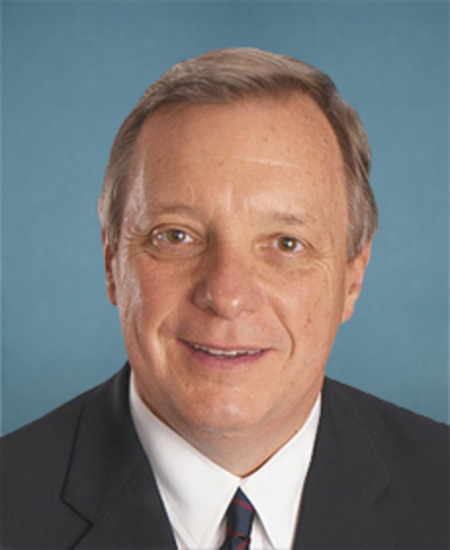
Maddy summaryThis Senate resolution (SRES 876) designates October 2024 as "National Principals Month" to honor elementary, middle, and high school principals across the U.S. It recognizes principals' roles as educational leaders, community builders, and key contributors to school improvement efforts. The resolution formally supports this designation through a non-binding Senate action, acknowledging principals' work in developing curriculum standards and fostering positive learning environments. It does not create new laws or alter funding, but serves as a ceremonial recognition of school leadership.
Sponsored bills
This resolution acknowledges the 120th anniversary of Big Brothers Big Sisters of America and commends the organization for its work mentoring the young people of the United States and strengthening thousands of communities.
Maddy summarySRES 885 is a non-binding Senate resolution designating October 2, 2024, as "Energy Efficiency Day." It commemorates the economic and environmental benefits achieved through existing private sector innovation and federal energy efficiency policies since the 1970s, such as the Energy Policy Act of 1992 and the Energy Efficiency Improvement Act of 2015. The resolution has no direct effect on individuals, businesses, or policy implementation - it solely encourages public observance through programs and activities. It references historical achievements like $1 trillion in annual energy cost savings and a 50% reduction in energy intensity in federal facilities. The resolution reflects bipartisan recognition of energy efficiency progress but does not create new laws or requirements.
Maddy summaryThis resolution (SRES 887) is a symbolic Senate expression of support for designating October 7-12, 2024, as "National 4-H Week." It does not create new laws or funding but formally recognizes the 4-H youth development program, which serves nearly 6 million young people nationwide through community-based projects in health, science, and leadership. The resolution highlights 4-H’s role in fostering youth leadership and its partnership with land-grant universities and the USDA. It directly affects the 4-H organization, its 500,000 volunteers, and the youth members participating in the program.
Maddy summaryThis bill amends the National Child Protection Act of 1993 to expand background check requirements. It allows businesses and organizations working with vulnerable populations (like childcare centers or youth programs) to request background checks for their contractors and for individuals they license or certify to provide care. The key change modifies the Act to include "contractors" and "licensees/certified individuals" under the definition of those requiring background checks. This directly affects organizations that hire external workers or grant credentials to caregivers, ensuring they can verify the background of these individuals. The policy change simplifies the process for these entities to conduct required checks without new federal mandates.
Maddy summaryThis bill adjusts the premium tax credit program under the Affordable Care Act to make health insurance more affordable for lower-income households. It establishes a new sliding scale for the percentage of income people pay toward premiums based on household income relative to the federal poverty line (ranging from 150% to 400% of the poverty line). For example, households earning 150-200% of the poverty line would pay 0-2% of income, while those earning 300-400% would pay 6-8.5%. The changes apply to tax years beginning after December 31, 2025, and directly affect individuals purchasing health insurance through marketplace plans who qualify for these tax credits.
Maddy summaryThis bill prohibits federal agencies from entering contracts with gun dealers who have been identified as "covered dealers" based on firearm tracing data. A dealer becomes "covered" if 25+ firearms traced to them were recovered in crimes within 3 years during two of the past three years. Federal agencies must then avoid contracting with such dealers for three years (current year plus two prior), though the Attorney General may grant national security waivers for Defense or Homeland Security contracts, requiring immediate congressional notification. The rule takes effect 180 days after enactment.
Maddy summaryThis bill, S 5272 (Protect Your Points Act of 2024), requires airlines with frequent flyer programs to protect consumer benefits. It mandates airlines to prominently display the cash value of points in real time, eliminate point expiration dates, allow free transfers of points between accounts with guaranteed equal value, and show both cash and point prices concurrently during flight bookings. Airlines must also provide at least one year’s notice before changing program terms that devalue points or add restrictions. The law directly affects frequent flyer program members and customers of airline co-branded credit cards.
Maddy summaryThis bill authorizes Congress to award Robert M. Gates, former Director of Central Intelligence and Secretary of Defense, a Congressional Gold Medal in recognition of his 27 years of public service to the United States. The medal, designed by the Treasury Secretary, honors his roles in ending the Cold War, leading military transitions in Iraq/Afghanistan, and supporting veterans' welfare. Duplicate bronze medals may be sold to the public to cover production costs. The bill is purely ceremonial, with no policy changes or direct effects beyond honoring Gates' career.
Maddy summaryThis bill authorizes a Congressional Gold Medal to honor the "Hello Girls" - 223 women who served as Army Signal Corps telephone operators in WWI. They connected 26 million calls in France, worked 12-hour shifts under combat conditions, and were denied veteran benefits for 60 years despite wearing uniforms and facing combat hazards. The medal recognizes their pioneering military service, devotion to duty, and the decades-long struggle for recognition as soldiers. It directs the Treasury to strike the medal and place it in the Smithsonian for public display at institutions like the National WWI Museum.