

Maddy summaryThe Strong Communities Act of 2025 creates a new federal grant program to fund law enforcement training for officers and recruits. Local police departments and sheriff's offices can receive grants to send officers to training programs at eligible colleges or police departments, with the requirement that officers serve at least 4 years in their local community after training. To qualify, officers must live within specific distances (7 or 20 miles) of their long-term residence (5+ years) and provide proof of employment. The program requires annual reports to Congress detailing grant recipients, training participants, and retention rates.
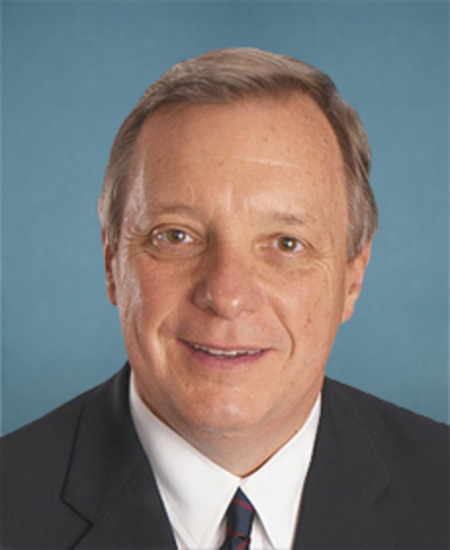
Sen. Richard J. Durbin
Sponsored bills
Maddy summaryThis bill reauthorizes the PROTECT Our Children Act of 2008 with updated requirements. It mandates a National Strategy for child exploitation prevention to be reviewed every four years (instead of every two), requiring detailed analyses of trends, resource needs, and ICAC task force performance. The bill modifies ICAC task force operations to include prioritizing victim identification, expands coordination with tribal/military agencies, and adds limited liability protections for task forces regarding investigative decisions. It increases annual funding for the program from $70 million (2026) to $90 million (2028), directly affecting federal agencies (DOJ, FBI, ICE), state/local law enforcement, and ICAC task forces nationwide.
Maddy summaryThis bill reauthorizes funding for existing mental health support programs designed to assist law enforcement officers experiencing crisis. It extends the authorization period for these programs from 2020-2024 to 2025-2029 under Section 1001(a)(21) of the 1968 Omnibus Crime Control and Safe Streets Act. The bill directly affects law enforcement officers who access these crisis support services, ensuring continued availability of the established program. It does not create new programs but maintains current funding for existing mental health treatment and support resources for officers.
Maddy summaryThis bill expands benefits for public safety officers (like police and firefighters) who develop certain cancers linked to their work. It creates a presumption that specific cancers - such as lung, bladder, or mesothelioma - were caused by job-related exposure to carcinogens, if the officer served at least 5 years, was diagnosed within 15 years of leaving active duty, and the cancer caused death or permanent disability. The list of covered cancers will be updated every 3 years based on medical evidence from agencies like the National Institute for Occupational Safety and Health. Claims must be filed within 3 years of the bill’s enactment, applying to cases involving deaths or disabilities occurring after January 1, 2020.
Maddy summaryS 180, the Protecting First Responders from Secondary Exposure Act of 2025, requires the federal government to provide training and resources for first responders on using containment devices to prevent accidental exposure to fentanyl and other dangerous substances. It mandates the purchase of these containment devices for first responder use. The bill amends existing law (34 U.S.C. 10701(a)) by adding a new provision (paragraph (4)) that specifically addresses this safety measure. This directly affects police, firefighters, and emergency medical personnel who may encounter fentanyl during their duties. The key mechanism is the federal funding and requirement for both training and procurement of protective equipment.
Maddy summaryThis resolution designates May 29, 2025, as "Mental Health Awareness in Agriculture Day" to raise public awareness about mental health challenges in farming and ranching. It directly affects farmers and farmworkers, who face significantly higher suicide rates (3.5x the general population for farmers, 1.4x for farmworkers) and unique stressors like weather, labor shortages, and market fluctuations. The resolution highlights existing USDA resources like the Farm and Ranch Stress Assistance Network and encourages the public to observe the day to reduce stigma and promote mental well-being in the agricultural workforce. As a ceremonial resolution, it does not create new programs but aims to foster awareness during National Mental Health Awareness Month.
Maddy summaryThis resolution (SRES 231) expresses the U.S. Senate's recognition of teachers' vital roles in strengthening American communities, culture, and economy. It specifically thanks teachers for their dedication during National Teacher Appreciation Week (May 5-9, 2025), which aims to raise public awareness of their contributions. The Senate encourages students, parents, school leaders, and officials to acknowledge teachers' work during this week. As a symbolic resolution, it does not create new laws or obligations but promotes public appreciation for educators.
Maddy summaryThis resolution (SRES 195) directs the U.S. Secretary of State to submit a detailed report to Congress within 30 days on El Salvador’s human rights practices. The report must include verified information about alleged violations such as torture, forced disappearances, judicial independence concerns, and the treatment of foreign nationals detained in El Salvador. It also requires assessments of whether U.S. security assistance could be misused and actions taken to protect U.S. citizens detained there. The resolution specifically requests this information under Section 502B(c) of the Foreign Assistance Act, which governs human rights conditions for foreign aid. The report will inform Congress’s oversight of U.S. policy toward El Salvador.
Maddy summaryThis bill protects employees and independent contractors who report AI-related security risks or violations. It prohibits employers from retaliating against workers who disclose AI security vulnerabilities (like potential theft of AI systems) or AI violations (such as unsafe development practices) to regulators, Congress, or internal supervisors. Covered individuals can seek remedies like reinstatement, double back pay, and legal fees through the Labor Department or federal court if retaliated against. The law explicitly blocks employers from requiring arbitration or waiving these protections through contracts.
Maddy summaryThis bill sets annual reference prices for prescription drugs based on the lowest prices in specific countries (like Canada, UK, and Germany), preventing manufacturers from charging more than this price for drugs covered under major federal health programs. It directly affects Medicare, Medicaid, VA care, TRICARE, and other federal health programs by capping drug costs at the reference price. Manufacturers must sell drugs at or below this reference price to all patients, including those without insurance, with civil penalties of up to five times the revenue difference for non-compliance. Collected penalties fund drug research through the National Institutes of Health.