

Maddy summaryThe Register America to Vote Act of 2023 would require states to automatically register eligible citizens to vote when they turn 18 or when they interact with state motor vehicle authorities for services like license applications, with an option to decline. States would need to establish electronic systems to transfer registration information from motor vehicle offices to election officials, updating voter registration without requiring additional action from citizens. The bill includes strong privacy protections for voter information and requires states to modernize registration systems to improve accuracy and accessibility, particularly benefiting young people, individuals with disabilities, and racial and ethnic minorities. It also provides $3 billion in federal funding to help states implement these changes by 2024.
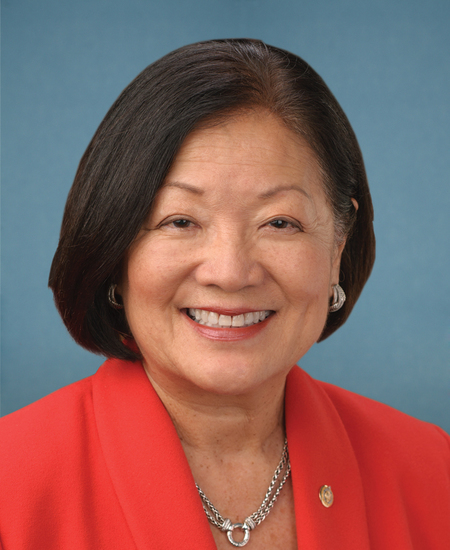
Sponsored bills
Maddy summaryThis bill requires the Federal Aviation Administration (FAA) to hire the maximum number of new air traffic controllers each year from 2024 through 2028, based on the training capacity of the FAA Academy. It directly affects the FAA, which must set annual hiring targets aligned with its ability to train new controllers. The law does not change existing hiring rules but mandates that the FAA utilize its full training capacity each year for new controller hires during this period. It excludes certain individuals specified under federal law, but the core provision focuses on maximizing new controller recruitment within available training resources.
Maddy summaryThis proposed constitutional amendment would give Congress and states the authority to regulate campaign contributions and spending, including setting limits and prohibiting corporations from spending money to influence elections. It explicitly protects freedom of the press by stating the amendment cannot be used to abridge it. If ratified by three-fourths of state legislatures, it would establish a new constitutional standard for campaign finance regulation.
Maddy summaryThis bill establishes a program to provide federal funding for school infrastructure improvements in federally impacted school districts, which serve communities on federal lands like Indian reservations and military bases where local property taxes are limited due to non-taxable federal property. It authorizes $250 million annually for fiscal years 2024-2027 to fund critical repairs, modernization, and construction projects, prioritizing schools with immediate safety hazards first. The program offers full grants for districts with no bond capacity and requires local matching funds (10-25% of project costs) based on each district's financial capacity. It specifically addresses unique challenges like teacher housing needs on tribal lands and ensures funds supplement, rather than replace, existing local funding for school facilities.
Maddy summaryS 2776, the Disarm Hate Act, prohibits firearm sales, possession, shipment, or transport for individuals convicted of a misdemeanor hate crime or receiving an enhanced sentence for such a crime. It directly affects people convicted under state, federal, or tribal law of a misdemeanor involving bias motivation (based on race, religion, gender, sexual orientation, gender identity, or disability) and physical threat or force. The bill amends federal gun laws (18 U.S.C. §§922(d) and 922(g)) to add this restriction, while excluding cases where convictions were expunged, pardoned, or where legal rights were waived improperly. This is a concrete policy change affecting firearm access for a specific category of offenders, not a broader hate crime prevention measure.
Maddy summaryThis bill provides $16 billion in federal funding over five years (2024-2028) to stabilize the child care sector. It directly affects child care providers by offering grants to offset operating costs, support higher wages for early childhood educators without increasing fees for families, and expand access to high-quality care. Key provisions include funding for providers in underserved areas (like rural communities, infant/toddler care, and inclusive services for children with disabilities) and a requirement that 99% of funds go directly to providers. The funds are administered through the existing framework of the American Rescue Plan Act's child care program.
Maddy summaryThe Wage Theft Prevention and Wage Recovery Act requires employers to provide detailed paystubs showing wage calculations, timely final payments within 14 days of termination, and strengthens workers' ability to recover stolen wages. It increases civil penalties for wage theft violations from $10,000 to $22,030 per employee affected for initial violations, and extends the statute of limitations for wage theft claims from 2-3 years to 4-5 years. The bill creates a $50 million grant program to fund community partnerships that prevent wage theft and assist workers in recovering unpaid wages. These provisions target widespread wage theft that disproportionately affects low-wage workers, women, immigrants, and racial and ethnic minorities.
Maddy summaryThis bill requires car manufacturers to include AM radio receivers as standard equipment in all new vehicles sold in the U.S., without additional cost to buyers. It mandates that AM radio controls be clearly visible on the dashboard for drivers. For vehicles sold before the rule takes effect, manufacturers must label them to disclose the absence of AM radio. The bill aims to maintain access to AM radio broadcasts, which are used for emergency alerts, but does not mandate new emergency systems.
Maddy summaryThis bill (S 2757) freezes current payment rates for veterans' transportation services provided through "special modes" (like non-emergency medical transport) starting January 1, 2023, preventing the VA from lowering these rates without strict conditions. It directly affects veterans relying on these transportation services and the contractors providing them. The key provision allows rate increases but requires the VA to conduct a detailed economic impact review, consult with veterans' groups and industry experts, and ensure new rates cover actual costs before any decrease can occur. This aims to protect veterans' access to care by preventing rate cuts that could disrupt transportation services.
Maddy summaryThis resolution designates August 16, 2023, as "National Airborne Day" to honor the history of U.S. airborne forces. It recognizes the first official Army parachute jump on August 16, 1940, and highlights the service of airborne units from World War II through modern conflicts. The resolution calls for the American public to observe the day with appropriate activities, but it does not create new laws or affect any specific group or policy. As a commemorative resolution, it has no binding effect beyond the symbolic recognition.