

Maddy summaryThis bill would require Members of Congress, their spouses, and dependent children to stop trading or holding certain investments (called "covered investments") and instead place them in "qualified blind trusts" or divest them by specific deadlines. It defines covered investments broadly to include stocks, commodities, and derivatives, but excludes diversified mutual funds, government bonds, and some business interests. The bill sets different deadlines for different groups (e.g., 90 days after enactment for existing holdings, 120 days for new holdings) and establishes civil penalties for non-compliance, including penalties equal to 10% of the value of non-compliant holdings. It also requires public reporting of financial disclosures and establishes procedures for oversight by ethics offices.
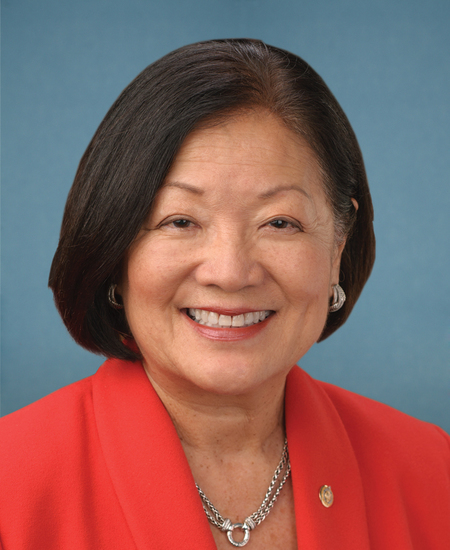
Sponsored bills
Maddy summaryThis bill creates a new student loan forgiveness program for public servants who take out federal loans after the law passes. It forgives 15% of the loan balance after 2 years of public service, increasing to 30% after 10 years, based on the loan amount when they started the job. Borrowers must submit an employment certification form to qualify, and the program also cancels interest accrued during the application review period. It directly affects public servants (like teachers, firefighters, and government workers) with new federal student loans who work full-time in qualifying roles for the required years.
Maddy summaryThis bill creates a federal task force within Homeland Security to reunite children separated from parents at the U.S.-Mexico border between January 2017 and January 2021 under the Zero-Tolerance Policy. The task force must identify all affected children (under 18 during separation), recommend legal pathways for reunification (including visa options and parole), and propose support services like mental health care. It must report to Congress every 60 days and will sunset 120 days after all reunifications are complete or by January 20, 2039, whichever comes first. The bill directly affects thousands of children and families impacted by the 2018 border separation policy.
Maddy summaryThis bill requires the Secretary of Veterans Affairs to review the automatic maximum coverage amount for Servicemembers' Group Life Insurance (SGLI) and Veterans' Group Life Insurance (VGLI) every three years, starting January 1, 2024. The review compares the current coverage limit to an inflation-adjusted amount calculated as $400,000 multiplied by the percentage increase in the Consumer Price Index (CPI) since 2005. This adjustment ensures coverage limits keep pace with inflation for eligible servicemembers and veterans enrolled in these insurance programs. The results of each review must be submitted to Congress.
Maddy summaryS 5531, the Public Archives Resiliency Act, provides $250 million in federal grants for state, local, tribal, territorial governments, and institutions like public archives, libraries, and museums to protect vital records from climate threats. Eligible entities can use funds for facility upgrades (e.g., flood or fire protection), staffing for digitization, relocating records from hazard zones, and developing emergency plans. At least 50% of funds must support vital records like birth certificates, marriage licenses, and historical archives, with 3% reserved for Tribal and Native Hawaiian organizations. The bill requires no matching funds from recipients and mandates a study on climate risks to records by the Comptroller General.
Maddy summaryThis bill reauthorizes the PROTECT Our Children Act of 2008, extending and updating federal efforts to combat online child exploitation. It requires the National Strategy for Child Exploitation Prevention to be updated every four years (instead of every two) and mandates detailed analyses of trends, resource needs, and ICAC task force performance - including arrests, prosecutions, and victim identification. The bill increases annual funding for these programs from $70 million (2025) to $90 million (2027) and adds limited liability protections for specialized law enforcement teams investigating online child exploitation. These provisions directly affect federal, state, local, tribal, and military law enforcement agencies operating ICAC task forces and the National Center for Missing and Exploited Children.
Maddy summaryThis bill authorizes the posthumous award of a Congressional Gold Medal to Shirley Chisholm, the first African-American woman elected to Congress (1968-1982) and the first African American to seek a major party's presidential nomination (1972). The bill directs the Secretary of the Treasury to design and strike a gold medal featuring Chisholm's image and name, which will be presented to her family by congressional leaders. After presentation, the medal will be displayed at the Smithsonian Institution for public viewing and research. The bill also authorizes the production and sale of bronze duplicates to cover costs. This is a commemorative measure honoring Chisholm's historic contributions to American politics and civil rights.
Maddy summaryThe Forgotten Heroes of the Holocaust Congressional Gold Medal Act (S. 91) authorizes the award of a single Congressional Gold Medal to 60 diplomats who risked their careers and safety to save Jewish lives during the Holocaust. These diplomats, representing countries including Sweden, Switzerland, Spain, Portugal, and others, issued visas and provided safe passage to Jews fleeing Nazi persecution despite strict orders from their home governments. The medal will be presented collectively to the next of kin of each diplomat, along with representatives from their home countries, and then permanently displayed at the United States Holocaust Memorial Museum. The act recognizes these individuals' bravery without implying they represent all who performed similar humanitarian acts during the Holocaust. The medal serves as a permanent tribute to their sacrifice and will be available for public display and research.
Maddy summarySRES 74 is a Senate resolution condemning Iran's state-sponsored persecution of the Baha'i minority, which directly affects Baha'is in Iran facing systemic discrimination. The resolution calls on Iran to immediately release imprisoned Baha'is, end hate propaganda against them, and reverse policies denying equal access to education, jobs, and religious practice. It also urges the U.S. President and Secretary of State to demand Iran's compliance with international human rights treaties and use existing sanctions authority against Iranian officials responsible for abuses. As a symbolic resolution, it does not create new laws but formally expresses congressional condemnation of Iran's violations of the Universal Declaration of Human Rights and International Covenant on Civil and Political Rights.
Maddy summaryThe End the Threat of Default Act of 2024 would repeal the statutory debt ceiling, a legal limit on how much the U.S. government can borrow. This change would eliminate the need for Congress to vote on raising the debt ceiling to avoid defaulting on government obligations like Social Security payments or military salaries. The bill also includes technical updates to other laws to remove references to the debt ceiling. The repeal would take effect 7 days after the bill is enacted.