

Maddy summaryThe SPARK Act establishes the Spark Program to support underserved small businesses by providing grants to eligible organizations like incubators, accelerators, and community development financial institutions. It directly affects minority-owned businesses (which face twice the denial rate for financing), women-owned businesses, rural businesses, and businesses in economically distressed areas by offering free mentorship, counseling, and access to capital. The program requires participating organizations to provide 5-year services with no fees for businesses and track metrics including jobs created, capital accessed, and business growth. It also creates a Spark Financing Program that provides grants up to $20,000 and low-interest loans to covered small businesses. Annual reports will track outcomes including demographic breakdowns of participants and business retention rates.
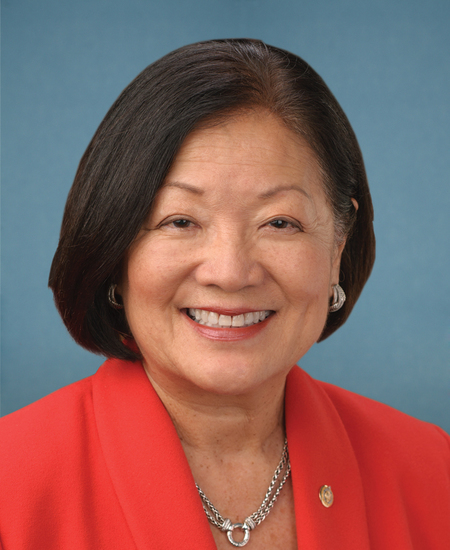
Sponsored bills
Maddy summaryThe Healthy Families Act would require most private employers and certain government entities to provide employees with earned paid sick time, allowing workers to take up to 56 hours per year for their own health needs, caring for family members, or addressing domestic violence, sexual assault, or stalking. Employees would earn 1 hour of paid sick time for every 30 hours worked, with the ability to use it for medical appointments, caring for family members with health needs, or seeking safety from violence. The bill prohibits employers from retaliating against workers who use this time and requires employers to post clear notices about the policy. It applies to most private employers, with specific provisions for government entities like the Library of Congress and Government Accountability Office.
Maddy summaryThis bill requires the Federal Trade Commission (FTC) to study firearm advertising and marketing for unfair or deceptive practices, such as ads targeting people under 18, implying illegal use, or promoting semiautomatic assault weapons. Within two years, the FTC must report findings to Congress and then create regulations to ban these practices within 18 months of the report. These regulations would apply to firearm manufacturers, dealers, and importers, prohibiting specific deceptive marketing tactics. Violations would be enforced under existing FTC authority, with penalties matching current unfair business practice violations.
Maddy summary# Summary of Workplace Discrimination and Harassment Legislation This comprehensive bill expands protections against workplace discrimination and harassment while strengthening enforcement mechanisms for workers. Key provisions include: 1. **Expanded Protections (Section 301)**: - Extends anti-discrimination protections to independent contractors, interns, fellows, volunteers, and trainees under major civil rights laws - Creates "covered establishment" definition for entities engaging these workers 2. **Nondisclosure/Nondisparagement Clause Ban (Section 302)**: - Prohibits employers from requiring workers to sign nondisclosure or nondisparagement clauses covering harassment or discrimination - Establishes strict requirements for settlement agreements (including 21-day consideration period, 7-day revocation period, and clear written disclosure) - Protects workers' right to report harassment to the EEOC without penalty 3. **Arbitration Restrictions (Section 303)**: - Bans mandatory pre-dispute arbitration agreements that prevent class or collective actions - Establishes new requirements for post-dispute arbitration agreements - Allows workers to sue employers who violate these provisions 4. **Federal Contractor Compliance (Section 304)**: - Requires federal contractors to disclose past violations of labor and civil rights laws - Establishes Labor Compliance Advisors at executive agencies - Creates a system for monitoring contractor compliance with labor laws 5. **Grant Programs (Sections 401-436)**: - Creates national grants to prevent and address employment discrimination - Establishes grants for legal assistance for low-income workers facing discrimination - Creates a system of state advocacy for workers' rights through state-level systems The bill aims to strengthen worker protections against discrimination and harassment while expanding access to legal remedies and creating new mechanisms for enforcement and prevention. It also includes provisions to ensure federal contractors comply with labor and civil rights laws and establishes new reporting requirements for contractors with past violations.
Maddy summaryThis is a Senate resolution (SRES 604), not a bill, expressing the Senate's non-binding view that the federal government should create a Transgender Bill of Rights. It calls for protections including equal access to healthcare (specifically affirming gender-affirming care), anti-discrimination measures in employment and housing, easier legal gender recognition on documents, and safety improvements for transgender and nonbinary people in custody. The resolution outlines detailed policy goals but does not create new law or mandate government action. It serves as a statement of principle, not a legislative proposal.
Maddy summaryThis bill sets minimum staffing requirements for two federal forestry research institutes. It mandates that the Institute of Tropical Forestry in Puerto Rico maintain at least 50 staff members, and the Institute of Pacific Islands Forestry must have at least 30 staff members, both with adequate resources. These provisions aim to ensure both institutes can effectively advance scientific research, demonstration, and knowledge exchange in tropical and Pacific Islands forestry. The bill directly affects these two specific research entities under the Food, Agriculture, Conservation, and Trade Act of 1990.
Maddy summaryThis bill amends U.S. tax law to prevent corporations from avoiding U.S. taxes through "inversions," where a foreign company acquires a U.S. business and moves its tax residence abroad. It treats certain foreign corporations as domestic for tax purposes if they acquire a U.S. entity after May 8, 2014, and either have over 50% of their stock held by former U.S. shareholders or maintain significant U.S. operations (at least 25% of employees, compensation, assets, or income in the U.S.). Exceptions apply if the corporation has substantial business activities in its original foreign country. The changes apply to taxable years ending after May 8, 2014, targeting tax avoidance strategies rather than affecting most standard multinational businesses.
Maddy summaryThis bill, S 3823 (FAIR Act), sets specific pay adjustments for federal employees in calendar year 2027. It mandates a 3.1% increase in base pay for employees covered by statutory pay systems (most federal workers) and prevailing rate employees (those paid based on local private-sector wages), and a 1% increase in locality pay adjustments. These changes directly affect all federal employees whose pay is determined under the specified systems outlined in Title 5 of the U.S. Code. The bill is procedural, establishing concrete pay rate adjustments without altering broader employment policies.
Maddy summarySRES 597 is a Senate resolution authorizing the U.S. Senate to initiate or join a federal lawsuit against the Department of Justice for failing to fully comply with the Epstein Files Transparency Act (Public Law 119-38), which required the complete release of all Epstein-related documents by December 19, 2025. The resolution directs the Senate Majority Leader to file the lawsuit to compel the DOJ to release unredacted documents meeting the Act's requirements, covering legal costs from Senate appropriations. This action follows the DOJ's release of only about 12,000 documents (less than 1% of files) by the deadline, along with misrepresentations about the volume and completeness of the release.
Maddy summaryThis Senate resolution (SRES 601) designates the week beginning February 2, 2026, as "National Tribal Colleges and Universities Week" to recognize these institutions' role in serving Native communities and their economic contributions. It highlights that tribal colleges serve students from over 250 federally recognized tribes, offer culturally grounded education, and contribute $3.8 billion annually to the U.S. economy. As a symbolic resolution (not a law), it has no binding effect but calls for public observance through community activities. The resolution focuses on honoring tribal colleges' mission and achievements, citing their open enrollment and economic impact statistics.