

Federal Employees Civil Relief Act This bill establishes a framework to temporarily suspend certain judicial and administrative proceedings against a federal employee or contractor during a shutdown (i.e., any period in which there is more than a 24-hour lapse in appropriations affecting any federal agency or department). A federal worker who is furloughed or required to work without pay during a shutdown may apply to a court for a temporary stay, postponement, or suspension of any payment of rent, mortgage, tax, fine, penalty, insurance premium, student loan repayment, or other civil obligation or liability that the worker or individual owes or would owe during the duration of the shutdown. The Department of Justice many commence a civil action against any person who engages in (1) a pattern or practice of violating the requirements of this bill, or (2) a violation that raises an issue of significant public importance. A person aggrieved by a violation of this bill's requirements may also bring a private right of action.
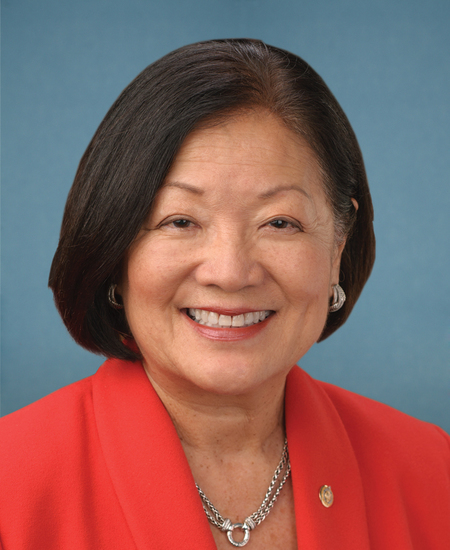
Sponsored bills
This resolution honors the life of Robert Dove, Parliamentarian Emeritus of the Senate, and offers the condolences of the Senate regarding his death.
This resolution honors the contributions of small businesses in the United States and supports the designation of National Small Business Week.
Tyler Clementi Higher Education Anti-Harassment Act of 2021 This bill addresses harassment at institutions of higher education (IHEs). Specifically, the bill requires each IHE to include in its annual security report a statement of policy regarding harassment on the basis of a student's actual or perceived race, color, national origin, sex (including sexual orientation, gender identity, pregnancy, childbirth, a medical condition related to pregnancy or childbirth, and a sex stereotype), disability, or religion. In addition, the Department of Education may award grants to IHEs to initiate, expand, or improve programs to (1) prevent the harassment of students; (2) provide counseling or redress services to students who have been harassed or accused of subjecting other students to harassment; or (3) educate and train students, faculty, or staff to prevent harassment or address harassment if it occurs.
Startup Opportunity Accelerator Act of 2021 or the SOAR Act This bill requires the Small Business Administration to develop and implement a program to award cash grants of at least $1,000,000 to organizations that support new small businesses. These awards may be used for construction costs, space acquisition, and programmatic purposes, but they may not be used to provide capital or professional services to small businesses directly or through the subaward of funds. The organization must have the support of new small businesses as a primary purpose and be often classified as an accelerator. The term accelerator means an organization that (1) supports new businesses with a focus on technology, research, and development; (2) frequently provides, but is not exclusively designed to provide, seed investment in exchange for a small amount of equity; (3) works with a startup for a predetermined amount of time; (4) provides mentorship and instruction to scale businesses; or (5) offers startup capital or the opportunity to raise capital from outside investors.
This resolution designates the week of September 19-September 25, 2021, as National Estuaries Week.
Equitable Payments for Nursing Facilities Act of 2021 This bill allows the Centers for Medicare & Medicaid Services to adjust the federal per diem payment rate for Medicare skilled nursing facilities in Alaska or Hawaii to reflect the unique circumstances of such facilities.
Keeping Renters Safe Act This bill expressly authorizes the Department of Health and Human Services (HHS) to place a moratorium on residential evictions to prevent the spread of communicable diseases. The bill also requires HHS to implement a moratorium nationwide to reduce the spread of COVID-19. This moratorium must remain in effect for at least 60 days following the termination of the COVID-19 public health emergency. Current law authorizes HHS to take measures to prevent the spread of communicable diseases. As part of the COVID-19 response, HHS delegated this authority to the Centers for Disease Control and Prevention (CDC), which then issued (and extended) several orders banning residential evictions. Whether these orders exceed the CDC's statutory and constitutional authority has been the subject of multiple legal challenges; the Supreme Court blocked enforcement of the most recent order on August 26, 2021.
This joint resolution proposes a constitutional amendment authorizing Congress and the states to set reasonable limits on the raising and spending of money by candidates and others to influence elections. The amendment grants Congress and the states the power to implement and enforce this amendment by legislation. They are allowed to distinguish between natural persons and corporations or other artificial entities created by law, including by prohibiting such entities from spending money to influence elections.
Do No Harm Act This bill prohibits the application of the Religious Freedom Restoration Act of 1993 (RFRA) to specified federal laws or the implementation of such laws. Currently, RFRA prohibits the government from substantially burdening a person's exercise of religion even if the burden results from a rule of general applicability, except in furtherance of a compelling governmental interest when using the least restrictive means. Under the bill, RFRA is inapplicable to laws or the implementation of laws that protect against discrimination or the promotion of equal opportunity (e.g., the Civil Rights Act of 1964); require employers to provide wages, other compensation, or benefits, including leave; protect collective activity in the workplace; protect against child labor, abuse, or exploitation; or provide for access to, information about, referrals for, provision of, or coverage for, any health care item or service. The bill prevents RFRA from being used to deny (1) goods or services the government has contracted, granted, or made an agreement to provide to a beneficiary of or participant in a program or activity funded by such government contract, grant, agreement, or other award; or (2) a person's full and equal enjoyment of a government-provided good, service, benefit, facility, privilege, advantage, or accommodation. In order for a person to assert a RFRA claim or defense in a judicial proceeding, the government must be a party to the proceeding.