

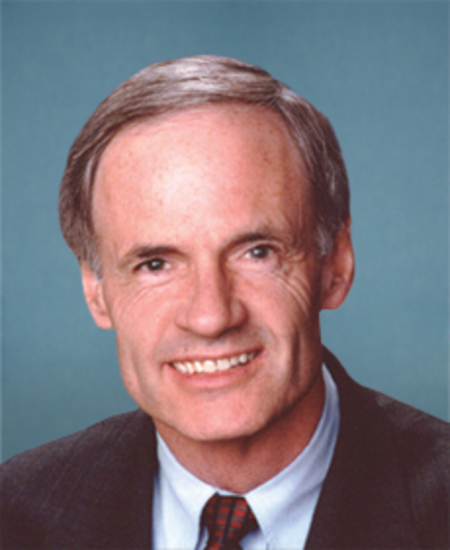
This resolution expresses that the Senate has heard of the death of the Honorable Orrin G. Hatch, former U.S. Senator for the state of Utah. The resolution also expresses that the Senate honors the life and legacy of the late Senator Hatch for his unwavering dedication to Utah as a Senator and a public servant and accomplishments in legislating with principle and dedication for the good of the people of the United States. The resolution states when the Senate adjourns today, it stands adjourned as a further mark of respect to the memory of Senator Hatch.
Sponsored bills
William T. Coleman, Jr. and Norman Y. Mineta Department of Transportation Headquarters Act This bill designates the headquarters building of the Department of Transportation located at 1200 New Jersey Avenue, SE, in Washington, DC, as the William T. Coleman, Jr. and Norman Y. Mineta Federal Building.
This resolution thanks the teachers of the United States and promotes the teaching profession by encouraging students, parents, school administrators, and public officials to recognize National Teacher Appreciation Week.
This resolution supports the designation of May 1, 2022, through May 7, 2022, as Public Service Recognition Week and commends public servants for their contributions.
Water Resources Development Act of 2022 This bill authorizes the U.S. Army Corps of Engineers to carry out activities concerning water resources development projects, ecosystem restoration, flood control, water supply and wastewater infrastructure, or navigation.
Human Trafficking Survivor Tax Relief Act This bill excludes from gross income, for income tax purposes, any civil damages, restitution, or other monetary award (including compensatory or statutory damages and restitution imposed in a criminal matter) awarded pursuant to an order of mandatory restitution or in a criminal proceeding for peonage, slavery, or human trafficking.
Maddy summarySRES 599 is a Senate resolution (not a law) introduced in April 2022 that honors military children during the National Month of the Military Child (observed each April). It recognizes the sacrifices of approximately 2 million military children who have experienced parental deployment since 9/11, live with disabled veterans, or have lost a military parent. The resolution urges all Americans to support military children through ceremonies and activities during April, aligning with existing Department of Defense and Veterans Affairs programs. It does not create new policies or funding but symbolically acknowledges military children's contributions and challenges.
Maddy summarySRES 593 is a Senate resolution honoring former U.S. Senator Kaneaster Hodges, Jr. of Arkansas, who served from 1977 to 1978. The resolution expresses the Senate’s "profound sorrow" at his death and directs the Secretary of the Senate to transmit an enrolled copy to his family. It also calls for the Senate to adjourn as a mark of respect. This is a ceremonial resolution with no policy provisions or direct impact on legislation or constituents.
Maddy summarySRES 586 is a symbolic Senate resolution expressing support for designating April 4-8, 2022, as National Assistant Principals Week. It honors assistant principals for their roles in maintaining school safety, supporting student achievement, and collaborating with staff and communities. The resolution does not create new policies or funding but encourages public recognition of their contributions to education. It directly affects assistant principals nationwide by formally acknowledging their work in school leadership.
Preventing Future Pandemics Act of 2022 This bill addresses issues related to the commercial trade in live wildlife for human consumption in other countries. For example, the bill requires the Department of State and the U.S. Agency for International Development to work with foreign governments, multilateral organizations, and nongovernmental organizations to carry out activities to (1) close wildlife markets and prevent associated commercial trade in live wildlife, (2) improve regulatory oversight and eliminate practices that contribute to zoonotic spillover and emerging pathogens, and (3) offer alternative livelihood and worker training programs to individuals and communities currently engaged in the commercial trade in live wildlife for human consumption.