

Maddy summaryThis bill amends the tax code to exclude certain veterinary student loan repayment or forgiveness assistance from taxable income. It specifically applies to veterinarians participating in programs under the National Agricultural Research, Extension, and Teaching Policy Act of 1977 or similar state programs designed to increase rural veterinary access. The key change clarifies that financial assistance provided through these targeted programs is not considered taxable income for participants. This directly benefits veterinarians in rural areas who use these loan repayment options to practice in underserved communities.
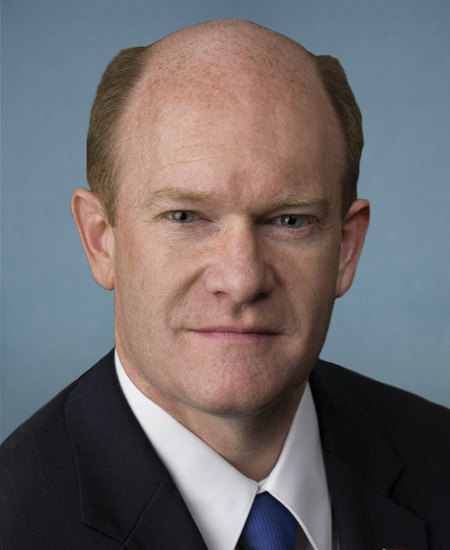
Sen. Christopher A. Coons
Sponsored bills
Maddy summaryThis proposed constitutional amendment would give Congress and states the authority to regulate campaign contributions and spending, including setting limits and prohibiting corporations from spending money to influence elections. It explicitly protects freedom of the press by stating the amendment cannot be used to abridge it. If ratified by three-fourths of state legislatures, it would establish a new constitutional standard for campaign finance regulation.
Maddy summaryThe Carbon Dioxide Removal Research and Development Act of 2023 establishes a federal program to research and develop carbon dioxide removal technologies across multiple departments. It creates an Office of Fossil Energy and Carbon Management within the Department of Energy to coordinate research and authorizes over $10 billion in funding through 2033 for projects including direct air capture, forest restoration, soil carbon management, and ocean-based removal techniques. The bill requires lifecycle analyses and environmental justice assessments for all technologies and establishes competitive demonstration projects with specific cost requirements. Federal agencies must prioritize carbon removal research in their programs, directing billions of dollars toward advancing these technologies to reduce atmospheric carbon dioxide levels.
Maddy summaryThe Veteran Families Health Services Act of 2023 provides fertility treatment and counseling services to active duty military members and veterans with infertility conditions, along with adoption assistance for veterans. It requires the Department of Defense to establish fertility preservation procedures before deployment or hazardous assignments, including cryopreservation and storage of reproductive genetic material at no cost to service members. The bill ensures these services are provided without regard to sex, gender identity, sexual orientation, or marital status, with specific limits on in vitro fertilization (three completed oocyte retrievals, unlimited embryo transfers per medical guidelines). It creates coordination between the Department of Defense and Department of Veterans Affairs to ensure seamless transitions of care and adds adoption assistance with a limit of three covered adoptions. The legislation specifically covers veterans with service-connected disabilities affecting reproductive health, such as spinal cord injuries, military sexual trauma, or certain mental health conditions.
Maddy summaryS 2789, the African Diaspora Heritage Month Act of 2023, would require the President to annually designate a month as "African Diaspora Heritage Month" through a formal proclamation. The proclamation would call on state and local governments and the public to observe the month with programs and activities celebrating the contributions of the African diaspora community. This bill does not create new government programs or funding but adds a recurring national observance to federal law. The African diaspora community - encompassing people of diverse African heritage living in the United States - would be the focus of this recognition.
Maddy summaryThe Increasing Access to Dental Insurance Act (S 2771) would amend the Affordable Care Act to allow individuals to enroll in standalone dental insurance plans through health insurance marketplaces without needing to also have a health insurance plan. This change removes a current barrier that previously prevented people from accessing dental coverage if they weren't enrolled in a health plan. The bill directly affects people seeking dental insurance who do not have or do not want a comprehensive health insurance plan. By prohibiting restrictions based on health insurance status, the law aims to make dental coverage more accessible for these individuals.
Maddy summaryThis bill requires car manufacturers to include AM radio receivers as standard equipment in all new vehicles sold in the U.S., without additional cost to buyers. It mandates that AM radio controls be clearly visible on the dashboard for drivers. For vehicles sold before the rule takes effect, manufacturers must label them to disclose the absence of AM radio. The bill aims to maintain access to AM radio broadcasts, which are used for emergency alerts, but does not mandate new emergency systems.
Maddy summaryThe JUDGES Act authorizes 66 new permanent federal district court judgeships across 16 states, primarily in high-filing districts like California, Texas, Florida, and New York, to address case backlogs. It schedules appointments for 2025 and 2029, including 2 temporary judgeships in Oklahoma (with vacancies not filled after 5 years) and converts existing temporary judgeships in Missouri, Arizona, and other districts to permanent status. The bill also requires a GAO report identifying underused federal courthouses within one year. These changes directly affect the judicial capacity of specific districts, aiming to reduce pending case loads by increasing judicial staffing.
Maddy summaryThis bill (S 2757) freezes current payment rates for veterans' transportation services provided through "special modes" (like non-emergency medical transport) starting January 1, 2023, preventing the VA from lowering these rates without strict conditions. It directly affects veterans relying on these transportation services and the contractors providing them. The key provision allows rate increases but requires the VA to conduct a detailed economic impact review, consult with veterans' groups and industry experts, and ensure new rates cover actual costs before any decrease can occur. This aims to protect veterans' access to care by preventing rate cuts that could disrupt transportation services.
Maddy summaryThis bill requires the Supreme Court to establish a code of conduct for justices within 180 days of enactment, with public access to these rules on the Court's website. It sets minimum disclosure standards for gifts, income, and reimbursements received by justices and their law clerks, and strengthens recusal requirements when justices have financial ties to parties in cases. The bill creates procedures for filing complaints about justices' conduct and establishes a judicial investigation panel to review such complaints, while also requiring parties and amicus curiae to disclose gifts to justices and lobbying activities related to the nomination of justices. These provisions aim to increase transparency and accountability in Supreme Court operations.