

Maddy summarySRES 596 is a Senate resolution recognizing the 112th birthday of Girl Scouts of the United States of America. It celebrates the organization's century-long mission of providing girls with a secure, inclusive environment to explore, build relationships, and develop leadership skills through programs in STEM, civic engagement, and global citizenship. The resolution specifically acknowledges Girl Scouts' role in fostering confidence, mental wellness, and community impact for over 50 million alumnae worldwide. As a symbolic gesture, it does not create new laws or policies but honors the organization's contributions to girls' leadership development.
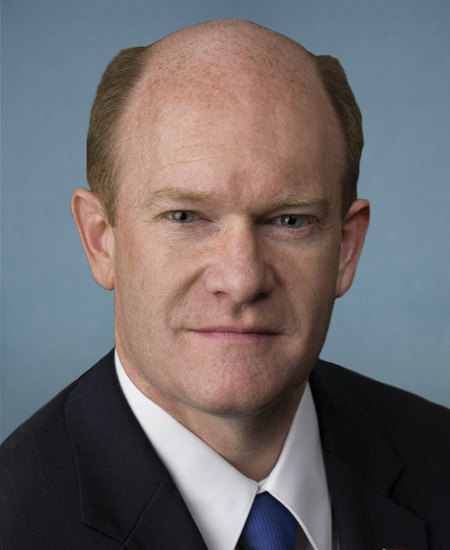
Sen. Christopher A. Coons
Sponsored bills
Maddy summaryThe Telehealth Modernization Act makes permanent Medicare's temporary telehealth coverage rules that were set to expire in 2024, ensuring continued access for beneficiaries. It expands eligibility for healthcare providers who can offer telehealth services under Medicare, allowing the Secretary to add more professions (like nurse practitioners or therapists) after stakeholder consultation. The bill also changes payment rules for community health centers and rural clinics, treating telehealth services provided after 2025 as if delivered in person for billing purposes. Additionally, it permanently allows audio-only telehealth visits for Medicare coverage, removing previous restrictions.
Maddy summaryThis bill establishes the INCLUDE Project at the National Institutes of Health (NIH) to advance research on Down syndrome. It authorizes $250 million annually (2025-2029) for studies on chromosome 21’s effects, co-occurring health conditions (like Alzheimer’s and heart disease), and developing treatments. The program requires NIH to coordinate research across agencies, expand clinical trials for individuals with Down syndrome, and submit biennial reports to Congress. It directly affects NIH’s research priorities and funding for Down syndrome studies, without altering medical care for patients.
Maddy summaryThis bill requires the Environmental Protection Agency (EPA) to collect and standardize data on U.S. recycling and composting systems to improve accountability. It mandates reports on composting infrastructure capabilities, federal agency recycling practices, and end-market sales of recyclables, while creating a national inventory of materials recovery facilities. The law directly affects the EPA, states, local governments, and Indian Tribes by requiring them to provide data on recycling rates, facility capabilities, and material flows. Key mechanisms include standardizing reporting rates, studying material diversion from circular markets, and developing voluntary guidelines for labeling and public education. The bill focuses on building a factual foundation for future policy decisions, not on imposing new recycling mandates.
Maddy summaryThis bill adds phosphate and potash to the Department of the Interior's official list of critical minerals, which identifies minerals vital to U.S. economic and national security. It directly affects domestic mining companies seeking to develop these minerals, as the change could influence federal permitting and leasing processes. The bill requires the Secretary of the Interior to evaluate current policies related to mining projects for these minerals within 90 days of enactment and submit recommendations to relevant congressional committees. These recommendations aim to support increased domestic production of phosphate and potash. The policy changes are limited to updating the critical minerals list and initiating a review of development policies, with no immediate regulatory changes.
Maddy summaryThis bill requires the Director of National Intelligence to create a strategy within 90 days for better sharing information between the government and private companies. The strategy must help U.S. companies competing on energy projects abroad - especially those involving critical minerals - by sharing intelligence about foreign adversaries' threats like economic espionage, disinformation campaigns, and deceptive tactics that undermine U.S. interests. It also mandates a plan for implementing this strategy within 30 days after the strategy is developed, focusing on both sending threat information to companies and receiving threat reports from them. The bill directly affects U.S. energy and mineral companies operating internationally.
Maddy summaryThis bill aims to increase landlord participation in the Housing Choice Voucher program, which helps low-income families, seniors, and people with disabilities afford housing in the private market. It creates three main incentives: one-time payments to landlords (up to 200% of monthly housing payments) for accepting vouchers in low-poverty neighborhoods (census tracts with less than 20% poverty rate), security deposit payments to landlords on behalf of tenants, and bonus payments to public housing agencies that employ dedicated landlord liaisons. The bill establishes a $100 million annual "Herschel Lashkowitz Housing Partnership Fund" to finance these initiatives, with specific requirements to prioritize high-opportunity neighborhoods that have good access to schools, jobs, and transportation. It also includes reporting requirements for the Department of Housing and Urban Development to track the program's effectiveness in recruiting landlords in these areas.
Maddy summaryThe Divided Families National Registry Act (S 3876) creates a national registry for Korean American families separated from relatives in North Korea after the 1953 Korean War Armistice. It directs the State Department to collect family names and details to facilitate future reunions (in-person or via video) and maintain a record of family members, including those who may have died. The bill authorizes $1 million for this registry and requires the State Department to include family reunion progress in U.S.-North Korea diplomatic talks, with annual reports detailing registry status, reunion participation rates, and North Korea’s responses to reunion requests.
Maddy summaryThis bill creates a federal grant program to help states fund child care programs specifically for the children of police officers during their irregular work shifts. States compete for grants to support law enforcement agencies (with 20% of funds reserved for agencies employing fewer than 200 officers), covering costs like facility setup, provider training, and extended hours. Grantees must contribute matching funds (10-33% over three years) and follow state licensing standards. The program, authorized for $24 million annually through 2029, aims to address child care challenges tied to law enforcement work schedules.
Maddy summaryThis bill would require the U.S. Treasury to notify China of termination of the 1984 U.S.-China Income Tax Convention if the Chinese military attacks Taiwan. The termination notice must be sent within 30 days after the President confirms such an attack. The President must also inform the Senate Foreign Relations and Finance committees about the termination. The bill directly affects the tax treaty governing cross-border taxation between U.S. and Chinese individuals and businesses.