

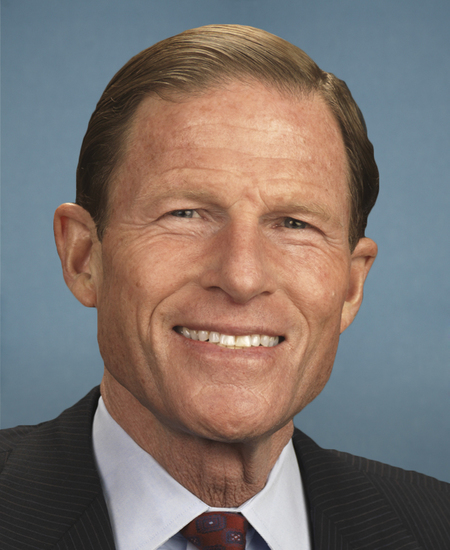
Maddy summaryS 1650, the VA Employee Fairness Act of 2025, modifies collective bargaining rules for Veterans Health Administration (VHA) employees. It removes existing subsections (b), (c), and (d) from Section 7422 of Title 38 and redesignates the current subsection (e) as (b). This change directly affects VHA health care workers who negotiate with management over wages, hours, and working conditions. The bill clarifies that these modifications do not impact the Secretary's existing authority over incentive pay and expedited hiring under Section 706 of Title 38.
Sponsored bills
Maddy summaryThe ACCESS Act of 2025 requires major social media and messaging platforms (defined as services with over 100 million U.S. users that monetize user data) to enable users to easily transfer their data to competing services and ensure their platforms can interoperate with rival services. It mandates that large platforms provide secure, machine-readable data portability and maintain transparent interfaces for competitors to connect with users. The law also establishes rules for third-party agents managing user accounts and prohibits platforms from using data from competitors for commercial gain. Enforcement falls to the Federal Trade Commission, with penalties for violations treated as unfair business practices.
Maddy summaryThis bill bans the commercial provision of conversion therapy - defined as paid attempts to change a person's sexual orientation or gender identity - as it is deemed ineffective and harmful. It directly affects therapists, clinics, and any commercial entity offering such services, while exempting gender transition support and non-discriminatory counseling. Key mechanisms include prohibiting paid conversion therapy, banning deceptive advertising (e.g., claiming it’s harmless), and empowering the Federal Trade Commission and state attorneys general to enforce penalties. The law focuses on preventing fraud by stopping profit-driven practices with no scientific basis, aligning with professional consensus on the risks.
Maddy summarySRES 206 is a symbolic Senate resolution supporting National Nurses Week, to be observed May 6-12, 2025. It recognizes nurses’ contributions to healthcare, highlights their role as patient advocates and leaders in public health, and acknowledges their impact across all stages of life. The resolution encourages the public to observe the week with recognition and activities but does not create new laws or alter policies. It directly honors the nursing profession, which includes over 4.9 million registered nurses in the U.S., without imposing any requirements on government or institutions.
Maddy summarySRES 205 is a Senate resolution condemning President Donald J. Trump’s specific actions targeting press freedom, including accusing media outlets without evidence, excluding major news organizations from White House access, suing CBS News, and seeking to defund public broadcasters. It reaffirms that a free press is essential to democracy and government accountability, as protected by the First Amendment. The resolution calls on the executive branch to respect journalists’ rights, urges continued efforts to secure the release of 11 U.S. Agency for Global Media (USAGM) journalists imprisoned abroad, and expresses solidarity with journalists facing threats. This is a symbolic statement, not a binding law, reflecting the Senate’s position on press freedom.
Maddy summaryS 1628, the Improving Access to Nutrition Act of 2025, eliminates work requirements for the Supplemental Nutrition Assistance Program (SNAP). The bill directly affects approximately 6.1 million people currently subject to SNAP work requirements, including many Black and Hispanic individuals, families with children, and people with health barriers that prevent compliance. It amends the Food and Nutrition Act of 2008 by removing subsection (o) that enforced work requirements and making related administrative adjustments. This change aims to prevent benefit reductions or terminations for vulnerable households during the pandemic, addressing findings that work requirements disproportionately impact communities of color and those facing health or homelessness challenges. The bill takes effect 180 days after enactment.
Modern Emoluments and Malfeasance Enforcement Act or the MEME Act This bill prohibits the President, the Vice President, Members of Congress, those holding Senior Executive Service positions, admirals, generals, and other federal public officials from engaging in or benefiting from the issuance, sponsorship, or promotion of certain assets. The spouse and dependent children of such an official are also covered by the prohibition. Assets covered by the bill are securities, security futures, commodities, digital assets such as cryptocurrency or a meme coin, as well as derivatives, options, warrants, mutual funds, or exchange traded funds of the preceding assets. The prohibition applies to (1) such officials during their term of service and for 180 days prior to and after their service, and (2) the spouse and dependent children of such an official during that same period. Civil and criminal penalties under the bill include disgorging (giving) to the Treasury any profits from prohibited transactions, fines, and imprisonment for up to five years. The bill provides additional penalties for such prohibited activities if they involve bribery or insider trading. The U.S. Office of Special Counsel may also determine that federal employees or officers serving in other positions are covered by the prohibition.
Maddy summaryThis bill, S 1613 (Tax Relief for New Businesses Act), simplifies tax deductions for new businesses forming corporations or partnerships. It combines "start-up" and "organizational" expenses into one deductible category, increasing the annual deduction limit from $5,000 to $50,000 (and the phaseout threshold from $50,000 to $150,000). It also creates special rules allowing new businesses to treat start-up/organizational losses separately when calculating net operating loss carryforwards, with more favorable tax treatment for these losses. The changes apply to expenses paid or incurred in taxable years beginning after December 31, 2025.
Maddy summaryS 1609, "Ellie’s Law," authorizes $10 million annually (2026-2030) for the National Institute of Neurological Disorders and Stroke to fund comprehensive research on unruptured brain aneurysms. The bill directly affects patients - particularly women, African Americans, and Hispanic individuals who face higher rupture risks - and medical researchers studying prevention and treatment. Key provisions require the research to diversify study populations by age, sex, and race, while ensuring new funds supplement, not replace, existing brain aneurysm research funding. This addresses a critical gap, as current federal spending averages just $2.94 per patient annually despite the condition affecting 6.8 million people and costing $2 billion yearly in direct medical expenses.
Maddy summarySRES 201 is a non-binding Senate resolution designating the week of May 4-10, 2025, as "National Small Business Week." It honors small businesses and entrepreneurs across all U.S. communities for their economic contributions, citing that small businesses support over 59 million jobs. The resolution recognizes their resilience and celebrates their role in strengthening local economies. This symbolic gesture, consistent with annual presidential proclamations since 1963, does not create new laws or affect any specific group through policy changes.