

Maddy summaryThe Predatory Lending Elimination Act applies military lending protections to all consumers, not just military members, by setting strict interest rate limits on personal loans and credit cards. It prohibits lenders from charging excessive rates on most consumer credit (except residential mortgages, auto loans for vehicle purchases, and federal credit union loans) and bans exemptions that would weaken these caps. The law preserves stronger state consumer protections and allows state attorneys general to enforce violations within three years. It requires the Consumer Financial Protection Bureau to issue rules within one year to implement these rate limits and ensure consistency with existing military lending standards.
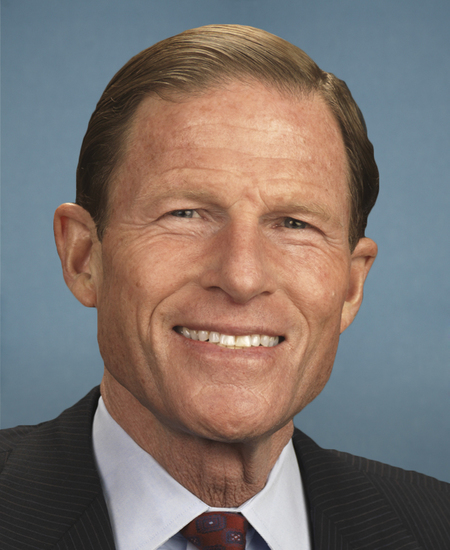
Sen. Richard Blumenthal
Sponsored bills
Maddy summaryThis bill amends the Federal Food, Drug, and Cosmetic Act to add two new prohibitions for dietary supplements. It bans introducing into interstate commerce any product marketed as a dietary supplement that doesn't meet the legal definition (Section 201(ff)), and prohibits supplements prepared, packed, or held using a person banned from the industry (Section 306). These changes update import restrictions (Section 801) and seizure authorities (Section 304) to include violations of these new prohibitions. The law directly affects dietary supplement manufacturers, distributors, and sellers who handle products meeting these specific criteria.
Maddy summarySRES 596 is a non-binding Senate resolution designating February 2-6, 2026, as "National School Counseling Week." It directly recognizes school counselors and their role in supporting students' academic, social, emotional, and career development. The resolution encourages public awareness through ceremonies and activities to highlight counselors' contributions, addressing their critical but often underfunded role (with a national student-to-counselor ratio of 376:1). It does not create new programs or alter funding but formally acknowledges counselors' work in schools.
Maddy summaryThe Rebuild America's Schools Act of 2026 would provide $20 billion annually (2027-2031) to improve public school facilities across the United States. The bill directs funds to states based on previous Title I funding allocations, requiring states to contribute 10% of the funds (with some exceptions) and develop plans for equitable distribution to school districts. Local educational agencies must prioritize schools with high numbers of students eligible for free or reduced-price lunch, and funds can be used for construction, renovation, energy efficiency upgrades, removal of toxic substances, and making facilities accessible. The bill also establishes school infrastructure bonds to leverage private investment and includes specific provisions to repair foundations damaged by pyrrhotite.
Maddy summaryThe Stop Underrides Act 2.0 requires new safety standards for side underride guards on commercial trucks and trailers to prevent passenger vehicles from sliding under them during collisions. The bill mandates that the Secretary of Transportation finalize regulations requiring these guards within 18 months, with full compliance required within two years. The regulations must meet specific performance standards to prevent intrusion into passenger vehicle occupant space during side collisions at speeds up to 40 mph. This law directly affects commercial truck manufacturers, trucking companies, and all road users, particularly vulnerable road users like cyclists and pedestrians who are at higher risk in underride crashes. The bill also establishes a public website for underride crash resources and requires studies to better understand and prevent these crashes.
Maddy summaryS 3754 imposes a tiered tax on investors purchasing single-family homes, targeting those owning significant portfolios: 1% for medium-sized investors (16-25 homes), 3% for large investors (26-100 homes), and 5% for giant investors (over 100 homes). The tax applies to home purchases, excluding new construction unless replacing an existing home on the same site, and exempts nonprofits focused on affordable housing, government entities, and community land trusts. Revenue generated will be allocated 65% to the Housing Trust Fund and 35% to the Capital Magnet Fund to support affordable housing programs. The law takes effect for taxable years beginning after December 31, 2025.
Maddy summarySRES 593 is a Senate resolution honoring the 67 victims of the January 29, 2025 mid-air collision between a U.S. Army Black Hawk helicopter and American Airlines Flight 5342 over the Potomac River. It specifically recognizes the lives of all victims, including 11 U.S. figure skating athletes, their families, and 3 Army soldiers, as well as the 1,700+ first responders who assisted in the recovery efforts. The resolution offers condolences to affected families, acknowledges the bravery of emergency personnel, and commits the Senate to using safety lessons from the crash to prevent future incidents. As a commemorative resolution, it does not create new laws or provide direct benefits but serves to formally memorialize the tragedy and honor those impacted.
Maddy summaryThe "Save the Kurds Act" maintains U.S. sanctions on Syria by requiring congressional approval before the President can terminate Syria's "state sponsor of terrorism" designation, redesignating Hay'at Tahrir al-Sham as a foreign terrorist organization, and imposing sanctions on Syrian government officials and financial institutions. It prohibits U.S. investments in Syria, restricts financial transactions with Syrian entities, bans certain energy exports to Syria, and includes exceptions for humanitarian aid. The bill would automatically suspend sanctions if Syria stops attacking Kurdish forces, but would expire after five years. This legislation directly affects Syrian government entities, financial institutions, and U.S. persons engaging in transactions with Syria.
Maddy summaryThis bill creates a legal pathway for individuals harmed by ICE or CBP officers to sue the U.S. government directly for constitutional violations. It amends the Federal Tort Claims Act to allow victims to seek monetary damages for deprivations of rights under the Constitution, including due process violations, racial profiling, unreasonable searches, or privacy rights infringements, regardless of whether the violation stemmed from official policy. The government would be liable for these damages, funded from specific appropriations (like those for border security), and the bill waives sovereign immunity for such cases. This directly affects people subjected to unlawful immigration enforcement actions by ICE or CBP officers, providing them a new civil remedy against the government.
Maddy summaryThis bill authorizes $6 million annually for seven years to fund the National Law Enforcement Museum's community outreach, public education, and officer safety programs. It directly supports the National Law Enforcement Officers Memorial Fund, which operates the museum in Washington, D.C., by requiring the Secretary of the Interior to award grants for specific activities like developing safety resources, expanding educational exhibits, and providing free museum access for officers and families. Key provisions include funding programs to reduce line-of-duty deaths, enhance public understanding of law enforcement, and foster community-police relationships through workshops and digital resources. The bill does not create new safety standards but provides federal funding to maintain and expand existing outreach efforts already coordinated with law enforcement agencies.