

Maddy summaryThe Equality Act (S 5) amends federal civil rights laws to explicitly prohibit discrimination based on sexual orientation and gender identity in public accommodations, employment, housing, credit, and jury service. It expands existing protections under the Civil Rights Act of 1964 by clarifying that discrimination based on sexual orientation or gender identity constitutes sex discrimination, as established by the Supreme Court's Bostock decision. The bill directly affects businesses, employers, housing providers, financial institutions, and government services that receive federal funding, requiring them to provide equal access and treatment regardless of sexual orientation or gender identity. It includes specific provisions addressing discrimination in foster care and adoption, where LGBTQ individuals often face barriers, and clarifies definitions of terms like "gender identity" and "sexual orientation" for consistent application. The law creates a uniform national standard for nondiscrimination where many states lack such protections, aiming to eliminate barriers to full participation in society for LGBTQ individuals.
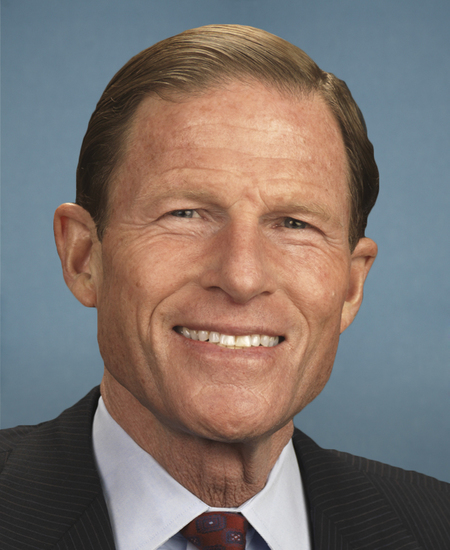
Sponsored bills
Maddy summaryThis bill adds multi-cancer early detection screening tests to Medicare Part B coverage, directly affecting Medicare beneficiaries. It creates a new coverage category for FDA-approved blood tests (like those analyzing cell-free DNA) that screen for multiple cancer types simultaneously, as defined in the bill. Medicare would cover these tests once every 12 months, and the bill clarifies that this change does not impact existing coverage for standard cancer screenings like mammograms or colonoscopies. The policy change ensures beneficiaries can access these new screening options without unnecessary delays after FDA approval.
Maddy summaryThis Senate resolution (SRES 258) reaffirms the U.S. commitment to supporting refugees and displaced persons globally and domestically. It urges the administration to meet robust refugee admissions goals (noting only 31,797 arrived in the U.S. by May 2023, far below the 125,000 target), uphold asylum protections under the Refugee Act of 1980, and strengthen partnerships with the UNHCR. The resolution specifically calls for increased U.S. leadership in humanitarian aid, addressing root causes of displacement, and ensuring refugees have access to education and livelihoods. It directly affects refugees seeking resettlement in the U.S. and global host countries bearing the burden of displacement crises.
Maddy summaryThis bill requires the EPA to create a public online compendium of air quality monitoring technologies and their uses, including costs, accuracy, and data accessibility. It establishes a working group to develop templates for integrated community-scale monitoring systems and recommend support for environmental justice communities seeking hyperlocal air quality data. The EPA must also conduct a national inventory of existing air quality monitoring infrastructure and submit a report identifying high-priority areas for improved monitoring, especially near communities disproportionately affected by pollution. The bill authorizes $11 million annually to fund these activities and create 8 new EPA positions, without altering existing air pollution protections. It directly affects EPA operations, state/local/Tribal agencies, and communities facing elevated air pollution exposure.
Maddy summaryThe Freedom to Travel for Health Care Act of 2023 prohibits states from restricting or penalizing individuals for traveling to another state to access legal reproductive health care, including abortion services. It also bans discrimination against those who assist with such travel or provide the care, and overrides conflicting state laws that interfere with these rights. The bill allows individuals, healthcare providers, and the federal government to sue to enforce these protections in court, with remedies including injunctions and attorney fees. It directly affects patients seeking care across state lines, healthcare providers, and organizations facilitating such travel.
Maddy summaryThis bill repeals legal protections that previously shielded gun manufacturers from civil lawsuits related to gun violence. It allows gun violence victims to use firearm trace data from the ATF's database as evidence in civil court cases (including state, federal, and administrative proceedings). The key change makes gun trace information admissible and subject to discovery, meaning victims' legal teams can subpoena this data to prove how guns were obtained. This directly affects victims pursuing civil claims against gun manufacturers or dealers.
Maddy summaryThis bill creates a new dental benefits plan specifically for members of the Selected Reserve in the Ready Reserve (part-time military service members). It establishes a "no premium plan," meaning these service members will not pay any monthly fees for dental coverage. Additionally, they will pay no copayments for any dental care received under this new plan. The bill directly affects Selected Reserve members by providing them with expanded, cost-free dental benefits through the TRICARE system.
Maddy summaryThe American Innovation and Choice Online Act targets large online platforms (termed "covered platforms") with significant user bases or revenue, specifically those meeting thresholds like 50 million US monthly active users or $550 billion in annual sales. It prohibits covered platforms from favoring their own products/services over others, using business users' nonpublic data to compete with them, or restricting business users' access to data or platform features. The law would be enforced by the FTC and Department of Justice, with potential civil penalties up to 10% of a platform's US revenue for violations. The law would take effect one year after enactment, with agencies required to issue enforcement guidelines to clarify implementation. This legislation aims to promote competition by preventing anticompetitive conduct by dominant digital platforms.
Maddy summaryThis bill ensures female service members who served in cultural support teams (2010-2021) receive proper military records and veterans' benefits. It requires military records to include this service for retirement pay calculations and directs the VA to treat such service as "combat" for disability claims. Veterans who were previously denied benefits for service-related injuries can file supplemental claims within three years of the bill's enactment. The bill specifically covers approximately 310 women who served in these teams, who faced barriers in accessing VA care for traumatic brain injuries, PTSD, or physical trauma incurred during deployment.
Maddy summaryThe Medicare Dental Benefit Act of 2023 would add dental and oral health services to Medicare Part B coverage for beneficiaries aged 65 and older, as well as certain disabled individuals. It defines covered services to include routine cleanings, fillings, crowns, emergency care, and dental prostheses (like dentures), with payment starting at 0% in the first year after enactment and gradually increasing to 80% over seven years. Coverage includes limits such as two cleanings and two exams per year, while the Secretary retains authority to adjust coverage based on U.S. Preventive Services Task Force recommendations. The bill takes effect for services on or after January 1, 2025.