

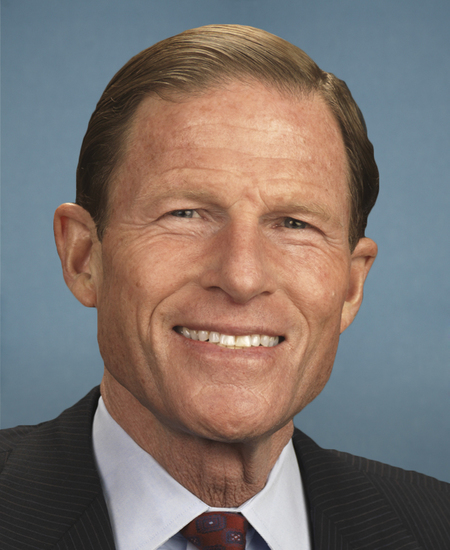
Maddy summaryThis bill corrects funding and eligibility rules for the World Trade Center Health Program, directly affecting 9/11 responders and survivors seeking medical care. It allows licensed mental health providers (not just physicians) to certify mental health conditions for program eligibility, requiring the program administrator to define these provider categories within 180 days. The bill also clarifies that deceased individuals should not be counted in enrollment statistics for funding calculations and adds $2.97 billion in funding for fiscal year 2024, with adjusted annual funding formulas extending through 2090. These changes aim to streamline access to care and stabilize long-term program financing for affected individuals.
Sponsored bills
Maddy summaryThis bill (S 4554) is a non-binding resolution expressing Congress's "sense" that protections for abortion access should be supported after the *Dobbs* decision and that *Roe v. Wade* protections should be restored. It does not create new laws or change existing policies; it is solely a statement of congressional opinion. The resolution directly affects no individuals or entities, as it lacks legal force. Key provisions (Section 2) state Congress supports post-*Dobbs* reproductive health care access and aims to restore *Roe*-era protections, but these are declarative statements only.
Maddy summarySRES 761 is a non-binding Senate resolution designating June 2024 as "National Post-Traumatic Stress Awareness Month" and June 27, 2024, as "National Post-Traumatic Stress Awareness Day." It aims to raise public awareness about PTSD among veterans and military personnel, reduce stigma, and support existing efforts by the Department of Veterans Affairs and Department of Defense to address mental health needs. The resolution does not create new laws or funding but symbolically encourages cultural change and timely treatment for PTSD.
Maddy summaryThis bill expands whistleblower protections for federal employees, contractors, and job applicants across all branches of government. It creates new administrative remedies for covered individuals harmed by retaliation, including specific pathways for FBI staff, intelligence community workers, and contractor employees. If agencies don't resolve complaints within 180 days, affected individuals can sue for double back pay, reinstatement, attorney fees, and other remedies in federal court. The law applies to all federal agencies, offices, and legislative/judicial entities, ensuring consistent protections for workers and contractors who report wrongdoing.
Maddy summaryThis bill strengthens the ban on foreign influence in U.S. elections by expanding the definition of foreign-controlled business entities to include those with significant foreign ownership or influence (e.g., 50% direct ownership or 1% indirect ownership with aggregation). It requires any for-profit business entity making election-related contributions, expenditures, or independent spending to file a certification within 7 days, under penalty of perjury, confirming it is not foreign-controlled. Recipients of such funds must separately account for them and cannot reuse the funds for further election activities without the certification. The bill also clarifies that these rules apply to State/local ballot initiatives and disbursements to political committees like Super PACs.
Maddy summarySRES 756 is a Senate resolution designating June 19, 2024, as "Juneteenth Independence Day" to commemorate June 19, 1865 - the date Union troops announced the end of slavery in Texas. This symbolic resolution recognizes the historical significance of Juneteenth, when news of emancipation reached enslaved people in the Southwestern U.S. after the Civil War. It does not create new laws or affect any group; it solely serves to honor this date as part of U.S. history and encourage nationwide observance.
Maddy summaryThis bill creates a $100 million federal fund to support local governments that provide free legal counsel to low-income tenants facing eviction. It directly affects tenants earning 200% or less of the federal poverty line in eviction or housing subsidy termination cases involving their primary residence. The fund provides grants to jurisdictions that have already enacted "right to counsel legislation," prioritizing those with tenant protections like 30-day notice periods, eviction diversion programs, or emergency rental assistance. Grant money can cover attorney training and recruitment costs for representing eligible tenants in covered cases. The bill does not mandate new laws but offers funding to jurisdictions that already have such policies in place.
Maddy summaryThis non-binding Senate resolution (SRES 743) reaffirms U.S. commitment to refugee and displaced persons' safety, health, and well-being, referencing the UNHCR's 2023 report showing over 117 million displaced people globally. It highlights statistics on refugee crises (e.g., 9.7 million displaced Ukrainians, 6.4 million Afghan refugees) and emphasizes the U.S. Refugee Admissions Program's role in resettling vulnerable refugees. The resolution calls on federal agencies to uphold existing policies, support international refugee protection efforts, and meet refugee admissions goals without creating new legal obligations or altering current programs. It serves as a symbolic statement of bipartisan support rather than enacting policy changes.
Maddy summaryThis Senate resolution (SRES 744) expresses the Senate's support for designating June 28, 2024, as "Stonewall Day" to commemorate the 1969 Stonewall Uprising, a pivotal moment in LGBTQIA+ rights history. It recognizes the significance of the uprising in advancing LGBTQIA+ equality and supports the opening of the Stonewall National Monument Visitor Center on that date. The resolution does not create new laws or affect specific individuals; it is a symbolic gesture acknowledging historical events and encouraging public recognition of the LGBTQIA+ civil rights movement.
Maddy summarySRES 749 is a symbolic Senate resolution recognizing June 2024 as "LGBTQ Pride Month." It does not create new laws or policies but formally acknowledges the contributions and struggles of LGBTQ individuals in the U.S. The resolution encourages public reflection on LGBTQ history, discrimination faced by the community, and celebration of their achievements. It directly affects public awareness and Senate recognition, with no direct impact on individuals or government programs. This is a procedural resolution, not a legislative measure with binding effects.