

Maddy summarySRES 885 is a non-binding Senate resolution designating October 2, 2024, as "Energy Efficiency Day." It commemorates the economic and environmental benefits achieved through existing private sector innovation and federal energy efficiency policies since the 1970s, such as the Energy Policy Act of 1992 and the Energy Efficiency Improvement Act of 2015. The resolution has no direct effect on individuals, businesses, or policy implementation - it solely encourages public observance through programs and activities. It references historical achievements like $1 trillion in annual energy cost savings and a 50% reduction in energy intensity in federal facilities. The resolution reflects bipartisan recognition of energy efficiency progress but does not create new laws or requirements.
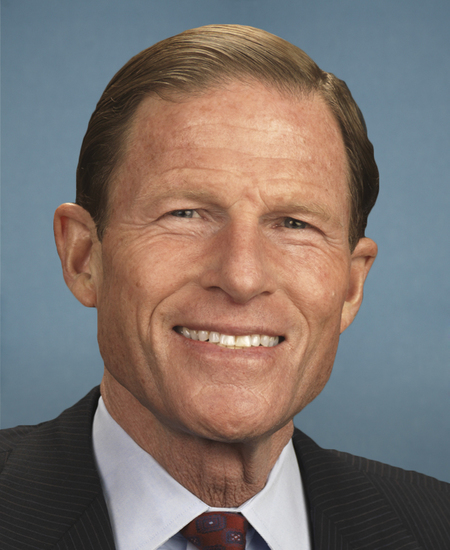
Sponsored bills
Maddy summaryS 5165 (Freedom from Intimidation in Elections Act) strengthens protections for election workers and officials by amending the Voting Rights Act to specifically prohibit intimidation during federal election administration. It directly affects poll workers, vote counters, and election officials who perform duties like vote tabulation, canvassing, or certification. The bill creates a legal presumption that displaying or carrying a visible firearm (including replicas that look real) near voting or election work is intimidation, shifting the burden of proof to the person carrying the firearm unless they show otherwise. This applies to interactions with voters, election workers, or during election administration tasks, with exceptions for law enforcement acting in their official duties.
Maddy summaryThis bill adjusts the premium tax credit program under the Affordable Care Act to make health insurance more affordable for lower-income households. It establishes a new sliding scale for the percentage of income people pay toward premiums based on household income relative to the federal poverty line (ranging from 150% to 400% of the poverty line). For example, households earning 150-200% of the poverty line would pay 0-2% of income, while those earning 300-400% would pay 6-8.5%. The changes apply to tax years beginning after December 31, 2025, and directly affect individuals purchasing health insurance through marketplace plans who qualify for these tax credits.
Maddy summaryS 5204, the Tax Relief for New Businesses Act, increases tax deductions for new businesses by consolidating "start-up" and "organizational" expenses into a single category and raising deduction limits. It raises the initial deduction from $5,000 to $50,000 and the phaseout threshold from $50,000 to $150,000 for these expenses. The bill also creates special rules for net operating losses related to start-up costs, allowing businesses to treat these losses separately with a 100% carryover (instead of 80%) and excluding them from other loss calculations. This directly benefits new corporations and partnerships formed after December 31, 2024, by reducing their initial tax burden.
Maddy summaryThis bill prohibits federal agencies from entering contracts with gun dealers who have been identified as "covered dealers" based on firearm tracing data. A dealer becomes "covered" if 25+ firearms traced to them were recovered in crimes within 3 years during two of the past three years. Federal agencies must then avoid contracting with such dealers for three years (current year plus two prior), though the Attorney General may grant national security waivers for Defense or Homeland Security contracts, requiring immediate congressional notification. The rule takes effect 180 days after enactment.
Maddy summaryThis bill establishes new protections for warehouse workers by requiring employers to provide clear written descriptions of performance quotas and workplace monitoring systems. It prohibits quotas that prevent workers from taking required breaks, using bathroom facilities, or complying with safety standards, and bans adverse employment actions based on certain types of performance data. The bill creates a new Fairness and Transparency Office within the Department of Labor to oversee enforcement, gives workers the right to request their work speed data in plain language, and adds protections against retaliation for exercising these rights. It also amends OSHA standards to improve ergonomic protections and medical treatment access for warehouse workers. The bill applies to large warehouse employers (with over 200 employees) in specific industry sectors like warehousing, distribution, and delivery services.
Maddy summaryS 5220, the Supreme Court Review Act of 2024, creates a special expedited process for Congress to address specific Supreme Court decisions. It applies to rulings interpreting federal law or diminishing constitutional rights, requiring a joint resolution to be introduced within 10 days of the ruling. The bill establishes strict timelines: committees must be discharged after 30 days, debate is capped at 10 hours with no amendments beyond 10 total, and resolutions must directly relate to the court decision (no "non-germane" additions). This process applies only to Congress (Senate and House) when considering such resolutions, not to the courts or the public.
Maddy summaryThe Ending Passenger Rail Forced Arbitration Act prohibits Amtrak from requiring customers to use private arbitration or waive class action rights for consumer and civil rights disputes. It invalidates pre-dispute agreements forcing arbitration or blocking collective claims related to Amtrak services (like personal injuries) or discrimination (e.g., based on race, gender, or disability). Courts, not arbitrators, will decide if a dispute falls under this law, ensuring customers can pursue claims in court. The bill applies to all claims arising after its effective date, directly affecting Amtrak and all its customers who use passenger services.
Maddy summaryThis bill amends the Camp Lejeune Justice Act of 2022 to clarify and improve legal pathways for victims. It directly affects individuals exposed to contaminated water at Camp Lejeune (1953-1987) who developed health issues, including latent or potential harm. Key changes include lowering the proof standard to show a causal link between contamination and health harm (requiring it to be "at least as likely as not"), updating residency requirements to 30 days, and revising attorney fee limits to 20% for pre-litigation settlements and 25% for court judgments. The bill also specifies jurisdiction in North Carolina courts and allows case transfers within the fourth judicial circuit. These technical corrections aim to streamline claims processing for existing and future victims.
Maddy summaryThis bill authorizes a Congressional Gold Medal to honor the "Hello Girls" - 223 women who served as Army Signal Corps telephone operators in WWI. They connected 26 million calls in France, worked 12-hour shifts under combat conditions, and were denied veteran benefits for 60 years despite wearing uniforms and facing combat hazards. The medal recognizes their pioneering military service, devotion to duty, and the decades-long struggle for recognition as soldiers. It directs the Treasury to strike the medal and place it in the Smithsonian for public display at institutions like the National WWI Museum.