

Maddy summaryThe SMART Prices Act (S 1246) repeals a provision blocking states from negotiating Medicare drug prices and accelerates the Medicare Drug Price Negotiation Program. It increases the annual number of drugs eligible for negotiation from 10 to 40 starting in 2027, shortens the timeframes for qualifying drugs from 7 to 3 years, and adjusts price ceiling percentages (e.g., raising the maximum fair price cap for some drugs from 75% to 76%). These changes directly affect Medicare beneficiaries by potentially lowering drug costs and pharmaceutical companies by altering negotiation timelines and pricing rules. The bill aims to reduce Medicare drug spending through faster, more aggressive price negotiations.
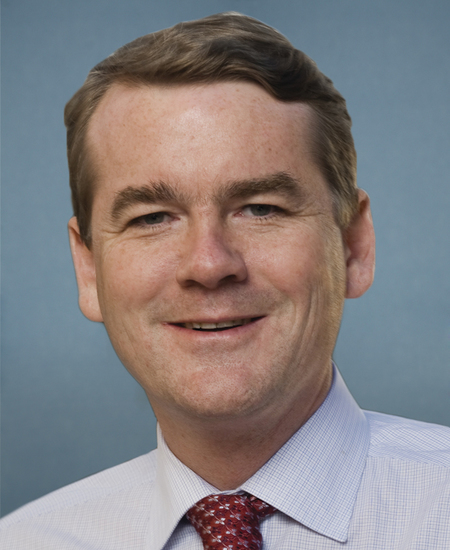
Sen. Michael F. Bennet
Sponsored bills
Maddy summaryThis bill amends the Conservation Reserve Enhancement Program (CREP) to provide greater flexibility for participating landowners. It allows owners to choose how annual payments are allocated across their agreement term and establishes specific payment rates for agreements involving permanent water rights retirement (matching irrigated rates) or dryland agricultural uses (paying the difference between irrigated and dryland rates). Landowners with CREP agreements that include water rights retirement or dryland farming will directly benefit from these revised payment structures. The bill also exempts CREP payments from certain payment limits that apply to other agricultural programs.
Maddy summaryThe Local Farms and Food Act of 2023 reforms the Local Agriculture Market Program to better support local food systems. It redefines "food hub" to include businesses coordinating local food distribution and creates simplified grant applications for projects under $100,000, such as farmers market staffing or equipment purchases. The bill increases annual funding for the program to $75 million (2024-2028) and expands the Seniors Farmers' Market Nutrition Program with $20.6 million annually for the same period. It also raises the federal share for nutrition incentive programs from 50% to 75% and adds a healthcare-experienced panel to review produce prescription applications. These changes directly affect local food hubs, farmers, seniors accessing nutrition benefits, and community food system projects.
Maddy summaryS 1202, the "Keep Our PACT Act," mandates increased annual federal funding for two key education programs. It requires specific minimum funding levels for Title I of the Elementary and Secondary Education Act (which supports schools in high-poverty areas) and the Individuals with Disabilities Education Act (IDEA, which funds specialized education for students with disabilities) from fiscal years 2024 through 2033. The bill sets annual dollar targets that increase each year, with IDEA funding eventually reaching 40% of national per-pupil spending for students with disabilities by 2033. These funds directly affect public schools serving low-income students and students with disabilities across all states. The bill does not change eligibility or program requirements but ensures specified funding levels are appropriated annually.
Maddy summaryThe Latonya Reeves Freedom Act of 2023 establishes a federally protected right for individuals with disabilities who require long-term services and supports (LTSS) to live in community-based settings rather than institutions. The bill defines specific requirements for "community-based" settings, including housing options that allow individuals to live in their own homes or shared residences with privacy rights, choice, and control over their services. It requires states to develop transition plans with measurable goals to move people from institutional settings to community-based supports within 12 years, along with annual reporting on progress. The Department of Justice and Department of Health and Human Services will enforce the law through investigations, compliance reviews, and the ability to seek injunctive relief for violations.
Maddy summaryS.1190, the "End the Threat of Default Act," repeals the statutory debt ceiling (Section 3101 of Title 31, U.S. Code), eliminating the legal limit on federal borrowing. This directly affects how the U.S. Treasury manages debt issuance, as it removes the requirement for Congress to vote on raising the debt limit. The bill replaces all references to "debt subject to limit" with terms like "face value of obligations" to align with the repealed ceiling mechanism, preventing future government shutdowns or default risks tied to debt ceiling negotiations.
Maddy summarySRES 161 is a symbolic Senate resolution designating April 22-30, 2023, as "National Park Week." It does not create new laws or affect specific groups, but formally recognizes the National Park System's significance. The resolution highlights the parks' historical value, visitor impact (312 million visits in 2022), and economic contributions ($42.5 billion in 2021). It encourages public engagement with national parks but contains no funding, regulatory changes, or policy mechanisms. As a procedural resolution, it serves purely to honor the parks' legacy.
Maddy summaryThis bill requires employers in healthcare and social service sectors to develop and implement workplace violence prevention plans for their workers. It applies to a wide range of facilities including hospitals, nursing homes, mental health clinics, and community care settings, affecting healthcare and social service workers who provide care in these environments. The plans must include risk assessments, hazard prevention measures, incident reporting procedures, and annual training for employees. Employers must maintain records of violent incidents, conduct annual evaluations of their prevention plans, and submit annual summaries of workplace violence data to the Secretary of Labor. The bill also prohibits retaliation against workers who report violence or safety concerns and ensures compliance with existing safety standards.
Maddy summarySRES 151 is a Senate resolution designating March 31, 2023, as "César Chávez Day" to honor the legacy of César Estrada Chávez, a civil rights leader who co-founded the United Farm Workers and championed nonviolent organizing for farmworkers' rights. This commemorative resolution has no policy impact or direct effect on any individuals or groups; it serves solely as a symbolic recognition. The resolution highlights Chávez's life work advocating for fair wages, safe working conditions, and dignity for agricultural laborers. It follows longstanding tradition of honoring Chávez through official designations, including existing state holidays in California, Colorado, and Texas. The resolution encourages the public to reflect on his legacy of service and nonviolent activism.
Maddy summarySRES 148 is a ceremonial Senate resolution (not a law) passed in March 2023 that formally recognizes the heritage, culture, and contributions of American Indian, Alaska Native, and Native Hawaiian women. It highlights their historical and ongoing achievements in areas like military service, business ownership, healthcare, arts, and civil rights through specific examples (e.g., veterans, entrepreneurs, activists). The resolution has no policy or funding mechanisms - it solely expresses the Senate's intent to honor these contributions and acknowledge the need to address barriers they face. It was introduced by Senators Murkowski, Schatz, and others with bipartisan support.