

Maddy summaryThe SAFE Orbit Act creates a new Bureau of Space Commerce within the Department of Commerce to manage space situational awareness and traffic coordination. It requires the Bureau to provide a free, public database of space object locations and behavior (like satellite positions and collision risks) and offer basic collision-avoidance services to satellite operators at no cost. The law ensures government services do not compete with private companies by mandating annual reviews and prioritizing commercial data sources while protecting proprietary information. It also grants legal immunity for entities sharing space data and establishes a 5-year transition plan to elevate the current Office of Space Commerce into a standalone Bureau.
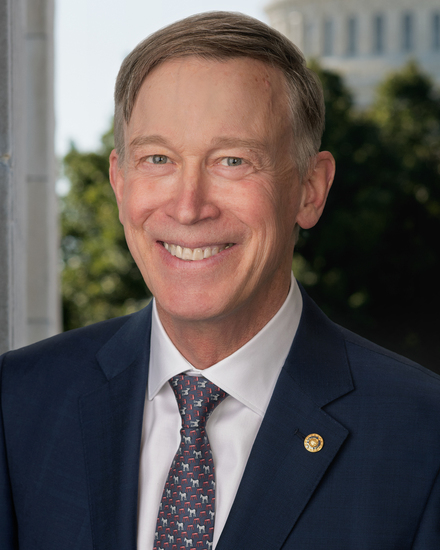
Sen. John W. Hickenlooper
Sponsored bills
Maddy summaryThe STARS Act waives entrance and recreation fees at specific federal public lands on September 17, 2026, to honor the U.S. semiquincentennial (250th anniversary). It requires the Interior Secretary to eliminate fees at National Parks and Wildlife Refuges, and waive standard amenity fees at Bureau of Land Management, Bureau of Reclamation, and Forest Service sites on that date, making entry free for all visitors. This is a one-time commemorative provision with no ongoing policy changes.
Maddy summaryThis bill establishes federal grants to support state and local governments building spaceport infrastructure for civil, national security, and commercial space launches. It sets a 90% federal funding cap for projects (with a national interest waiver option), broadens eligibility to cover all U.S. space transportation needs, and requires agencies to consult on project impacts. The bill mandates a report within two years evaluating U.S. space transportation demand and competitiveness, with updates every four years. It authorizes $10 million annually for these grants, focusing on modernizing infrastructure to support national space capabilities.
Maddy summaryThe Reconciliation in Place Names Act establishes a process to rename geographic features (like mountains and rivers) and federal lands (such as national parks and forests) with names containing racial slurs, honoring individuals who committed atrocities against Native Americans, or perpetuating prejudice. It creates an advisory committee with 17 members - including Native American tribal representatives, civil rights experts, and the public - to gather input, propose new names, and recommend changes to the Board on Geographic Names. The Board must review these proposals within three years, unless a compelling reason exists to reject them, and must rename features if approved. This directly affects federal lands and geographic features with offensive names, aiming to replace them with names that promote equity and respect for all communities.
Maddy summaryThe Protect America’s Workforce Act (S 2837) directly affects federal employees and their labor unions by reversing two executive orders that limited their collective bargaining rights. It nullifies Executive Orders 14251 and 14343, which had excluded certain federal workers from labor-management programs, and prohibits federal funding for any efforts to implement those orders. The bill ensures that all existing collective bargaining agreements between federal agencies and employee unions remain fully enforceable through their original terms, as long as they were in effect as of March 26, 2025. This preserves current workplace agreements without creating new obligations or altering existing labor-management processes.
Maddy summaryS 2832, the Native American Entrepreneurial and Opportunity Act of 2025, creates a new Office of Native American Affairs within the Small Business Administration. This office directly serves federally recognized tribes, Native Hawaiian Organizations, and small businesses owned by Native Americans by connecting them to existing SBA programs like the 8(a) program. The bill establishes an Associate Administrator for Native American Affairs (requiring cultural expertise and experience) to coordinate outreach, develop tailored assistance, and facilitate tribal consultation. It authorizes funding for the office from fiscal years 2026 through 2030 to support these initiatives.
Maddy summaryThis bill requires investment companies and transfer agents to collect contact information for a trusted person when serving "specified adults" (individuals aged 65+ or with a mental/physical impairment affecting their financial decision-making). It allows these firms to temporarily delay redemptions of securities for up to 15 business days (extendable by 10 more days with notification) if they reasonably suspect financial exploitation is occurring. Firms must document all delays, conduct internal reviews, and retain records for regulatory oversight. The law directly affects vulnerable account holders and the financial institutions managing their investments, aiming to prevent scams through proactive safeguards.
Maddy summaryThe Energizing Our Communities Act establishes a new fund using interest from specific Department of Energy loans for large-scale electric transmission projects (over 999 megawatts). It requires payments to host communities - local governments or tribes where transmission lines are built - within 18 months of project construction start. Funds must be split: 80% for community services like schools, broadband, or infrastructure, and 20% for conservation, recreation, or climate resilience projects. The bill mandates annual reports on fund usage and ensures payments supplement existing "payments in lieu of taxes."
Maddy summarySRES 392 is a Senate resolution designating November 16, 2025, as "National Warrior Call Day." It encourages all U.S. citizens to reach out to active-duty service members and veterans through phone calls or conversations to reduce isolation and connect them with support resources. The resolution specifically highlights the importance of peer-to-peer connections in addressing mental health challenges, citing veteran suicide statistics as context. As a symbolic measure (not a law), it does not create new programs but urges public engagement to support military personnel transitioning from service.
Maddy summaryS 2777, the Small Business RELIEF Act, exempts small businesses from import duties imposed under Executive Order 14257 (related to national emergencies) for goods they import. It requires the President to refund all duties paid under that order within 90 days of the bill's enactment. The bill directly affects small business concerns as defined by the Small Business Act (15 U.S.C. 632), which typically covers businesses with fewer than 500 employees. This policy change removes a financial burden on qualifying small importers and provides retroactive refunds for past payments.