

Maddy summaryS 1654, the Credit Access and Inclusion Act of 2023, allows credit bureaus to include positive payment history for utility and telecommunications services in consumer credit reports. It directly affects consumers who pay utility bills (electric, gas) or telecom services on time, as well as utility and telecom companies that may now report these payments to credit bureaus. The bill permits reporting of payment performance under lease agreements for housing, utility payments, and telecom contracts, but only includes payment-related details - not usage data - and prohibits reporting late payments if a consumer is on a valid payment plan. A GAO study on the bill's impact is required within two years of enactment.
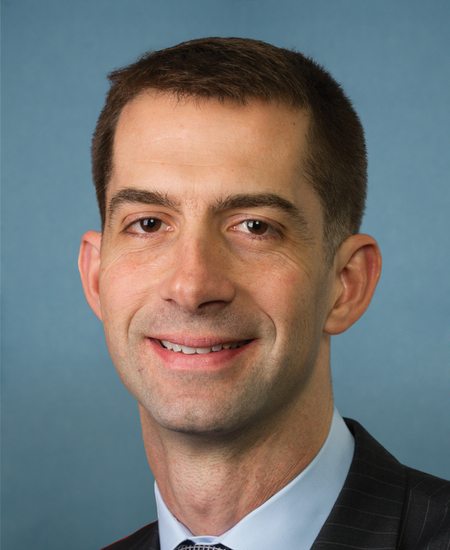
Sen. Tom Cotton
Sponsored bills
Maddy summaryS 1585, the Federal Law Enforcement Service Weapon Purchase Act, allows current or former federal law enforcement officers to purchase handguns retired from agency service. The bill authorizes officers to buy these retired handguns during a 6-month window after retirement, at fair market value based on the weapon's age and condition, provided they are legally permitted to own firearms under federal or state law. It directly affects federal law enforcement officers who served with agency-issued handguns and now wish to retain one. Key provisions include defined terms (like "retired handgun" meaning agency-surplus weapons), purchase limitations, and requirements for the General Services Administration to establish sale policies. This bill creates a formal process for officers to legally acquire service-issued handguns no longer needed by their agency.
Maddy summaryThis bill, the "Back the Blue Act of 2023," strengthens federal protections for law enforcement officers by creating new criminal penalties for killing or assaulting them while on duty. It makes it a federal crime to kill or attempt to kill law enforcement officers, federal judges, or federally funded public safety officers (including firefighters and first responders) during official duties, with penalties ranging from 10 years to life in prison or death if the victim dies. The bill also establishes a new federal offense for fleeing interstate to avoid prosecution for killing law enforcement officers and adds a new aggravating factor for death penalty cases involving officers. Additionally, it expands law enforcement officers' rights to carry firearms in certain circumstances and limits federal habeas corpus relief for murder convictions involving law enforcement officers.
Maddy summaryThe Campus Free Speech Restoration Act (S 1511) strengthens student free speech protections at colleges and universities receiving federal funding. It defines "expressive activity" broadly to include peaceful assembly, protests, distributing literature, and other First Amendment-protected speech, while prohibiting schools from restricting such activities through overly broad speech codes or "free speech zones." The bill requires institutions to clearly disclose their speech policies online and in student handbooks, establishes a complaint process for students who believe their rights were violated, and allows for loss of federal funding if institutions don't comply with the new standards. It applies to public institutions and private institutions receiving federal funds, with exemptions for religiously controlled schools.
Maddy summaryThe Ensuring Peace Through Strength in Israel Act (S 1504) requires the U.S. Department of Defense to annually assess Israel's need for specific munitions to defend against threats from Iran, Hezbollah, Hamas, and other groups, starting April 2024 and continuing through 2028. This assessment evaluates current stockpiles in Israel's military, U.S. reserves (like the War Reserves Stock Allies-Israel), and U.S. military inventories, plus plans for pre-positioning and rapid resupply of these munitions. The Secretary of Defense must consult with Israel (if agreed) and submit progress reports to Congress every 90 days, tracking steps taken to ensure Israel has sufficient munitions for defense operations. The bill directly affects U.S. defense planning and Israel's military readiness, with no new funding or policy changes beyond these reporting requirements.
Maddy summaryThis bill expands Medicare coverage to include pharmacist services in designated underserved areas. It directly affects Medicare beneficiaries in health professional shortage areas, medically underserved areas, or medically underserved populations, as well as pharmacists licensed to provide these services. Key provisions require Medicare to cover pharmacist services (like those typically provided by physicians) in these areas and set payment at 80% of the lesser of the actual charge or 85% of the physician fee schedule. The changes take effect January 1, 2024, and require new billing codes for pharmacists.
Maddy summaryS 1498, the Finish It Act, requires the Department of Defense to transfer existing border wall construction materials to border states within 15 days of enactment for the sole purpose of building physical barriers along the U.S.-Mexico border. States receiving materials must certify they will use them exclusively for border barriers and face financial penalties if unused after two years. The bill mandates a report to Congress detailing storage costs, landowner contracts, and any internal investigations into the decision to store materials instead of using them. This directly affects the Department of Defense (which holds the materials), border states (as recipients), and private landowners (who currently store materials). The policy change focuses on redirecting existing resources toward border construction rather than ongoing storage costs.
Maddy summaryThis bill (S 1503) bans the use of Department of Defense (DoD) funds or DoD facilities for adult cabaret performances. It prohibits the DoD from hosting, advertising, or supporting any performance featuring topless dancers, go-go dancers, exotic dances, strippers, or male/female impersonators that appeals to prurient interest. The law directly affects DoD spending and operations, restricting where and how its budget can be used. It creates a clear definition of prohibited performances to ensure the ban applies consistently.
Maddy summaryThis bill requires thorough background checks - including fingerprint, sex offender registry, and child abuse history checks - for all sponsors and household members aged 18+ seeking to care for unaccompanied migrant children. It prohibits placing children with undocumented adults unless they are biological parents, legal guardians, or immediate relatives. The bill mandates unannounced home visits before release and at least five in-person visits in the first year (then quarterly), plus monthly reports to Congress on placements, sponsor vetting, and missing children. It also requires retroactive vetting of all sponsors since January 2021 to ensure compliance with these safety measures.
Maddy summaryThis bill modifies how federal agencies handle administrative subpoenas in child predator investigations. It prohibits recipients (like banks or tech companies) from disclosing that a subpoena was issued for 180 days, unless a federal official certifies disclosure would endanger victims, cause flight, destroy evidence, intimidate witnesses, or jeopardize the investigation. Recipients may share information only with necessary parties (e.g., legal counsel) under strict confidentiality rules. The bill also adds a new judicial review process (Section 3486A), requiring courts to quickly evaluate nondisclosure requests within 30 days to ensure they protect ongoing investigations.