

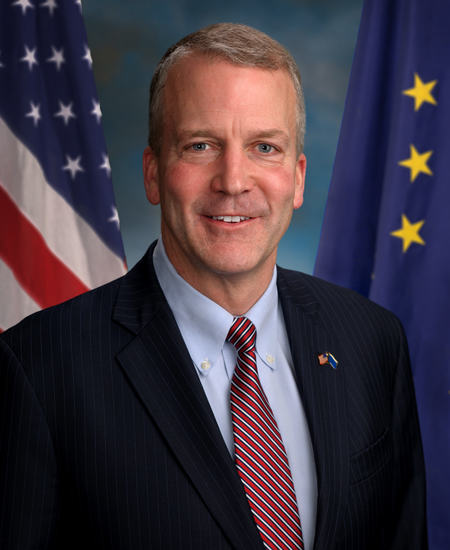
Photo of Dan Sullivan
R United States Senate · Alaska On the 2026 ballot

Sen. Dan Sullivan

Compare
Total votes
1,054
all sessions
Attendance
95%
55 missed
Near the chamber average
With party
90%
of cast votes
Lower than 92% of chamber peers
Bipartisan score
6%
crosses aisle rarely
Higher than 90% of chamber peers
Sponsored
1,084
bills & resolutions
Near the chamber average
Committees
13
assignments
1,084 bills and resolutions

Sponsored bills

Total
1,084
Primary
197
Co-sponsor
887
This page
1,084
matching current filters
Primary S 2263
In committee · United States Senate · Lead sponsor
The Rural Vital Emergency Transportation Services (VETS) Act

Maddy summaryS 2263, the Rural Vital Emergency Transportation Services (VETS) Act, requires the Department of Veterans Affairs (VA) to reimburse veterans for ambulance or air ambulance transportation costs to VA or non-VA providers for care authorized under VA laws. It specifically applies to veterans living in areas rated "10 or higher" on the USDA's rural-urban commuting areas scale (defined as "highly rural"). The bill mandates VA reimbursement regardless of whether the veteran qualifies for standard travel benefits under 38 U.S.C. § 111. This policy change directly affects veterans in remote rural communities who face significant transportation barriers to accessing authorized VA care.

In committee Jul 12, 2023 0 co-sponsors
Primary S 2265
In committee · United States Senate · Lead sponsor
STEADFAST Act

Maddy summaryThe STEADFAST Act (S 2265) aims to speed up U.S. defense equipment sales to foreign countries by establishing specific response deadlines for purchase requests (ranging from 45 to 150 days depending on the country's status) and creating streamlined procedures for priority nations. It establishes a Commission to study and recommend improvements to the foreign military sales process, creates a new Assistant Secretary position focused on technology cooperation, and allows U.S. defense companies to begin acquiring long-lead equipment before final contracts are signed. The bill specifically targets faster processing for major allies including Israel, Japan, South Korea, NATO members, major non-NATO allies, and designated major defense partners. These changes directly affect foreign military purchasers, defense contractors, and the Department of Defense's foreign military sales operations.

In committee Jul 12, 2023 0 co-sponsors
Primary S 2259
In committee · United States Senate · Lead sponsor
LINC VA Act

Maddy summaryThe LINC VA Act (S 2259) establishes a pilot program to connect veterans with community services through a coordinated network. It requires the VA to create infrastructure linking providers of housing, healthcare, job training, transportation, and other critical services - prioritizing interoperability with existing systems and standardized data collection on veterans' social needs (like housing instability or food insecurity) using ICD-10 codes. The pilot will operate at multiple VA facilities nationwide, including rural and under-resourced locations, to track referral accuracy, response times, and service outcomes. The program aims to improve access to integrated care by aligning VA services with community resources, with mandatory reports to Congress on unmet needs after three years.

In committee Jul 12, 2023 0 co-sponsors
Co-sponsor S 1037
In committee · United States Senate · Co-sponsor
Department of Veterans Affairs EHRM Standardization and Accountability Act

Maddy summaryThis bill requires the Department of Veterans Affairs (VA) to certify improvements to its electronic health record system (EHR) before expanding its implementation. Specifically, the VA cannot start new EHR program activities or implement the system at new facilities until it provides written certification to Congress that: (1) the system meets minimum uptime/stability standards, and (2) workflow customization issues are resolved. The VA must also certify that staff and infrastructure at each facility are ready for the EHR, with this requirement ending once certification is achieved across all facility complexity levels. Additionally, the VA must submit detailed reports to Congress within 30 days and quarterly thereafter on system stability, readiness standards, and deviations from national workflow guidelines.

In committee Jul 12, 2023 1 co-sponsor
Co-sponsor SRES 289
Passed · United States Senate · Co-sponsor
A resolution expressing support for the designation of July 2023 as "American Grown Flower Month".

Maddy summarySRES 289 is a non-binding Senate resolution expressing support for designating July 2023 as "American Grown Flower Month." It recognizes the domestic flower and foliage industry's economic impact (supporting hundreds of growers, thousands of small businesses, and tens of thousands of jobs) and encourages consumers to purchase domestically grown floral products. The resolution highlights that only 22% of flowers sold in the U.S. are domestically grown despite consumer preference for local products, and it urges Americans to support domestic flower farmers and the agricultural industry. This resolution does not create new laws or alter existing policies; it serves to raise awareness about the domestic floral industry's contributions.

Passed Jul 11, 2023 1 co-sponsor
Co-sponsor SJRES 11
Vetoed · United States Senate · Co-sponsor
A joint resolution providing for congressional disapproval under chapter 8 of title 5, United States Code, of the rule submitted by the Environmental Protection Agency relating to "Control of Air Pollution From New Motor Vehicles: Heavy-Duty Engine and Vehicle Standards".

Maddy summarySJRES 11 is a joint resolution seeking to cancel an Environmental Protection Agency (EPA) rule that set new emissions standards for heavy-duty vehicles, including trucks and buses. The rule, published in the Federal Register on January 24, 2023, would have required manufacturers to meet specific pollution control measures for new vehicles. This resolution uses a congressional disapproval process under the Congressional Review Act to nullify the EPA rule, meaning it would have no legal effect if enacted. If passed, the EPA's emissions standards for heavy-duty vehicles would be voided, removing requirements for manufacturers to comply with those specific pollution controls.

Vetoed Jun 22, 2023 1 co-sponsor
Primary S 2208
In committee · United States Senate · Lead sponsor
National Seafood Supply Act of 2023

Maddy summaryThe National Seafood Supply Act of 2023 establishes an Office of Seafood Policy within the Department of Agriculture to coordinate seafood policies and promote domestic seafood production. It creates a "Wild USA Seafood" labeling standard requiring retailers to verify seafood is wild-caught from U.S. waters or farmed in the U.S., with enforcement through warnings and potential fines. The bill also modifies school lunch program rules to encourage domestic seafood purchases, requiring school food authorities to request waivers for foreign seafood and develop plans to increase seafood availability in schools. Additionally, it mandates country of origin labeling for cooked king crab, tanner crab, and salmon products. The legislation aims to strengthen the domestic seafood industry, support rural economies, and improve consumer access to domestically produced seafood.

In committee Jun 22, 2023 0 co-sponsors
Co-sponsor S 2210
In committee · United States Senate · Co-sponsor
Iran Sanctions Relief Review Act

Maddy summaryS 2210, the Iran Sanctions Relief Review Act, requires the President to submit a detailed report to Congress before terminating, waiving, or significantly altering U.S. sanctions on Iran. Congress then has 30 days (or 60 days during summer months) to review the proposal through committee hearings and decide whether to approve or disapprove it via joint resolution. During this review period, the President cannot implement the sanction change without Congressional approval. The bill directly affects the executive branch's ability to modify Iran sanctions policy and gives Congress formal oversight authority over major foreign policy shifts related to Iran.

In committee Jun 22, 2023 1 co-sponsor
Co-sponsor S 2118
In committee · United States Senate · Co-sponsor
Real Emergencies Act

Maddy summaryS 2118, the "Real Emergencies Act," prohibits the President from declaring national emergencies, major disasters, or public health emergencies based on climate change. It specifically blocks the use of climate change as a justification under three key laws: the National Emergencies Act, the Robert T. Stafford Disaster Relief Act, and the Public Health Service Act. The bill does not affect past emergency declarations but restricts future declarations where climate change is cited as the primary reason. This directly impacts the executive branch's authority to invoke emergency powers for climate-related events.

In committee Jun 22, 2023 1 co-sponsor
Co-sponsor S 2125
In committee · United States Senate · Co-sponsor
National Ambient Air Quality Standards Implementation Act of 2023

Maddy summaryS 2125 amends the Clean Air Act to change how the EPA establishes and reviews national air quality standards. It extends the review cycle for these standards from 5 to 10 years, sets specific deadlines (December 2030) for reviewing ozone and particulate matter standards, and requires the EPA to consider technological feasibility and economic impacts when setting standards. The bill also creates "Extreme Areas" for ozone nonattainment zones, exempting them from certain cleanup requirements, and mandates that EPA publish implementation guidance alongside new standards to help states and industries obtain permits for new facilities. Additionally, it requires the EPA to report on how foreign pollution affects U.S. air quality designations and the handling of interstate pollution petitions.

In committee Jun 22, 2023 1 co-sponsor
Showing 611 to 620 of 1,084 bills
Previous 1 … 61 62 63 … 109 Next